
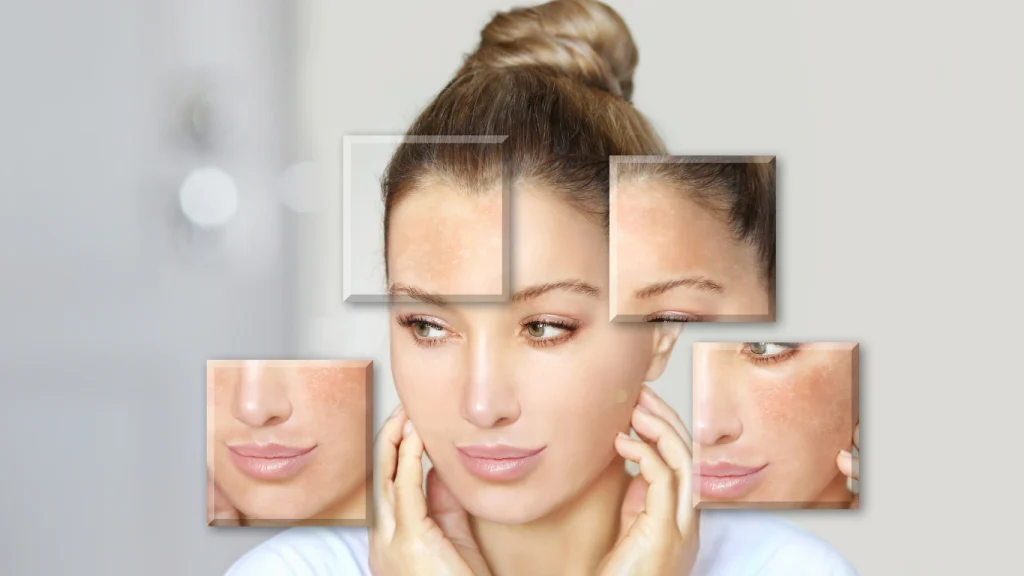
You clear the breakout, your skin finally feels smooth again… but the mark it left behind refuses to leave. Or maybe there was no breakout at all—you just looked in the mirror one day and wondered, “Where did these brown spots come from?”
That’s the frustrating thing about dark spots on face. They can look similar, but they don’t always have the same cause. Some show up after acne or irritation, some build up after years of sun exposure, and others may be linked to melasma.
So before buying another brightening serum, start with the spot itself. What does it look like, what may have triggered it, and is that trigger still happening? Once you know that, choosing what to do next becomes much easier.
This guide will help you figure out what may be behind your dark spots, what can actually help fade them, and when a spot deserves a closer look.
Table of Contents
Dark Spots on Face -What Are They, Exactly?
“Dark spot” is a simple name for an area of skin that looks darker than the skin around it, often because of extra pigment called melanin.
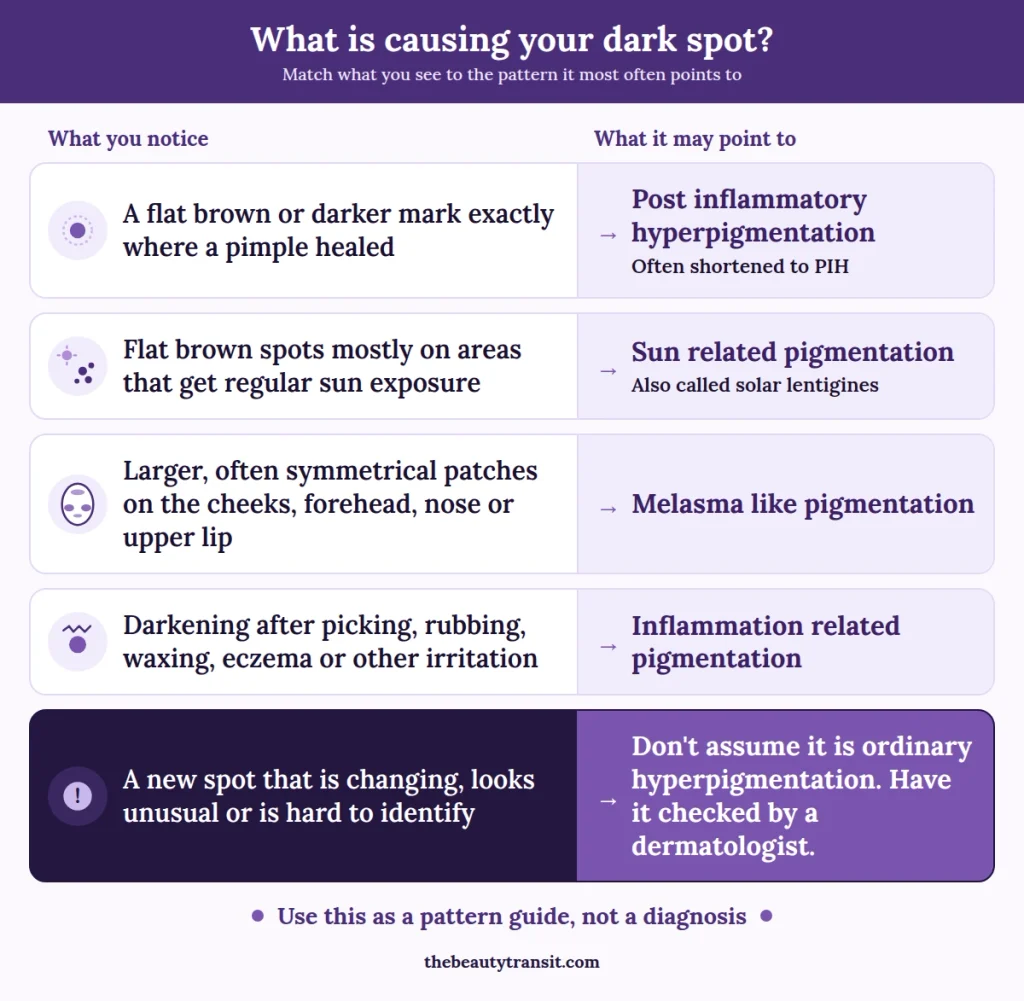
But not all dark spots are the same. A mark left after a pimple, scattered sun spots, or larger patches of pigmentation can have different causes. What happened before the spot appeared is often your first clue to what it is-and how to treat it.
So, What’s Causing Those Dark Spots On Face?
Acne and the Marks Pimples Leave Behind
The pimple is gone, but the flat brown mark is still there weeks later. Sound familiar? This can be post-inflammatory hyperpigmentation (PIH). It happens when inflammation triggers extra pigment in the skin.
Picking or squeezing can make these marks more stubborn. And if you’re still breaking out, treating the acne matters just as much as fading the spots. Otherwise, you’re clearing old marks while new ones keep appearing.
Sun Exposure and Sun Spots
Those small, flat brown spots that become more noticeable over the years may be linked to long-term sun exposure. Often called sun spots or age spots, they commonly show up on areas that regularly see the sun.
Sunlight can also make existing pigmentation look darker or last longer. That’s why sunscreen isn’t just for preventing future spots—it’s an important part of any routine aimed at fading the ones you already have.
Hormonal Changes and Melasma
If you’re seeing larger patches of pigmentation rather than individual spots—especially across both cheeks, the forehead or upper lip—melasma could be one possibility.
Hormonal changes, pregnancy and light exposure can play a role. Melasma can also be stubborn and may come back, so if your pigmentation follows this pattern, getting a dermatologist’s advice can save you from endlessly switching between brightening products.
Irritation Can Leave a Mark Too
Acne isn’t the only inflammation that can leave pigmentation behind. Eczema, scratching, burns or skincare products that repeatedly irritate your skin can all result in darker areas after the skin settles.
If your routine regularly leaves your face burning, stinging or very irritated, adding more strong actives may make things worse. First calm the irritation, then work on the pigmentation.
Picking, Rubbing and Waxing
Sometimes the problem isn’t a product—it’s what keeps happening to the same area.
Picking pimples, scratching, rubbing your skin or hair removal that repeatedly leaves an area sore can keep inflammation going. If a dark mark keeps coming back in exactly the same place, ask yourself: what keeps irritating this area?
Stopping that cycle may help more than simply adding another brightening serum.
Medications and Other Causes
Some medicines and medical conditions can also affect pigmentation. If new dark spots on face do not fit an obvious pattern, appear suddenly, or look unusual, it is better to have them assessed than to keep experimenting with brightening products.
Take a Closer Look at Your Dark Spots
Dark Spots vs Acne Scars: How Can You Tell?
It’s easy to call every mark left by a breakout an acne scar, but dark spots and scars are not the same thing.
If the mark is flat and only the color of your skin has changed, it may be post-inflammatory hyperpigmentation (PIH). The American Academy of Dermatology explains that these flat spots are not true acne scars and often fade with time.
If you can feel a change in the skin’s texture—such as a dip, pit or raised area—you’re more likely dealing with a scar. Dark-spot treatments can help with unwanted pigment, but they cannot repair an indented or raised scar.
And if pimples keep creating new marks, our guide on how to unclog pores can help you tackle the breakouts behind them.
What Ingredients Can Help Fade Dark Spots?
Azelaic Acid
Azelaic acid is used for pigmentation and can be useful when acne and dark spots on face occur together.
Retinoids
Retinoids can help fade pigmentation by increasing skin cell turnover. Start slowly, as using them too often can irritate the skin.
Niacinamide
Niacinamide is used in formulas for uneven tone and is listed by DermNet among topical options for PIH. It can fit easily into a simple routine for dark spots on face.
Vitamin C
Vitamin C is another topical option for pigmentation. Treat it as one part of a routine, not an overnight spot eraser.
Alpha Arbutin and Kojic Acid
Arbutin and kojic acid are used in pigmentation products. You do not need to combine them with every other brightening active.
Tranexamic Acid
Tranexamic acid appears in pigmentation treatments, including some melasma plans. Oral tranexamic acid requires medical assessment and is not a DIY treatment.
Exfoliating Acids
Alpha-hydroxy acids such as glycolic acid are used for some pigmentation concerns, but repeated irritation can work against dark spots on face.
Match the Right Ingredient to Your Dark Spots
Choose an ingredient based on your main skin concern, rather than trying several brightening actives at once:
Acne + dark marks: Try azelaic acid or niacinamide—both can fit well into a routine that also needs to manage breakouts.
Sensitive skin: Consider niacinamide or azelaic acid, starting slowly and watching how your skin responds.
Uneven skin tone: Ingredients such as niacinamide, alpha arbutin or tranexamic acid may help target uneven pigmentation.
Sun spots: Consider a retinoid or targeted brightening ingredient, alongside daily sunscreen.
Stubborn or melasma-like patches: Azelaic acid or tranexamic acid may be used for pigmentation, but persistent melasma often needs dermatologist-guided treatment.
Why More Exfoliation and Actives Don’t Mean Faster Fading
Using more acids, scrubs or brightening actives may seem like a faster way to fade dark spots, but overdoing them can irritate your skin and make pigmentation worse.
The American Academy of Dermatology recommends gentle skincare for melasma and notes that products that burn or sting can darken spots. Choose a few suitable products and give them time to work instead of constantly adding more.
Why Sunscreen Matters for Dark Spots
Sun exposure can darken existing pigmentation and make dark spots on face harder to fade, so sunscreen is part of the treatment—not just prevention.
The American Academy of Dermatology recommends a broad-spectrum SPF 30 or higher. For melasma or stubborn pigmentation, a tinted sunscreen containing iron oxides can also help protect against visible light.
Apply enough and reapply when needed, especially after swimming or sweating.
How to Build a Simple Skincare Routine for Dark Spots
Morning Routine
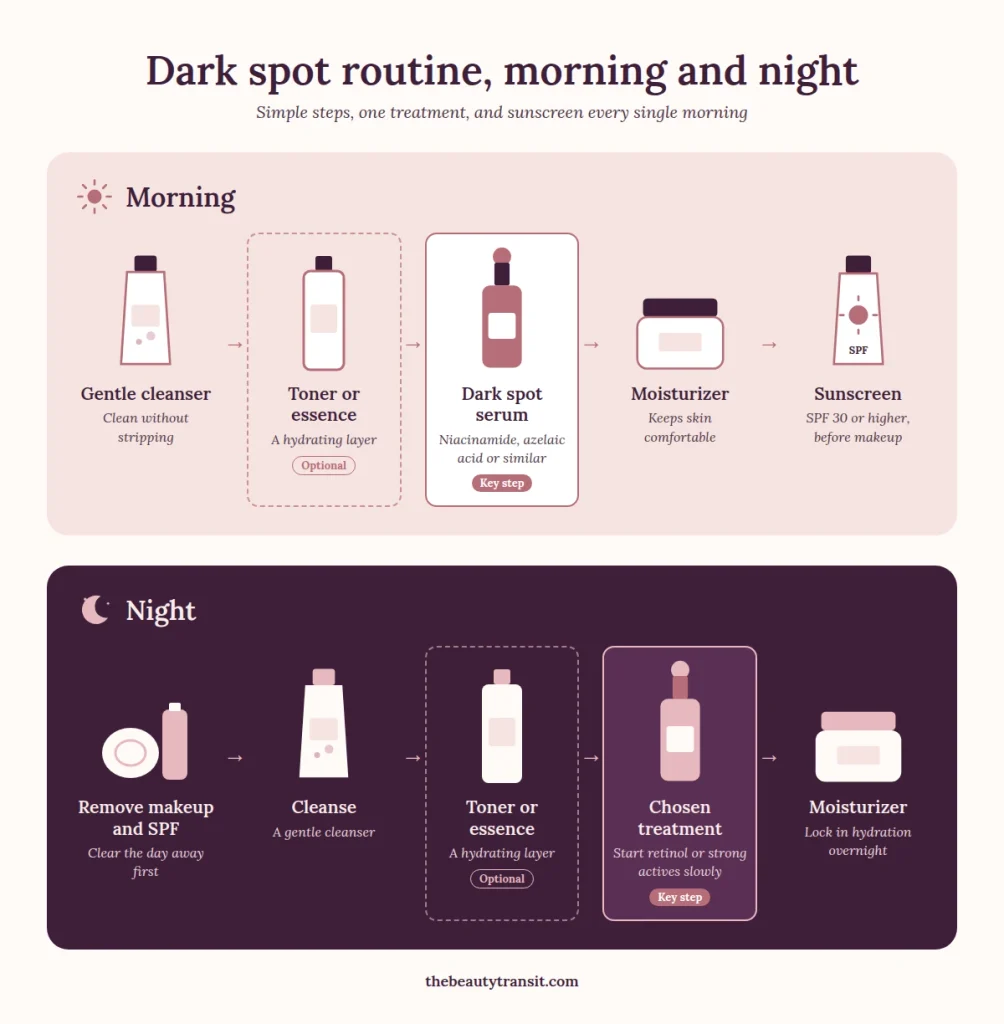
Keep it straightforward: gentle cleanser → suitable treatment or serum → moisturizer → sunscreen. You do not need a separate product for every possible brightening ingredient. Sunscreen should be the final skincare step before makeup.
Night Routine
At night: cleanse → chosen treatment → moisturizer. If you use a stronger active, introduce it gradually and follow the directions for that specific product. If you are unsure where treatments belong, our skincare routine order guide explains what goes first and why.
How to Introduce Actives Without Overdoing It
Start with one main treatment direction. Give your skin time to adjust before adding another strong active. This makes irritation easier to spot and prevents the routine from becoming unnecessarily complicated.
How Long Do Dark Spots Take to Fade?
Dark spots on face do not share one timeline. The AAD notes that a spot a few shades darker than natural skin may take about 6 to 12 months to fade on its own; deeper discoloration can take much longer.
Melasma can be persistent, and treatment results often take months. Compare occasional photos in similar lighting instead of judging progress every morning.
Why Aren’t My Dark Spots Fading?
You’ve been consistent with your routine, but the spots barely seem to change. Before assuming your treatment isn’t working, check these common problems:
You’re Expecting Results Too Quickly
Dark spots can take time to fade. Taking a photo in the same lighting every few weeks can help you notice gradual changes that are difficult to see day to day.
You Keep Switching Products
Trying a new serum every couple of weeks makes it almost impossible to know what’s actually working. Give a suitable routine enough time before replacing it.
Your Treatment Doesn’t Match Your Pigmentation
A product that helps post-acne marks may not be the right approach for melasma or sun-related pigmentation. Identify the type first, then choose the treatment.
Your Products Are Irritating Your Skin
More tingling, peeling or exfoliation doesn’t mean more progress. If your routine constantly irritates your skin, simplify it rather than adding another active.
You’re Treating the Spots but Not Protecting the Progress
Dark-spot treatment and daily sun protection work together. Without protection from light exposure, getting noticeable improvement can be more difficult.
It May Be Time to See a Dermatologist
If you’ve used an appropriate routine consistently and the pigmentation isn’t improving—or a spot is changing in size, shape or color—get it professionally assessed.reconsider what you are treating rather than simply increasing treatment strength.
Professional Treatments for Dark Spots
If skincare alone isn’t enough, a dermatologist may recommend professional treatment based on the type of pigmentation and your skin tone:
- Prescription creams: Stronger ingredients can target stubborn pigmentation such as melasma or PIH.
- Chemical peels: Carefully applied acids remove surface layers of skin and may gradually improve discoloration.
- Microneedling: Tiny controlled injuries stimulate skin renewal and may help certain types of pigmentation.
- Laser and light treatments: Target pigment more directly but must be chosen carefully for your skin type.
- Combination treatment: Melasma often needs a mix of sun protection, medication and sometimes procedures.
Professional doesn’t automatically mean better or faster. Some procedures can actually trigger post-inflammatory hyperpigmentation (PIH), so treatment should be selected for your specific pigmentation and skin tone.
How to Prevent New Dark Spots
Prevention follows naturally from the causes. Protect your skin from sunlight. Manage acne instead of picking it. Reduce repeated rubbing and irritation. Avoid harsh DIY treatments. Do not over-exfoliate. And use a routine your skin can tolerate consistently.
Once dark spots on face start improving, keep addressing the original trigger. Fading a mark is useful; preventing the next one is better.
Home Remedies for Dark Spots on Face: What Is Actually Worth Trying?
Aloe Vera
How to use: Apply a thin layer of plain aloe vera gel to clean skin and leave it on as a soothing moisturizer.
For dark spots: Aloe contains compounds studied for effects on pigmentation, but evidence for fading dark spots at home is limited.
Caution: Patch test first, especially if your skin is sensitive.
Turmeric
How to use: Mix a small amount of turmeric with a gentle base such as plain yogurt to make a short-contact mask, then rinse thoroughly.
For dark spots: Curcumin in turmeric has been studied for effects related to pigmentation, but DIY turmeric masks are not well-established dark-spot treatments.
Caution: It can irritate sensitive skin and temporarily stain the skin yellow.
Lemon Juice
How to use: Don’t apply lemon juice directly to dark spots.
For dark spots: Although lemon is often promoted as a natural brightener, using fresh lemon juice is not a reliable or skin-friendly way to fade pigmentation.
Caution: It can irritate skin, and citrus plus sunlight can cause phytophotodermatitis and potentially leave darker pigmentation.
DIY Scrubs
How to use: If you want exfoliation, choose a formulated gentle exfoliant rather than homemade abrasive scrubs.
For dark spots: Removing surface flakes may temporarily make skin look smoother or brighter, but scrubbing cannot remove deeper excess pigment.
Caution: Over-scrubbing can cause inflammation and make dark marks worse.
Frequently Asked Questions About Dark Spots on Face
What causes dark spots on the face?
Common causes include acne-related PIH, irritation, long-term sun exposure and melasma.
Can dark spots go away on their own?
Some PIH gradually fades, but deeper pigment and ongoing triggers can make dark spots on face last longer.
What is the best ingredient for dark spots?
There is no universal best ingredient. Choose according to the likely cause, other skin concerns and tolerance.
Are acne dark spots the same as acne scars?
No. A flat post-acne mark may be PIH. A true acne scar involves a change in skin texture, such as an indentation or raised area.
Does niacinamide help with dark spots?
Niacinamide is used in products for uneven pigmentation and is one possible part of a routine for dark spots on face.
Can vitamin C fade dark spots?
Vitamin C is used in pigmentation-focused skincare, but results depend on the discoloration, formula and consistent use.
Does retinol help with dark spots?
Retinoids can help pigmentation concerns but may irritate skin, so introduce them carefully.
Does exfoliating remove dark spots faster?
Not necessarily. Over-exfoliation can cause inflammation and work against fading dark spots on face.
Why are my dark spots getting darker?
Sun exposure, acne, friction and irritation can contribute. If the spot itself is changing, have it assessed.
Does sunscreen help with dark spots?
Yes. Sun protection helps prevent additional darkening and supports treatment of dark spots on face.
Can dark spots come back after they fade?
Yes. New pigmentation can develop if the original trigger returns, and melasma can recur.
The Bottom Line
Dark spots on face do not all have the same cause, so they should not all be treated the same way. Identify the likely pattern, stop ongoing triggers, choose a tolerable treatment, protect your skin from light and give it time.
The TBT approach is simple: identify → stop the trigger → treat → protect → give it time → reassess. And if a pigmented spot is new, changing or unusual, get it checked instead of
Pingback: How to Get Rid of Dark Eye Circles: What Works for Each Type
Pingback: : Acne Skincare Routine: What to Use & What to Skip