

You’ve tried the cold spoon. Maybe the tea bags too.
And your dark circles are still there. The problem? Most advice on how to get rid of dark eye circles skips the one step that matters most: figuring out why yours are there.
Quick answer: dark circles usually come from extra pigment, visible blood vessels, or shadows from puffiness and hollows. And plenty of us have a mix. That’s exactly why one eye cream can be brilliant for your friend and do absolutely nothing for you.
On this Page
At a Glance: Match the Fix to the Cause
| What you see | Likely cause | What to try |
|---|---|---|
| Brown, flat color | Extra pigment | Sunscreen + vitamin C, niacinamide or azelaic acid; professional peels or pigment-targeting treatments if stubborn |
| Blue or purple tint | Thin skin, visible vessels | Caffeine + gentle retinoid; vascular laser treatments if needed |
| Shadowy or hollow look | Tear trough / volume loss | Hydration for dryness; filler or fat transfer for lost volume |
| Puffy, worse in morning | Fluid retention / allergies | Cold compress, head elevation, allergy management; professional options for persistent bags |
| A bit of everything | Mixed causes | Combine treatments based on the main causes |
Step 1: Figure Out Your Type
Most people don’t fit perfectly into one box. You may have brown pigment plus a hollow, or thin skin plus morning puffiness. Still, finding the biggest contributor tells you where to put your effort.
Pigment Circles
These look brown and fairly flat. The color tends to stay even when the lighting changes.
Extra melanin, sun exposure, genetics and post-inflammatory pigmentation from eczema or rubbing can all play a part.
Blood Vessel Circles
These often look blue, pink or purple. Thin under-eye skin can make the vessels underneath easier to see.
Tiredness may make them look more obvious, but poor sleep isn’t necessarily the original cause.
Hollow or Puffy Circles
Sometimes the skin isn’t actually darker. You’re seeing a shadow.
A tear-trough hollow can cast a shadow. Puffiness can do the same thing from the opposite direction. That’s why a brightening serum won’t fix every ‘dark circle.’

Try This 30-Second Dark Circle Check
Stand in good natural light and gently stretch the skin under one eye. Don’t tug hard.
If the darkness stays brown, pigment may be a bigger part of the problem. If a shadow improves, your facial structure may be contributing. If blue-purple color becomes more obvious, thin skin and visible vessels may be involved.
This is only a clue, not a diagnosis. A clinical review of periorbital hyperpigmentation describes the same stretch test as one way clinicians distinguish pigment, vascular color and shadowing.
Don’t Miss Allergies, Eczema and Eye Rubbing
Do your circles come with a blocked nose, itchy eyes or lots of rubbing? Don’t automatically reach for another eye cream.
Cleveland Clinic explains that nasal allergies can cause dark under-eye circles called allergic shiners. Congestion can slow blood flow in veins around the nose, making the area look darker.
Mayo Clinic also lists eczema, contact dermatitis and rubbing or scratching the eyes among common contributors. So if the area is itchy or irritated, treating the irritation matters too.
Step 2: Treat Your Actual Type
For Pigmented Dark Circles
If your under-eyes look more brown than blue or purple, extra pigment may be the main problem.
Use sunscreen daily and avoid rubbing the area. Vitamin C, niacinamide or azelaic acid can help with pigmentation. Start with one gentle treatment and use it consistently rather than layering several strong ingredients.
If you also have facial dark spots, see our best vitamin C serums for dark spots guide.
For Blue or Purple Dark Circles
Blue, purple or pink circles can come from visible blood vessels showing through thin under-eye skin.
Caffeine can temporarily make them less noticeable. A gentle retinoid may support collagen and improve thin skin over time, but introduce it slowly because irritation can make darkness worse.
New to retinoids? Our retinol for beginners guide explains how to start carefully.
For Puffy Under-Eyes
If your circles are worse in the morning, puffiness may be creating a shadow.
Try a cold compress or caffeine to temporarily reduce swelling. Sleeping with your head slightly raised, managing allergies and avoiding frequent eye rubbing can also help. Mayo Clinic also suggests limiting excess salt when fluid retention contributes to under-eye bags.
For Under-Eye Hollows
If you have a visible tear trough or hollow, the darkness may actually be a shadow rather than pigmentation.
Hydrating eye creams can make the skin look smoother, but they cannot fill a true hollow. If the darkness changes noticeably in different lighting, shadowing is likely contributing.
Skincare can improve the skin around the hollow, but correcting lost volume requires the professional treatments we cover below.
Professional Treatments for Dark Circles
If skincare isn’t making much difference, the next step isn’t necessarily a stronger eye cream. A dermatologist can identify the cause and choose a treatment that actually targets it.
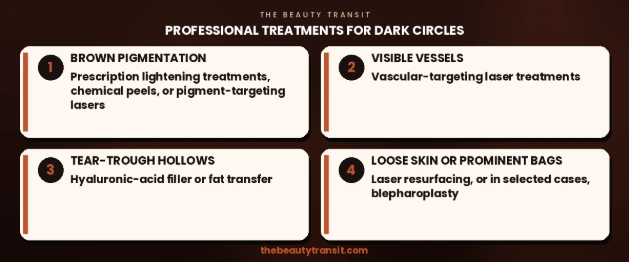
These treatments aren’t interchangeable. Pigment needs pigment treatment, visible vessels need a vascular approach, hollows need structural correction, and puffiness needs the swelling addressed. Many people have more than one cause, so treatment may need to combine approaches. Research on periorbital dark circles discusses these different treatment options. So these treatments can also be answer for how to get rid of dark eye circles.
Why Do They Look Worse in the Morning?
If you wake up looking much darker or puffier and improve as the day goes on, fluid may be part of the story.
Mayo Clinic notes that under-eye fluid retention can be more noticeable on waking or after a salty meal. Allergies and lack of sleep can add to the puffiness too.
So before buying another brightening serum, notice the pattern. Morning-only puffiness needs a different plan from flat brown pigmentation.
Habits That Help No Matter Your Type
- Get enough sleep. It may not erase genetic circles, but too little sleep can make existing shadows look more obvious.
- Stop rubbing your eyes. Repeated irritation can contribute to inflammation and pigmentation.
- Wear broad-spectrum SPF 30+ every morning. This is especially important when pigment is part of your dark circles.
- Manage allergies if they’re part of the picture. Treating the trigger makes more sense than only covering the result.
Risky Remedies to Skip
Lemon juice under the eyes? Please don’t.
Citrus on skin plus sunlight can trigger phytophotodermatitis, which can leave irritation and extra pigmentation. That’s exactly the opposite of what we’re trying to achieve.
Tea bags and cucumber are different. When they’re chilled, they can act like a cold compress and temporarily calm puffiness. Just don’t expect them to remove pigment or fill a hollow.
What About Makeup and Concealer?
Sometimes you don’t need a twelve-week plan. You need to look awake in twenty minutes. Fair.
Skincare works on the underlying concern. Makeup covers what you see today. Use both.
- Blue or purple circles: try a peach or orange corrector that suits your skin depth.
- Brown circles: use a concealer/corrector that neutralizes the discoloration without turning the area orange.
Keep the layers thin. This is a same-day fix, not treatment.
Why Genetics Matter More Than You’d Think
Some people sleep well, wear sunscreen and still have visible circles. Genetics can affect pigmentation, skin thickness and facial structure.
So if yours never disappear completely, that doesn’t automatically mean your routine failed. Your realistic goal may be improvement, not perfectly blank under-eyes.
Realistic Timelines
This is the annoying bit: skincare needs time.
- Pigment-focused skincare: think in weeks to months, not days.
- Retinoids and skin-quality changes: also take consistent use over weeks to months.
- Cold compresses: can help puffiness quickly, but the effect is temporary.
- Hollows: creams may soften dryness, but they won’t rebuild lost volume.
If you’ve matched the treatment to the likely cause and still see no meaningful improvement after a few months, that’s a good point to ask a dermatologist instead of endlessly switching products.
When to See a Doctor Instead
Most dark circles are cosmetic.
Mayo Clinic advises getting a one-sided under-eye change checked if it keeps getting worse. For puffiness, seek medical advice if it comes with problems such as vision changes, irritation, headaches or a rash.
The point isn’t to panic over ordinary dark circles. It’s simply to know when an eye cream isn’t the right answer.
How to Get Rid of Dark Eye Circles: The Bottom Line
There’s no single fix because there’s no single cause.
Figure out the main contributor first. Pigment? Visible vessels? Puffiness? Hollows? Allergies? Or a mix?
Then treat that problem specifically. Protect the area from sun, keep irritation down and give skincare enough time to work. Thats the whole story behind how to get rid of dark eye circles.
And if the issue is structural, persistent or unusual, that’s when professional advice becomes more useful than buying eye cream number seven.
FAQs
Can dark circles be permanently removed?
Some types can improve a lot, but permanent removal isn’t realistic for every cause. Genetic pigment, thin skin and structural hollows may remain partly visible.
Do under-eye creams actually work?
They can — when the ingredients match the problem. Brightening ingredients may help pigment; hydration can help dryness. A cream cannot replace lost volume.
Why do my dark circles get worse when I’m tired?
Lack of sleep can make existing shadows and puffiness more noticeable, even when tiredness isn’t the original cause.
What’s the fastest fix before an event?
Use a cool compress for puffiness, then a thin layer of color corrector and concealer. That’s camouflage, not treatment, but it works for the job you need right now.
Are dark circles genetic?
Often, genetics play a role in pigmentation, skin thickness and facial structure. That helps explain why two people can use the same routine and get very different results.