
Finding a good sunscreen for acne prone skin sounds simple until you actually start shopping.
One feels greasy by lunchtime. Another leaves a white cast. A formula everyone calls “lightweight” somehow feels heavy on your face. And if you use acne treatments, your skin may be dry and flaky instead of oily.
So we didn’t choose these sunscreens just because they say “non-comedogenic” on the bottle. We looked at what actually makes a sunscreen easier—or harder—to wear every day.
Some of these picks are better for dry skin. Some make more sense if you hate white cast. One is here specifically for workouts and sweaty days. The point is to find the one that fits your skin and your routine, not simply the sunscreen with the biggest SPF number.
In this Article
Best Sunscreens for Acne-Prone Skin at a Glance
| Best for | Our pick | Why we like it |
| Best overall | EltaMD UV Clear SPF 46 | A balanced everyday option made with acne-prone skin in mind |
| Best lightweight everyday wear | COSRX Vitamin E Vitalizing SPF 50+ | Light, comfortable and easy to wear without a mineral white cast |
| Best for dry or treatment-dried skin | CeraVe Hydrating Sheer SPF 30 | A better fit when acne treatments leave your skin dry or tight |
| Best mineral for sensitive skin | Cetaphil Sheer Mineral Face SPF 50 | A fragrance-free mineral option made with sensitive skin in mind |
| Best tinted for post-acne marks | La Roche-Posay Anthelios Mineral Tinted SPF 50 | Tint helps with white cast and adds iron oxides |
| Best for exercise and outdoor use | Neutrogena Sport Face SPF 70+ | Affordable and water-resistant for sweaty days |
What Actually Matters When Choosing Sunscreen for Acne-Prone Skin?
Start with the sunscreen part
It is easy to get distracted by niacinamide, antioxidants and other skincare ingredients. They can be nice extras, but sunscreen still has one main job: protecting your skin from the sun.
The American Academy of Dermatology recommends a broad-spectrum SPF 30 or higher. If you are swimming or sweating, water resistance matters too.
So don’t reject a sunscreen simply because it doesn’t contain an acne-fighting ingredient. Your cleanser, serum or treatment can handle that job.
Acne-prone skin isn’t always oily
This is where a lot of sunscreen advice becomes too general.
You can have acne and still have dry skin. Retinoids and other acne treatments can also leave your face tight, flaky or more sensitive than usual.
If that sounds like your skin, an ultra-matte sunscreen made for oil control may feel awful after a few hours. A more comfortable, hydrating formula may be the better choice.
“Non-comedogenic” is helpful, but it isn’t a guarantee
If you are looking for a sunscreen for acne prone skin, a non-comedogenic or “won’t clog pores” claim is a useful place to start.
Just don’t treat it as a promise that you can never break out.
Skin is individual. Even a well-formulated sunscreen with thousands of happy users may not agree with everyone.
Think about what normally makes you stop wearing sunscreen
This is probably the most useful question to ask before buying.
Does sunscreen usually make you too shiny? Does it dry you out? Leave a cast? Pill under makeup? Feel heavy when you sweat?
Start there.
A sunscreen you genuinely don’t mind wearing every morning is much more useful than a supposedly perfect one sitting untouched in a drawer.
Here is your list of the sunscreens according to what you need.
1. EltaMD UV Clear Broad-Spectrum SPF 46 — Best Overall
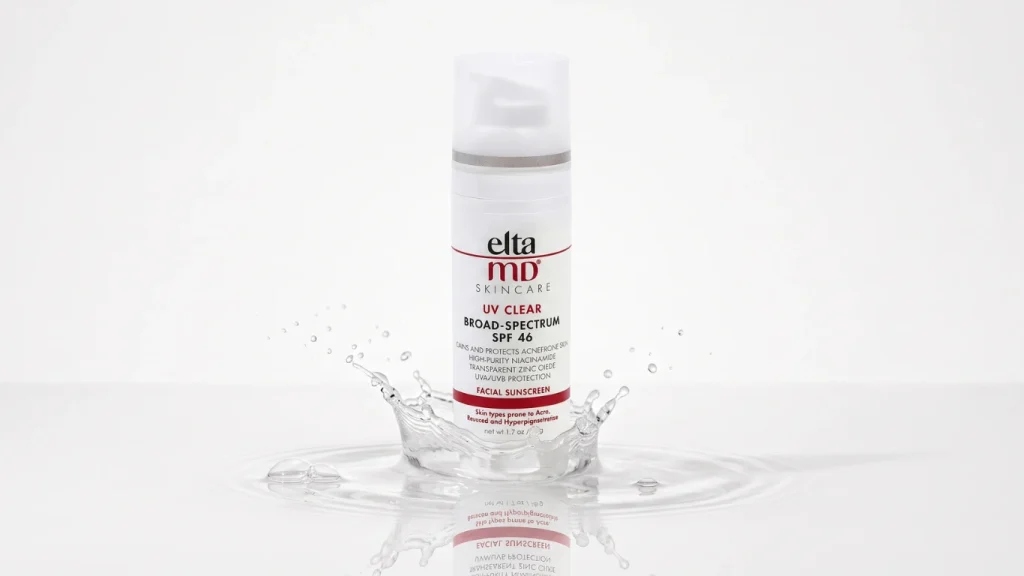
Best for: Someone who wants one dependable everyday option for acne-prone skin.
SPF: 46
Sunscreen type: Hybrid
Key features: Oil-free · Niacinamide
Finish/texture: Lightweight lotion
Fragrance: Fragrance-free
Pore-clogging claim: Non-comedogenic
Water resistance: Not water-resistant
Size: 1.7 fl oz
Price: About $45 for 1.7 fl oz
Why We Picked It
EltaMD UV Clear is the easiest all-round recommendation in this group.
It was made with acne-prone skin in mind, but it doesn’t try to behave like another acne treatment. The formula includes niacinamide, feels light enough for everyday wear and can fit into a morning routine without adding another heavy layer.
We also like that the classic UV Clear has been around long enough to have a much deeper consumer track record than many newer acne-focused sunscreen launches.
Pros
- Comfortable enough for everyday use
- Works well when you don’t have one very specific sunscreen problem to solve
- Fragrance-free
- Niacinamide is a useful extra
- Long consumer track record
- Available in tinted versions too
Cons
- Not water-resistant
- Can still pill or look shiny on some skin, depending on what is underneath
TBT Verdict
If you are standing in front of six options and have no idea where to begin, we’d start here.
EltaMD isn’t our cheapest pick, our highest SPF or our workout sunscreen. What it does well is everyday wear. That makes the premium price easier to justify for someone who wants one reliable daily option.
If you sweat heavily or spend a lot of time outdoors, though, we’d choose something water-resistant instead.
Who should skip it: Anyone who regularly needs water resistance or doesn’t want to spend around $45 on a small bottle.
2. COSRX Vitamin E Vitalizing Sunscreen SPF 50+ — Best Lightweight Everyday Wear
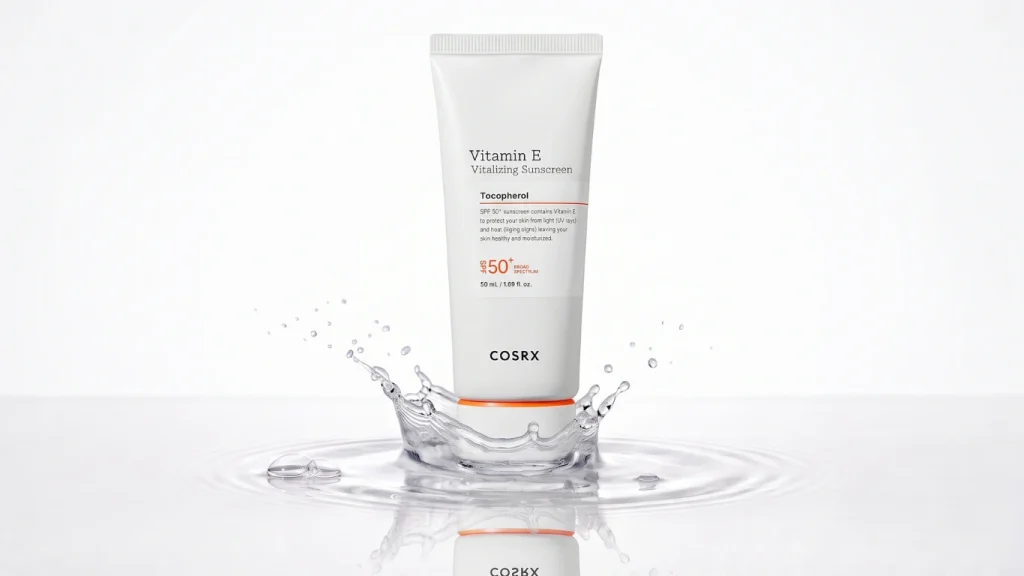
Best for: Anyone who knows they should wear sunscreen every day but hates feeling it on their face.
SPF: 50+
Sunscreen type: Chemical
Key features: No white cast · Makeup-friendly
Finish/texture: Lightweight cream
Fragrance: Contains fragrance
Pore-clogging claim: Not officially stated
Water resistance: Not water-resistant
Size: 1.69 fl oz / 50 mL
Price: About $18–$23 for 1.69 fl oz
Why We Picked It
COSRX is here for a simple reason: some sunscreens are technically great but annoying to wear.
This one is designed to feel light, doesn’t have the obvious cast you can get from mineral formulas and sits comfortably in an everyday skincare-and-makeup routine.
We originally considered putting it in an oily-skin category, but that would be too neat. Some users find the finish more dewy than expected. Calling it our lightweight everyday pick is a much better reflection of what it actually offers.
Pros
- Doesn’t leave the typical mineral white cast
- Easy to fit under makeup
- More affordable than premium facial SPFs
- SPF 50+
- Good option for people who dislike heavier sunscreen textures
Cons
- Contains fragrance
- May look dewy rather than matte on some skin
- No water resistance
- Not our first choice for very reactive skin
TBT Verdict
COSRX makes sense when the feeling of sunscreen is what usually puts you off wearing it.
Don’t buy it because you’re expecting a super-matte oily-skin sunscreen. That’s not really its strength. Buy it because you want an everyday SPF that feels less obvious on your face.
If you already know fragrance irritates your skin, we’d choose one of the fragrance-free options instead.
Who should skip it: Very fragrance-sensitive skin or anyone who needs sunscreen for swimming, exercise or heavy sweating.
3. CeraVe Hydrating Sheer Sunscreen SPF 30 — Best for Dry or Treatment-Dried Acne-Prone Skin
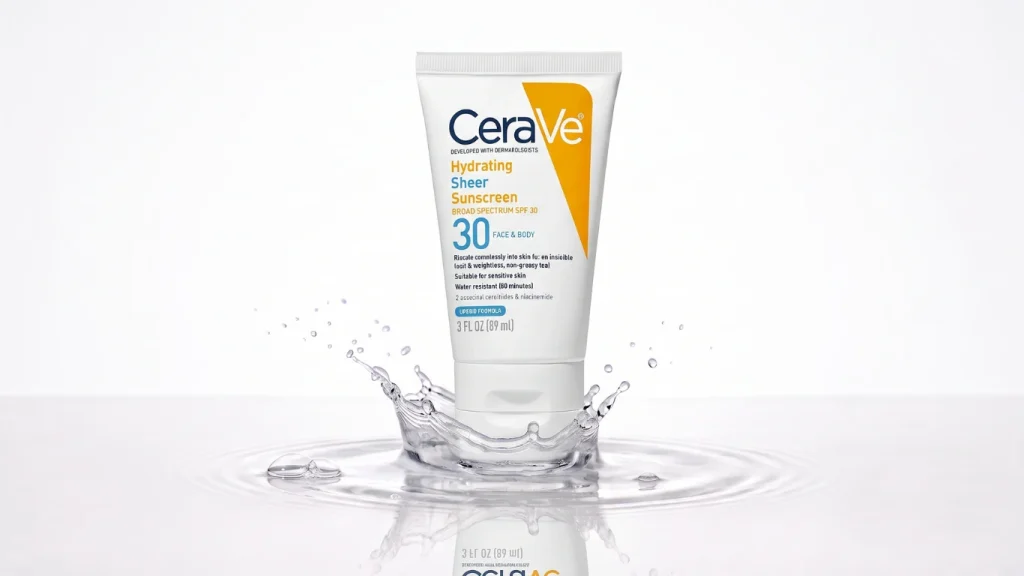
Best for: Acne-prone skin that feels dry, tight or flaky, especially after acne treatments.
SPF: 30
Sunscreen type: Hybrid
Key features: Ceramides · Hyaluronic acid
Finish/texture: Ultra-light fluid
Fragrance: Fragrance-free
Pore-clogging claim: Non-comedogenic
Water resistance: 80 minutes
Size: 3 fl oz
Price: About $14 for 3 fl oz
Why We Picked It
Not everyone with acne is trying to control oil.
If you use retinoids or other drying treatments, you may have the opposite problem. Your skin can be acne-prone and still feel tight around your cheeks or flaky around active breakouts.
That’s where CeraVe makes sense. Ceramides and hyaluronic acid support the hydrating side of the formula, while the 3 fl oz bottle also gives you considerably more product than many of the facial sunscreens here.
Pros
- Good value for the bottle size
- Useful when acne and dryness happen at the same time
- Fragrance-free
- 80-minute water resistance
- Doesn’t force treatment-dried skin into another mattifying product
Cons
- SPF 30 may look less impressive next to SPF 50 and 70 bottles
- Not the obvious choice when oil control is your main concern
- The larger face-and-body packaging doesn’t feel as refined as some dedicated facial sunscreens
TBT Verdict
We’d choose CeraVe based on what your acne routine is doing to your skin now, not what you think acne-prone skin is supposed to look like.
If your face feels dry after your acne treatment, you don’t need to punish it with an aggressively matte sunscreen just because you still get pimples.
CeraVe fills that gap nicely—and at around $14 for 3 fl oz, the value is hard to ignore.
Who should skip it: Someone whose main problem is excess oil and who wants the lightest possible daytime finish.
4. Cetaphil Sheer Mineral Face Liquid SPF 50 — Best Mineral for Sensitive Acne-Prone Skin
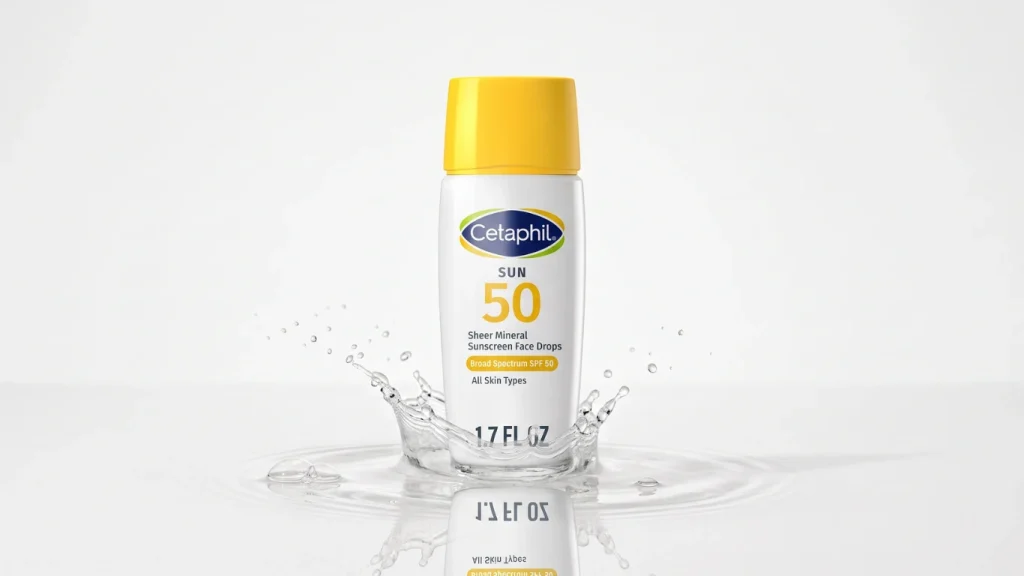
Best for: Sensitive acne-prone skin when you prefer a mineral sunscreen.
SPF: 50
Sunscreen type: Mineral
Key features: Hypoallergenic · Sensitive-skin focused
Finish/texture: Ultra-light liquid
Fragrance: Fragrance-free
Pore-clogging claim: Won’t clog pores
Water resistance: 80 minutes
Size: 1.7 fl oz / 50 mL
Price: Check current Amazon price
Why We Picked It
If your skin gets irritated easily and you prefer mineral sunscreen, Cetaphil is the one we’d look at first.
The formula is fragrance-free, hypoallergenic and made with sensitive skin in mind. It also has 80 minutes of water resistance, which makes it more versatile than some of the everyday-only sunscreens in this guide.
There is a catch, though: the white cast. It comes up often enough in user feedback that we wouldn’t describe this as invisible on every complexion, particularly on medium to deeper skin tones.
Pros
- A straightforward mineral option for sensitive skin
- Fragrance-free
- Thin liquid texture rather than a thick mineral cream
- 80-minute water resistance
- Useful if chemical sunscreens tend to bother your skin
Cons
- White cast can be noticeable
- May cling to dry areas
- Some users mention eye-area discomfort
- Not our first choice for deeper skin tones if an invisible finish is important
TBT Verdict
Cetaphil is worth considering because of its sensitive-skin credentials, not because we think it has the prettiest finish of the six.
If your skin likes mineral sunscreen and you can live with some cast, it is a sensible choice.
But if you’ve already bought mineral sunscreens that ended up in a drawer because they looked chalky, don’t repeat the same mistake. The tinted La Roche-Posay below will probably make more sense.
Who should skip it: Anyone who considers visible white cast a deal-breaker.
5. La Roche-Posay Anthelios Mineral Tinted SPF 50 — Best Tinted for Post-Acne Marks
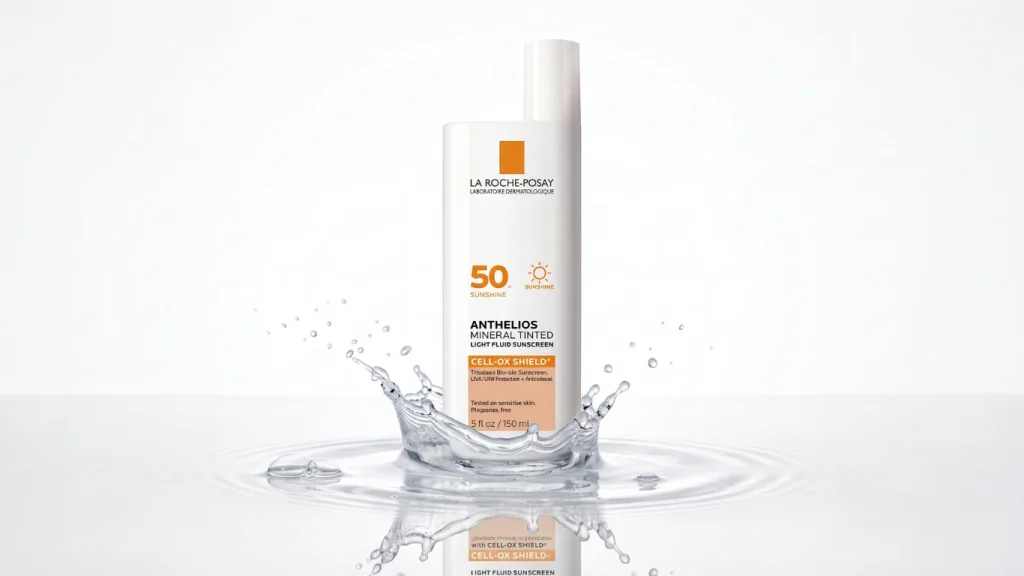
Best for: Acne-prone skin when post-acne dark marks and mineral white cast are both concerns.
SPF: 50
Sunscreen type: Mineral
Key features: Tinted · Oil-free
Finish/texture: Ultra-light fluid
Fragrance: Fragrance-free
Pore-clogging claim: Non-comedogenic
Water resistance: 40 minutes
Size: 1.7 fl oz / 50 mL
Price: About $40 for 1.7 fl oz
Why We Picked It
There is a real reason for the tint here.
Post-acne marks can hang around long after the pimple has disappeared. Tinted sunscreens containing iron oxides can add protection against visible light, which is particularly relevant when hyperpigmentation is a concern.
The tint also helps solve another common mineral-sunscreen problem: that obvious pale cast across the face. Just keep the expectation realistic. This sunscreen helps protect skin when discoloration is a concern. It isn’t a treatment for fading existing acne marks.
Pros
- Tint serves a useful purpose beyond adding color
- Better option if untinted mineral SPF looks chalky on your skin
- Fragrance-free
- Can give a little complexion-evening effect
- Particularly relevant when post-acne discoloration is part of your concern
Cons
- Expensive for 1.7 fl oz
- Only 40 minutes of water resistance
- The tint won’t suit every complexion perfectly
- Doesn’t replace a dark-spot treatment
TBT Verdict
If you have ever put on a mineral sunscreen, looked in the mirror and immediately wanted to wash it off because of the cast, this is the kind of alternative worth considering.
The iron-oxide tint is also what separates it from simply being another mineral SPF on our list.
Still, don’t force it if the shade looks wrong. A sunscreen that makes you uncomfortable with how your skin looks isn’t going to become your everyday sunscreen.
Who should skip it: Anyone who dislikes tinted products or can’t find a tint that blends naturally with their complexion.
6. Neutrogena Sport Face SPF 70+ — Best for Sweat, Exercise and Outdoor Use
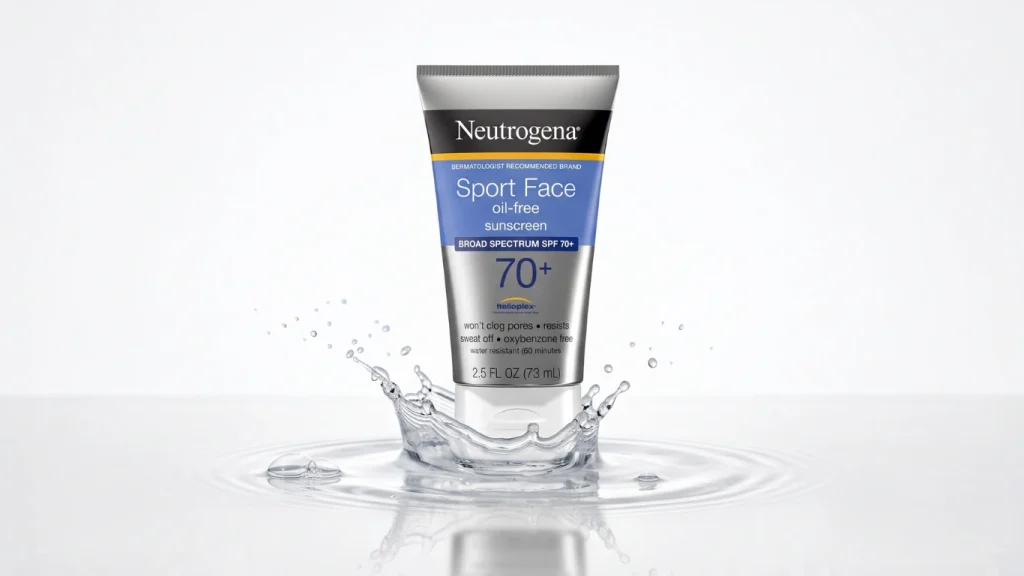
Best for: Workouts, hot days and longer periods outdoors.
SPF: 70+
Sunscreen type: Chemical
Key features: Oil-free · Sweat-focused
Finish/texture: Lotion
Fragrance: Not marketed as fragrance-free
Pore-clogging claim: Non-comedogenic
Water resistance: 80 minutes
Size: 2.5 fl oz
Price: About $12 for 2.5 fl oz
Why We Picked It
There are days when a beautiful under-makeup finish isn’t the most important thing.
If you’re going for a run, spending the afternoon outside or know you’re going to sweat, water resistance suddenly matters a lot more.
Neutrogena gives you 80 minutes of it. It is also one of the cheapest products in this guide, so you can apply it generously without feeling like you’re watching a $40 bottle disappear.
Pros
- Made for active days
- 80-minute water resistance
- Affordable
- Good amount of product for the price
- Practical sunscreen to keep specifically for workouts and outdoor plans
Cons
- Feels more like a traditional sunscreen than our lighter everyday picks
- Some users report eye-area or skin irritation
- Not the product we’d choose mainly for makeup wear
- SPF 70+ still needs proper application and reapplication
TBT Verdict
Don’t choose Neutrogena just because 70+ is the biggest SPF number on this page.
Choose it when you’re actually going to use what makes it different: the water resistance.
For sitting at your desk, we’d rather wear EltaMD or COSRX. For a sweaty outdoor day, we’d rather have this. And at around $12, it also quietly becomes our value pick without needing a separate “best budget” category.
Who should skip it: Very reactive skin or anyone mainly looking for an elegant everyday sunscreen under makeup.
Which One Should You Choose?
If you’re still comparing bottles, make the decision simpler.
You want a good all-round everyday sunscreen: EltaMD UV Clear.
You hate heavy sunscreen: COSRX.
Your acne treatment has made your skin dry: CeraVe.
You have sensitive skin and prefer mineral SPF: Cetaphil.
White cast and post-acne marks bother you: La Roche-Posay Tinted.
You exercise, sweat or spend more time outdoors: Neutrogena Sport Face.
You don’t need the product that wins the most categories. You need the one that solves the problem you actually have.
Is Your Sunscreen Actually Causing Your Breakouts?
If new bumps show up after you start a sunscreen, it is tempting to blame the newest bottle immediately.
Sometimes that may be right. Sometimes it isn’t.
Think about what else changed around the same time. If you started a retinoid, exfoliant, moisturizer and sunscreen within the same week, the timing doesn’t tell you much.
Also look at the reaction itself. Your usual clogged pores or pimples are different from sudden itching, burning, redness or a rash.
And sunscreen isn’t something we’d normally expect to cause an acne-treatment-style “purge.” If you introduced a retinoid or exfoliating acid at the same time, that can make the situation much harder to read.
If clogged pores are already part of the problem, our How to Unclog Pores the Right Way Without Damaging Your Skin guide explains what actually helps—and why scrubbing harder usually isn’t the answer.
How Sunscreen Fits Into Your Acne Routine
Sunscreen comes last in your morning skincare
Keep the order simple:
Cleanser → treatment or serum → moisturizer if needed → sunscreen → makeup
You don’t need to build a ten-step morning routine around it.
If you’re still unsure which product goes where, our Skincare Routine Order: What Goes First and What Do You Actually Need? guide breaks it down step by step.
If it pills, don’t throw the bottle away yet
Sometimes sunscreen isn’t the real problem.
A rich moisturizer underneath, too many serums or simply using more layers than your skin needs can make products roll up into those annoying little flakes.
Try simplifying what’s underneath first. Give your skincare a little time to settle, then apply sunscreen without endlessly rubbing it around.
If that works, you don’t need another bottle.
What about reapplying over makeup?
This is one of those pieces of sunscreen advice that sounds much easier on paper.
Yes, sunscreen needs to be reapplied when you’re outdoors for extended periods. The FDA advises reapplying at least every two hours, and swimming or sweating can mean reapplying sooner depending on the product’s water-resistance directions.
Makeup obviously makes that less convenient.
The important thing is not to assume that a tiny dusting of SPF powder or quick spray automatically gives you the same protection as a properly applied layer of sunscreen.
At night, get it off without attacking your face
You don’t need to scrub your skin raw because you wore sunscreen.
For an ordinary daily SPF, your regular cleanser may be enough if it removes everything comfortably.
Heavier makeup and water-resistant sunscreen can be easier to remove with a first cleansing step followed by your normal cleanser.
Either way, your face should feel clean, not stripped.
SPF 30 vs SPF 50 vs SPF 70: Bigger Does Not Always Mean Better
The American Academy of Dermatology recommends SPF 30 or higher. That doesn’t mean SPF 70 is automatically the best product on this list.
Look at CeraVe SPF 30 and Neutrogena SPF 70+.
CeraVe is here because it makes sense when acne-prone skin is also dry. Neutrogena is here because it can handle sweat and water exposure better.
Those are two completely different jobs.
The SPF number matters, but it isn’t the only number worth thinking about.
Mineral or Chemical: Which Is Better for Acne-Prone Skin
Neither automatically wins.
Mineral sunscreen can be a good option if your skin is sensitive or you simply prefer mineral formulas. The downside can be white cast and, depending on the product, a heavier feel.
Chemical and hybrid sunscreens can offer lighter, more transparent textures that some people find easier to wear every day.
So don’t choose based on fear of one sunscreen type.
Choose based on the whole formula, how your skin handles it and whether you’ll actually use it.
Does Fragrance Matter?
It can—but not because fragrance automatically clogs pores.
Some sensitive or reactive skin simply doesn’t tolerate fragranced products very well.
That’s why we clearly mention fragrance in every product box. COSRX contains fragrance, while several of our other picks are fragrance-free.
If you’ve used fragranced skincare for years without a problem, you don’t necessarily need to avoid it just because you have acne.
If fragrance regularly irritates your skin, though, there’s no reason to make sunscreen another experiment.
How We Evaluated These Sunscreens
We evaluated each sunscreen for acne-prone skin fit, SPF protection, formula, texture, finish, fragrance, pore-clogging claims, water resistance, white cast, makeup compatibility, price and overall value.
We also checked official product information, dermatology guidance, Amazon demand and recurring real-user feedback. Popularity alone did not decide our recommendations—we chose each product for the specific problem it solves.
FAQs
What is the best sunscreen for acne prone skin?
Our best overall pick is EltaMD UV Clear SPF 46. It is a good everyday starting point if you don’t have one very specific problem to solve. But someone with treatment-dried skin, for example, may be happier with CeraVe, while someone who exercises outdoors may get more from Neutrogena Sport Face.
Can sunscreen clog pores?
A sunscreen can disagree with your individual skin, but that doesn’t mean sunscreen in general clogs pores. Looking for “non-comedogenic” or “won’t clog pores” is a useful starting point when you have acne-prone skin, but it isn’t a guarantee.
Is SPF 30 enough for acne-prone skin?
Yes. Dermatologists recommend broad-spectrum SPF 30 or higher. Applying enough and reapplying when needed matter too.
Is mineral sunscreen better for acne-prone skin?
Not necessarily. Mineral sunscreen may suit some sensitive skin, while chemical or hybrid formulas can offer lighter textures. Your skin’s response to the complete formula matters more than automatically choosing one type.
Which sunscreen is best if my acne treatment makes my skin dry?
CeraVe Hydrating Sheer SPF 30 is our pick for this situation. If your acne treatment has left your skin tight or flaky, a comfortable hydrating sunscreen can make more sense than another oil-control formula.
Can tinted sunscreen help with post-acne dark marks?
A tinted sunscreen containing iron oxides can add visible-light protection, which is useful when hyperpigmentation is a concern. It helps protect your skin from exposure that can contribute to discoloration; it doesn’t directly fade existing marks.
How often should I reapply sunscreen?
If you’re outdoors, sunscreen generally needs to be reapplied at least every two hours. Swimming, sweating and towel drying can mean you need to reapply sooner. For water-resistant sunscreen, follow its 40- or 80-minute directions.
Can I use sunscreen over acne treatments?
Yes. Follow the directions for your acne treatment, then use sunscreen as the last step of your morning skincare before makeup.
How do I know if my sunscreen is breaking me out?
Look at when the bumps started, whether they look like your usual acne and what else changed in your routine. If you introduced several new products at once, it becomes much harder to know which one is responsible.
Final Takeaway
Shopping for sunscreen for acne prone skin gets much easier once you stop looking for one bottle that’s supposedly perfect for everyone.
If you want a dependable everyday starting point, go with EltaMD UV Clear SPF 46.
If you hate heavy sunscreen, COSRX Vitamin E SPF 50+ is more appealing.
If your acne treatment leaves you dry, look at CeraVe Hydrating Sheer SPF 30.
If sensitive skin has you leaning toward mineral sunscreen, Cetaphil Sheer Mineral Face SPF 50 is worth considering—as long as you’re okay with the possibility of some white cast.
For post-acne marks and a tinted finish, La Roche-Posay Anthelios Mineral Tinted SPF 50 makes more sense.
And when sweat and outdoor time are the real issue, Neutrogena Sport Face SPF 70+ is the practical pick.
You don’t need to find a sunscreen that sounds flawless.
You need one that works well enough with your skin that putting it on every morning doesn’t become another battle.
Affiliate disclosure: The Beauty Transit may earn a commission from qualifying purchases made through links in this guide, at no extra cost to you. Our recommendations are based on product fit and research, not affiliate commission.
Price note: Prices and Amazon availability can change. Approximate prices are included to make products easier to compare.
Pingback: Skincare Routine Order: What Goes First & What You Need