
So you’ve decided to try retinol. Good call! But then you start shopping, and it gets confusing fast.
One bottle has a number on it. Another doesn’t. Every label promises smoother skin, and every article warns you about peeling and redness. It’s enough to make you close the tab and forget the whole thing.
We get it. So here’s the honest truth: the best retinol serum for beginners isn’t the strongest one or the one everyone’s raving about. It’s the one that fits your skin and what you actually want to change.
That’s exactly what this guide will help you figure out. We’ve picked five great options, each one for a different kind of beginner. Find the one that sounds like you, and we’ll show you how to start using it without upsetting your skin.
Let’s get into it.
In this Article
At a Glance: Which Retinol Serum Should You Start With?
| Serum | Start here if… | Retinol strength | Skin type fit | Main thing to know | Link |
| CeraVe Resurfacing Retinol Serum | Post-acne marks and uneven texture are your main concern | Not disclosed by brand | Oily, combination, acne-prone. Also suits easily irritated skin | Fragrance-free | $18 |
| Minimalist Retinol 0.3% Face Serum | You want to know your exact starting strength | 0.3% retinol | Normal to dry | Fragrance-free; oil-like texture | $11 |
| Neutrogena Rapid Wrinkle Repair Retinol Renewal Serum | Early fine lines are your main reason to start | Not disclosed by brand | Normal to combination | Made with first-time users in mind | $19 |
| La Roche-Posay Retinol B3 Serum | You want a hydrating serum feel | Not disclosed by brand | Normal, combination, dehydrated | Contains alcohol denat. and fragrance | $45 |
| RoC Retinol Correxion Deep Wrinkle Serum | Wrinkles are the whole reason you are starting | Not disclosed by brand | Normal to dry | Contains fragrance | $22 |
These five are not ranked. Each one suits a different skin goal, so start with the row that sounds most like you.
Wait, What Is Retinol?
Retinol is a form of vitamin A used in skincare to help with concerns such as fine lines, uneven texture, acne and some types of dark spots. It tells your skin cells to turn over and renew themselves faster. The American Academy of Dermatology (AAD) recommends introducing retinoids gradually because they can irritate the skin.
Over time, that can mean smoother texture, softer-looking fine lines and a more even skin tone.
The 5 Best Retinol Serums for Beginners
Each serum below could be the best retinol serum for beginners, just for a different kind of beginner. We have noted what each brand officially states and kept that separate from our own assessment.
1. CeraVe Resurfacing Retinol Serum
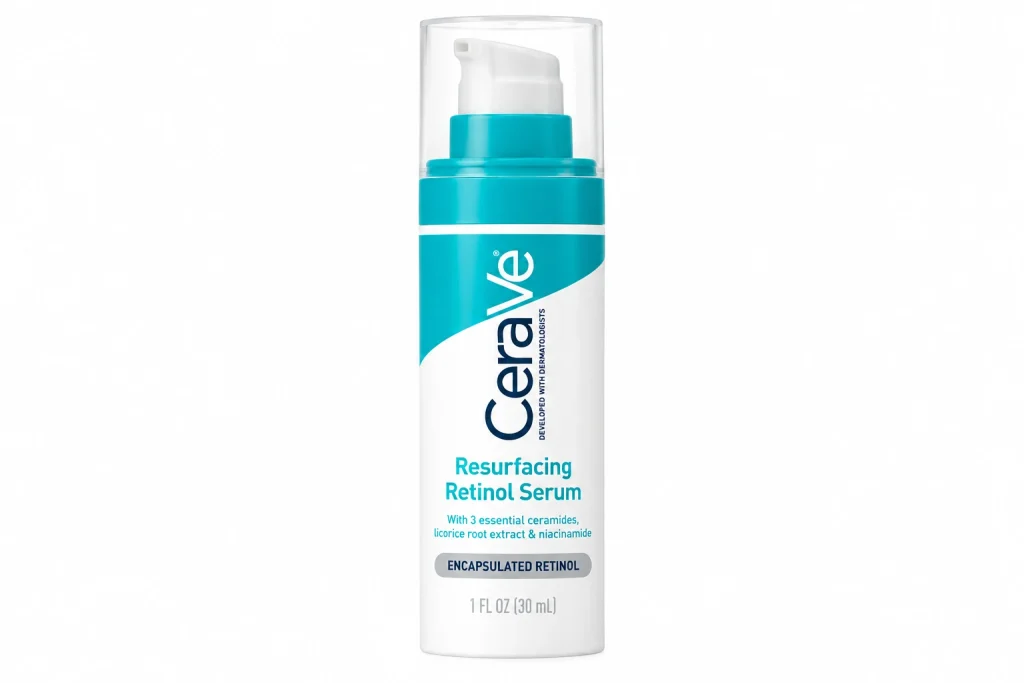
Best for: Beginners whose main concerns are post-acne marks, visible texture and uneven-looking tone.
Skin type fit: Oily, combination and acne-prone skin. Also a sensible fragrance-free choice if your skin irritates easily.
Retinol strength: Not disclosed by the brand.
Texture: Lightweight serum.
Why we picked it: CeraVe made this serum especially for post-acne skin. It combines encapsulated retinol with niacinamide and three ceramides to help improve the look of post-acne marks and uneven texture.
What we like about the formula: Niacinamide and licorice root extract make it especially relevant when leftover marks and uneven tone are part of the problem, while the ceramides support your skin barrier as it adjusts to retinol. CeraVe describes it as fragrance-free and non-comedogenic, which matters if you break out easily.
Pros:
Fragrance-free
non-comedogenic
barrier-supporting ceramides; a clear focus on post-acne marks and texture.
Cons:
Retinol concentration is not disclosed.
Who should skip it: Someone who wants a clearly stated retinol percentage above everything else, or whose main goal is deeper wrinkles rather than marks and texture.
Price: about $18
2. Minimalist Retinol 0.3% Face Serum
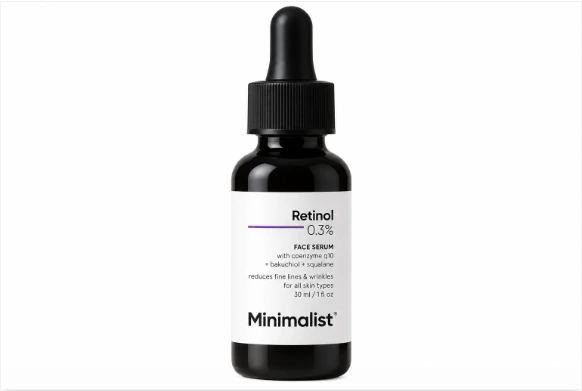
Best for: Beginners who feel more comfortable buying a retinol serum with a clearly disclosed concentration.
Skin type fit: Normal to dry skin. Very oily skin may find the texture too slippery.
Retinol strength: 0.3% retinol.
Texture: Water-free, squalane-based serum with an oil-like feel.
Why we picked it: This is the most transparent option in our five when it comes to strength. Minimalist confirms 0.3% pure retinol in a water-free formula, along with CoQ10, vitamin E, squalane and 1% bakuchiol oil.
What we like about the formula: Knowing you are starting at 0.3% takes a lot of guesswork out of a first purchase. Squalane gives the serum a cushiony slip that dry skin tends to like, and the brand describes the formula as fragrance-free and non-comedogenic. One point to be clear on: bakuchiol is not a retinoid, so it does not add to the 0.3% retinol figure.
Pros:
Clearly disclosed strength
fragrance-free
budget-friendly
antioxidant and emollient supporting ingredients.
Cons:
The oil-like texture will not suit everyone, especially oily skin.
Who should skip it: Someone who strongly dislikes oily serum textures or has very oily skin that prefers a light gel.
Price: about $11
3. Neutrogena Rapid Wrinkle Repair Retinol Renewal Serum
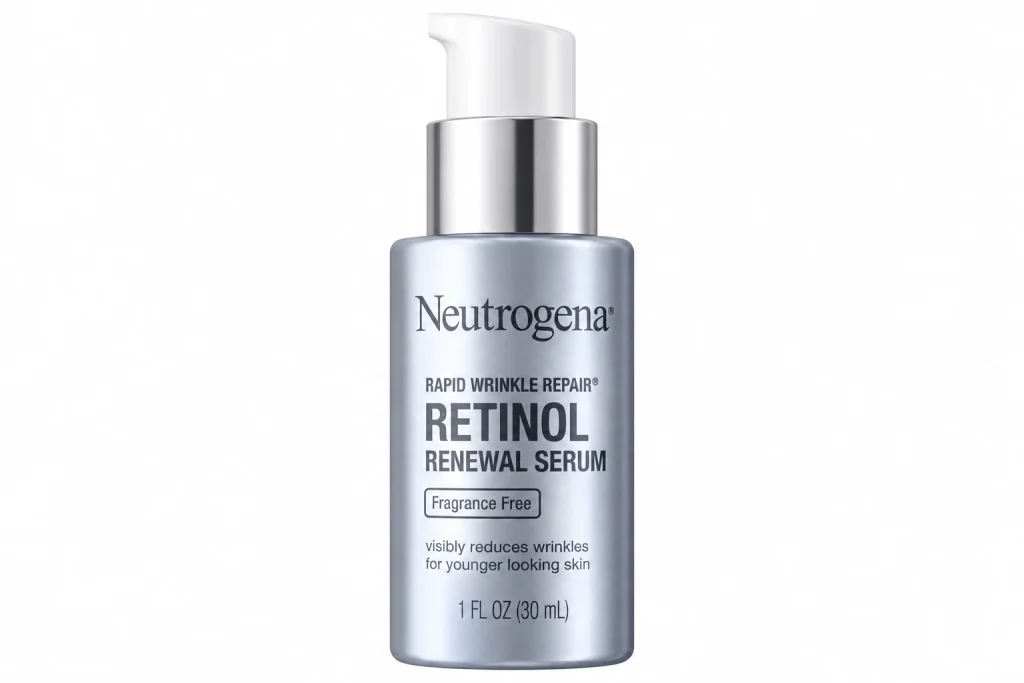
Best for: Someone starting retinol mainly for fine lines, dullness and early visible signs of aging.
Skin type fit: Normal to combination skin that prefers a light serum.
Retinol strength: Not disclosed by the brand.
Texture: Lightweight serum.
Why we picked it: Neutrogena describes the Retinol Renewal Serum as suitable for people new to retinol and tells beginners to start every other night before building up. Few brands speak this directly to first-time users, which helps if you feel nervous about starting.
What we like about the formula: The brand’s own directions do some of the hand-holding for you. Neutrogena also tells users to follow with moisturizer and wear broad-spectrum SPF 30 or higher during the day, which lines up with the routine we recommend below.
Pros:
Clear beginner positioning
lightweight feel
step-by-step starting directions from the brand
focused on fine lines and dullness.
Cons:
Retinol percentage is not disclosed
similar-looking products in the range make it easy to buy the wrong one.
Who should skip it: Someone who wants a disclosed retinol percentage, prefers a richer cream, or is mainly targeting post-acne marks (CeraVe is the better fit there).
Price: about $19
4. La Roche-Posay Retinol B3 Serum
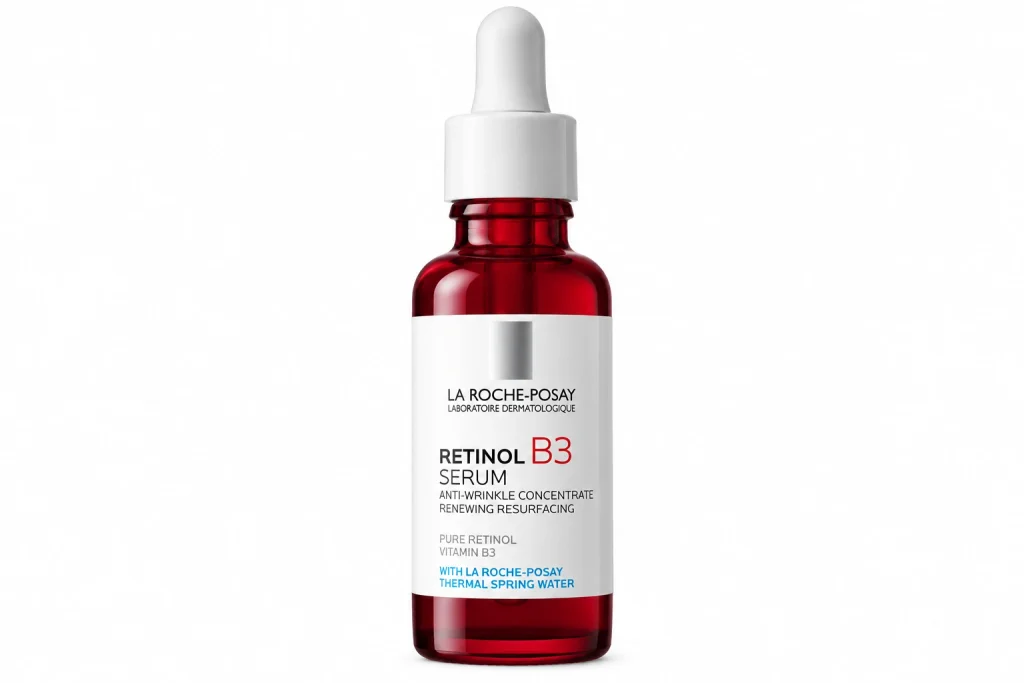
Best for: Beginners who want retinol in a lightweight serum with several hydrating ingredients.
Skin type fit: Normal, combination or dehydrated skin that does not react to fragrance or alcohol.
Retinol strength: Not disclosed by the brand.
Texture: Lightweight, hydrating serum.
Why we picked it: La Roche-Posay combines retinol with niacinamide, glycerin and sodium hyaluronate, a form of hyaluronic acid. That makes it feel quite different from the post-acne-focused CeraVe and the oil-like Minimalist.
What we like about the formula: Glycerin and hyaluronic acid help draw water into the skin, which is why this is the hydrating choice of the five. Niacinamide is a helpful partner for retinol, and the brand describes the serum as non-comedogenic.
Pros:
Several hydrating ingredients
lightweight serum format
non-comedogenic
Cons:
Contains fragrance and alcohol denat
retinol percentage is not disclosed.
Who should skip it: Anyone with fragrance-sensitive or reactive skin, anyone who finds alcohol-heavy skincare stings or dries them out, and shoppers on a tight budget.
Price: about $45
5. RoC Retinol Correxion Deep Wrinkle Serum
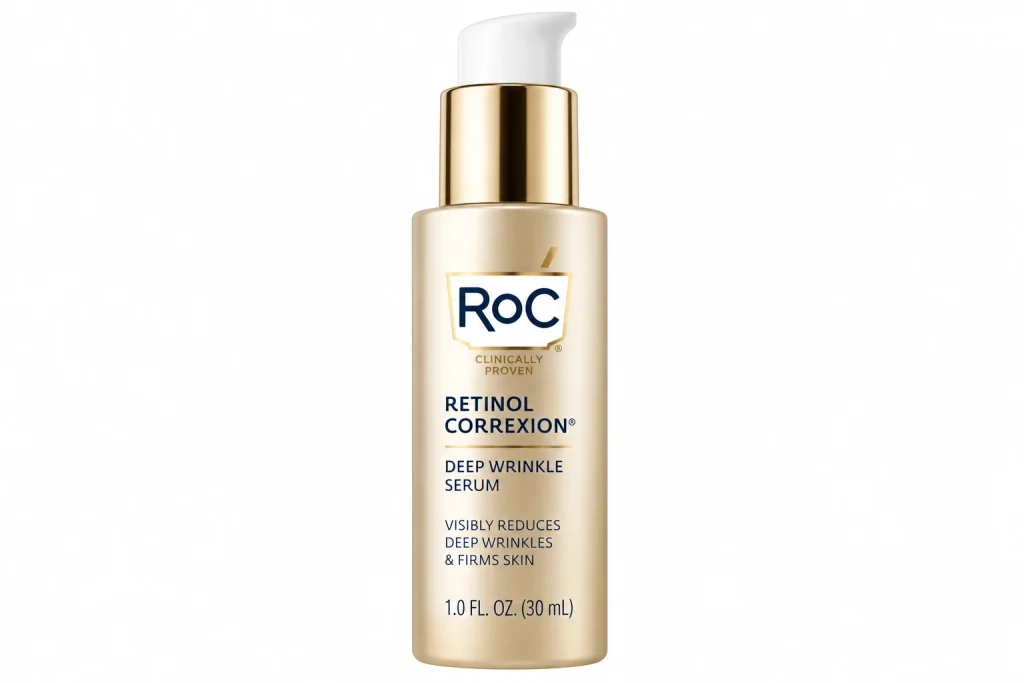
Best for: Beginners whose main reason for adding retinol is the appearance of wrinkles and fine lines.
Skin type fit: Normal to dry skin that is comfortable with fragranced skincare.
Retinol strength: Not disclosed by the brand.
Texture: Silicone-based moisturizing serum.
Why we picked it: RoC keeps its Deep Wrinkle Serum tightly focused on visible signs of aging. Alongside retinol, the ingredient list includes glycerin, plus allantoin and bisabolol, two ingredients often used in soothing formulas.
What we like about the formula: If wrinkles are the whole reason you are starting, this is the most focused formula in the group. The silicone base gives it a smooth, moisturizing feel, and RoC advises new users to introduce it gradually rather than jumping straight to nightly use.
Pros:
Clear wrinkle focus
moisturizing base
gradual-use guidance from the brand.
Cons:
Contains fragrance
concentration is not disclosed.
Who should skip it: Someone who avoids fragranced skincare, wants a clearly stated retinol percentage, or is mainly dealing with post-acne marks.
Price: about $22
Before You Pick One, Know What Kind of Beginner You Are
Being new to retinol does not automatically mean you have sensitive skin. You could be a beginner with oily, dry, acne-prone, sensitive or fairly resilient skin. Think about what your skin normally tolerates well, because the right first serum should fit your skin – not just carry a “beginner-friendly” label.
What Do You Actually Want Retinol to Improve?
Now that you have seen all five serums, come back to the reason you wanted retinol in the first place. Your main concern is the easiest way to narrow the list down.
| If your main concern is… | Start by looking at |
| Post-acne marks and uneven texture | CeraVe Resurfacing Retinol Serum |
| Early fine lines, and you are nervous about starting | Neutrogena Retinol Renewal Serum |
| Wrinkles you already notice | RoC Retinol Correxion Deep Wrinkle Serum |
| Knowing exactly how strong your retinol is | Minimalist Retinol 0.3% |
| A hydrating serum feel | La Roche-Posay Retinol B3 (if fragrance and alcohol are not a problem) |
Then Check What Fits Your Skin
| If your skin is… | Start by looking at |
| Oily or acne-prone | CeraVe |
| Dry | Minimalist or RoC |
| Easily irritated or reactive | CeraVe or Minimalist (both fragrance-free), introduced very slowly |
| Normal or combination | Neutrogena or La Roche-Posay |
| On a tight budget | Minimalist |
If your skin is mainly dry and tight, your skin barrier may need attention first. If blackheads are your biggest concern, a salicylic acid cleanser for blackheads may make more sense. Not sure what is actually clogging your pores? Our guide on how to unclog pores the right way can help you tell blackheads, closed comedones and sebaceous filaments apart before you add another active.
Starting Retinol: A Simple First-Month Guide
Even the best retinol serum for beginners can irritate your skin if you do too much, too soon. This simple plan helps you avoid that.
Getting Started With Your First Retinol
Keep the routine boring on purpose, and use retinol at night only.
- Cleanse and pat your skin completely dry.
- Use a pea-sized amount for your whole face. More is not better, and extra product mostly means extra irritation.
- Spread it evenly, keeping it away from the eye area, the corners of your nose and your lips unless your product says otherwise.
- Follow with a simple moisturizer.
- Apply broad-spectrum sunscreen the next morning.
If your product’s directions differ, follow them. If you are unsure where treatments belong, see our skincare routine order guide. If your skin reacts easily, you might also try the serum on a small patch along your jawline for a few nights first.
Weeks 1 and 2: Start Slowly
For many beginners, every other night is already enough to start, and some people prefer even more spacing if they are dry or easily irritated. The AAD also recommends starting slowly and using moisturizer to reduce irritation. Follow your product’s instructions, but do not increase frequency just because a calendar says two weeks have passed.
Weeks 3 and 4: Increase Only if Your Skin Is Comfortable
If your skin is adjusting well, you can gradually add another retinol night to your week. Give your skin time to settle before increasing again. There is no need to rush toward using it every night.
If you notice ongoing stinging, significant redness or uncomfortable peeling, use retinol less often or take a break until your skin feels comfortable again.
More retinol does not automatically mean faster or better results. Consistency matters more than reaching nightly use. A routine your skin can comfortably maintain is far more useful than one that repeatedly leaves it irritated.
What Should You Avoid on Retinol Night?
When you are new to retinol, keep the rest of the night simple. Strong exfoliating acids, scrubs and other irritating treatments on the same night can increase irritation and make it harder to work out what your skin is reacting to.
If you already use vitamin C, many people keep it for the morning and retinol for the night. Exfoliating acids such as glycolic or salicylic acid can go on different nights once your skin has settled. You do not need to introduce everything at once.
Do You Need the Retinol Sandwich?
The “retinol sandwich” means moisturizer, then retinol, then another layer of moisturizer. It is a practical way to make retinol feel gentler if your skin tends to get dry, but it is not a rule everyone has to follow. Check the directions for your serum and keep your moisturizer simple.
Your moisturizer should make this routine easier, not leave your skin feeling heavy or looking flat. If that is happening, see why your moisturizer can make skin look dull before changing several products at once.
Sunscreen Is Part of a Retinol Routine
Retinoids can make your skin more sensitive to the sun, which is why the AAD advises daily sunscreen when you use them. Several brands in this guide say the same in their directions. Sun exposure can also darken the very marks and uneven tone you may be trying to fade.
Choose a broad-spectrum SPF 30 or higher that you will actually wear every day. If your skin breaks out easily, our guide to sunscreen for acne-prone skin can help you find one that does not feel heavy.
When Retinol Irritation Is a Sign to Slow Down
Some change in the first few weeks is common. What matters is whether it stays mild and settles, or keeps getting worse.
Usually mild adjustment
- Slight dryness or light flaking
- Mild tightness that eases after moisturizer
- A little pinkness that fades within a day
What to do: use the serum less often, keep moisturizing and avoid adding any new actives.
A reason to stop and reassess
- Burning that does not ease
- Swelling
- Redness that lingers or spreads
- Stinging from products that never bothered you before
- Raw, cracked or weepy skin, or irritation that gets worse each week
What to do: stop using retinol and let your skin calm down. If it does not settle, speak to a pharmacist or dermatologist before trying again. Significant irritation is not proof that the product is “working.”
If dryness is the main thing you are struggling with, our fall skincare routine explains how to adjust your routine when skin starts feeling tight.
Retinol Can Make Dark Spots Look Worse
Retinol is often used to improve uneven-looking tone, but irritation can work against that goal. The AAD notes that irritation can trigger hyperpigmentation, particularly in darker skin tones. That is one more reason to start slowly instead of pushing your skin through redness or burning.
If dark marks are one of the main reasons you are starting retinol, protecting your skin from irritation matters just as much as choosing the bottle. Go slower than you think you need to, and do not skip sunscreen.
How Long Does Retinol Take to Work?
Retinol is a long-game ingredient. Do not increase the amount or jump to nightly use just because you have not noticed a big change after a week or two.
Many people need around three months of consistent use before they can fairly judge changes in texture and tone, and fine lines usually take longer. The timeline varies by product, skin concern and routine. Manufacturer studies, including those some brands in this guide publish, should not be read as a promise for every user.
You Do Not Have to Keep Going Stronger
The goal is not to reach the highest percentage or use retinol every night. If a beginner-friendly serum is giving you the results you want and your skin is comfortable, you do not need to “graduate” to something stronger, however many months have passed.
Consider a stronger product only when you have a real reason to change, such as results clearly leveling off after several months of steady use. Stronger sounding more advanced is not a reason.
When Retinol May Not Be Right for You
The AAD pregnancy skin-care guidance advises avoiding retinoids, including over-the-counter retinol, during pregnancy. If you are pregnant, trying to become pregnant or breastfeeding, ask your doctor what is appropriate for you.
It is also worth speaking to a doctor or dermatologist first if you have active eczema, a rosacea flare, broken or sunburned skin, or if you already use a prescription acne or retinoid treatment. Do not add an over-the-counter retinol on top of a prescription retinoid without advice.
This guide is for general product comparison and does not replace individual medical advice.
How We Evaluated These Beginner Retinol Serums
A beginner retinol should not just look good on an ingredient list. We looked at how each formula is likely to fit into a real routine when someone is using retinol for the first time.
We compared retinol strength (where the brand discloses it), delivery type, texture, supporting ingredients such as ceramides, niacinamide, glycerin, hyaluronic acid and squalane, and possible irritants such as fragrance and alcohol. We then matched each serum to the skin concern and skin type it suits best, rather than naming one overall winner, because the best retinol serum for beginners depends on the person using it.
Frequently Asked Questions
What Retinol Percentage Should a Beginner Start With?
If you’re completely new to retinol, around 0.1% to 0.3% retinol is a sensible starting range. Starting lower gives your skin time to adjust before you consider stronger formulas.
But don’t judge a serum by percentage alone. A 0.3% retinol isn’t automatically gentler or harsher than every other product because the complete formula matters too. The delivery system, texture, supporting ingredients such as ceramides or niacinamide, and potential irritants can all affect how a product feels on your skin.
What Is the Difference Between Retinol, Retinal and Prescription Retinoids?
Retinoids are a family of vitamin A ingredients used in skincare. Retinol is a common and generally gentler option you can buy without a prescription. Retinal works more directly and can be stronger than retinol, while prescription retinoids like tretinoin are stronger treatments prescribed by a doctor.
Is CeraVe Resurfacing Retinol Serum good for beginners?
It can be a sensible choice if your main concerns are post-acne marks and uneven texture, especially for oily or acne-prone skin. It uses encapsulated retinol with niacinamide and ceramides and is fragrance-free, but CeraVe does not disclose a retinol percentage.
Should I moisturize before or after retinol?
Most routines use moisturizer after the serum. If your skin gets dry, you can also apply a thin layer before retinol as a buffer. Follow the directions for your specific product and keep the rest of the routine gentle.
Can I use niacinamide with retinol?
Yes, most people can. Niacinamide is already included in two serums in this guide, CeraVe and La Roche-Posay, so you do not need a separate niacinamide serum just because you use retinol.
Can I Use Retinol and Vitamin C Together?
Yes, you can use retinol and vitamin C in the same skincare routine, bu as a beginner use them separately. Use vitamin C in the morning and retinol at night, followed by moisturizer.
If you’re new to retinol, introduce it first and give your skin time to adjust before adding multiple strong actives. If you notice persistent stinging, redness or peeling, simplify your routine and reduce how often you use retinol.
Can I put retinol serum around my eyes?
Keep a regular face serum away from the eye area unless the product says it is safe to use there. The skin around your eyes is thinner and tends to get irritated more easily.
The Bottom Line
Choosing the best retinol serum for beginners is not about picking the highest percentage, the biggest review count or the most dramatic claims. Start with the concern you actually want to improve, be honest about what your skin tolerates, and choose a formula you can introduce slowly.
Whichever serum you pick, a pea-sized amount, a slow start, a good moisturizer and daily sunscreen will do more for your skin than rushing toward a stronger routine.
Affiliate disclosure: As an Amazon Associate, The Beauty Transit earns from qualifying purchases made through links on this page, at no extra cost to you. Affiliate availability does not determine which products are included or how they are described.
This article is for general information and is not medical advice. If you have a skin condition or ongoing irritation, please speak to a dermatologist or qualified healthcare professional.
Pingback: Best Gentle Retinol Cream: 4 Picks for Sensitive Skin