
Finding a tinted sunscreen sounds simple until you actually start looking. One has the right SPF but the tint looks orange. Another matches your skin but feels too heavy. And some look great with a tiny amount, then completely different when you apply enough for proper sun protection.
That’s why the best tinted sunscreens aren’t just about SPF or a long shade range. The right one needs to work with your skin tone, undertone, skin type and what you actually want the tint to do.
To make the choice easier, we narrowed it down to seven options for different skin needs. Start with the quick comparison below, then we’ll help you figure out which one makes the most sense for your skin.
On this Page
Best Tinted Sunscreens at a Glance
| Product | Best For | SPF | Finish |
| EltaMD UV Clear Tinted | Acne-prone skin | 46 | Lightweight, natural |
| Beauty of Joseon Daily Tinted Fluid | Shade range | 40 | Natural soft glow |
| CeraVe Hydrating Mineral Sheer Tint | Affordable hydration | 30 | Sheer, healthy glow |
| Colorescience Face Shield Flex | Dark spots & pigmentation | 50 | Demi-matte |
| Tower 28 SunnyDays | Makeup-like coverage | 30 | Natural |
| DRMTLGY Universal Tinted Moisturizer | Dry skin / dewy finish | 46 | Dewy |
| Australian Gold Mineral Tinted Face | Oily skin / budget | 50 | BB-cream-like |
Start with your main concern, then check skin type, shade, undertone, coverage and full-amount wearability.
What Makes a Tinted Sunscreen Different?
A tinted sunscreen gives you sun protection plus a little color. The tint can help avoid the white or grey cast that some sunscreens leave behind. Depending on the formula, it may look almost invisible or give you light to medium coverage.
Tint Is Not Just About Coverage
Not every tint looks the same on skin. Some are so sheer that you barely notice them, while others can look more like a light foundation.
If you want your tinted sunscreen to replace some of your makeup, a very sheer tint may not be enough. But if you prefer a natural, no-makeup look, a heavier tint might feel like too much. The right choice depends on how much coverage you actually want.
What Iron Oxides and Visible Light Have to Do With It
Sunscreen protects your skin from UV rays, but UV isn’t the whole story. Visible light can also make dark spots and uneven pigmentation worse, especially on darker skin tones.
That’s where tinted sunscreen can be helpful. The American Academy of Dermatology recommends broad-spectrum SPF 30 or higher. If dark spots are a concern, choosing a tinted sunscreen with iron oxides can give you extra protection against visible light too.
Think of it this way: SPF handles the UV protection, while iron oxides add another layer of defense against visible light.
Does Every Tint Give the Same Visible-Light Protection?
No. The word “tinted” is not a standardized visible-light protection score. A 2026 product analysis and literature review found that most products studied did not disclose iron oxide percentages, so we should not assume two tinted formulas give identical visible-light protection.
The Best Tinted Sunscreens We Chose
These best tinted sunscreens were chosen for more than SPF alone. We looked at protection, shade usability, skin type, coverage, finish, formulation, value, and how practical each one is for everyday wear.
1. EltaMD UV Clear Tinted SPF 46 — Best for Acne-Prone Skin
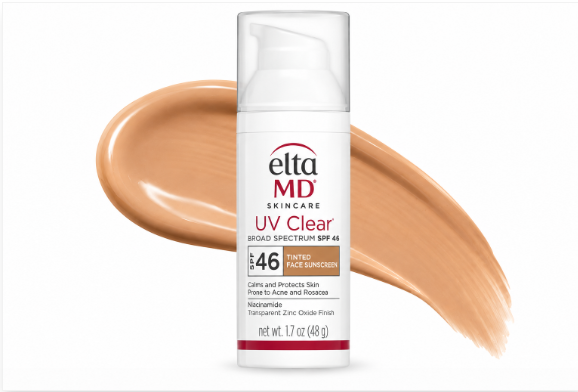
Best for: Acne-prone, oily and sensitive skin
SPF: 46
UV filters: Zinc oxide + octinoxate
Shades: Tinted options, including a deeper tint
Coverage: Sheer
Finish: Lightweight, natural
Why We Picked It
EltaMD keeps the focus on everyday wear for acne-prone skin. Its lightweight formula includes niacinamide and suits readers who want tint without turning sunscreen into foundation.
Pros
- Lightweight everyday texture
- Useful fit for acne-prone skin
- Niacinamide adds skincare appeal
Cons
- Shade choice is limited beside BOJ or Tower 28
- Premium price for the size
What to Know
The tint is sheer, so it is meant more for evening the look of skin and reducing cast than hiding acne marks. Its limited shade system is the main trade-off. A sheer formula can be forgiving, but depth and undertone still matter at a full sunscreen application.
Buy It If: You want a lightweight tinted SPF and acne-prone skin is your main concern.
Skip It If: You need precise shade and undertone matching or noticeable complexion coverage.
2. Beauty of Joseon Daily Tinted Fluid Sunscreen SPF 40 – Best Shade Range
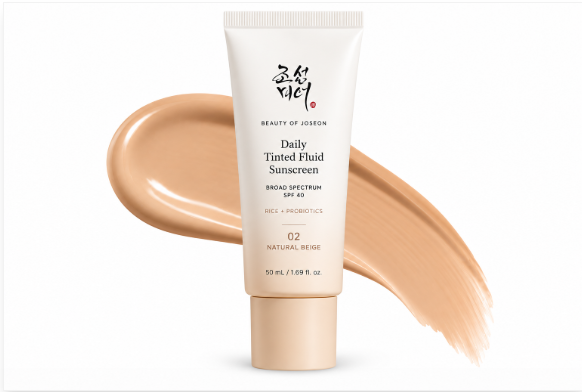
Best for: Readers who struggle to find a tint
SPF: 40
UV filters: Mineral zinc oxide formula
Shades: 12
Coverage: Sheer
Finish: Natural soft glow
Why We Picked It
Beauty of Joseon stands out with 12 shades, giving more room for skin depth and undertone than one- or three-shade systems. Its fluid texture also feels closer to sunscreen than heavier makeup.
Pros
- 12-shade range
- Light fluid texture
- Sheer finish that can be easier to wear daily
Cons
- Not enough coverage if you want foundation-like correction
- A larger shade range still does not guarantee a perfect match
What to Know
Shade count helps, but shade usability matters more. Check the tint after applying the amount directed on the label, not from one tiny swatch. A color that looks perfect in a dot can become too warm, pale or obvious when spread generously.
Buy It If: Tinted sunscreens usually fail you because the available shades are too limited.
Skip It If: You want medium, foundation-like coverage.
3. CeraVe Hydrating Mineral Sunscreen SPF 30 Sheer Tint — Best Affordable Hydrating Pick
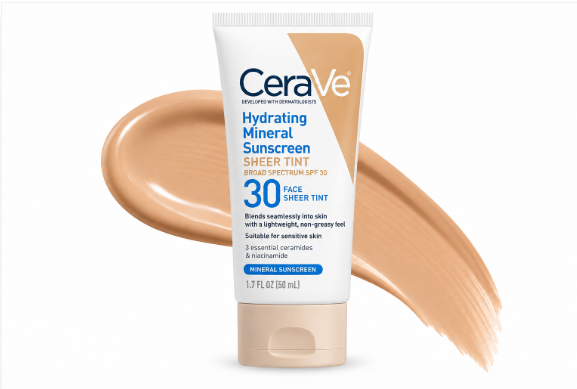
Best for: Normal to dry or sensitive skin on a budget
SPF: 30
UV filters: Zinc oxide + titanium dioxide
Shades: 3
Coverage: Sheer
Finish: Natural, healthy glow
Why We Picked It
CeraVe is a straightforward mineral option with ceramides, niacinamide and hyaluronic acid for readers wanting hydrating tinted SPF without premium pricing.
Pros
- Affordable compared with many premium picks
- Hydrating-support ingredients
- Fragrance-free positioning
Cons
- Only three broad shade groups
- Glow may be more than very oily skin wants
What to Know
This is a good example of why three shades do not equal three universal matches. Light, Medium and Deep cover broad groups of skin tones and undertones. The sheer finish gives some flexibility, but readers who often see orange, pink or grey casts should pay close attention to undertone.
Buy It If: You want a hydrating mineral sunscreen with sheer tint at a more accessible price.
Skip It If: You need precise undertone matching or a distinctly matte finish.
4. Colorescience Sunforgettable Total Protection Face Shield Flex SPF 50 – Best for Dark Spots and Pigmentation
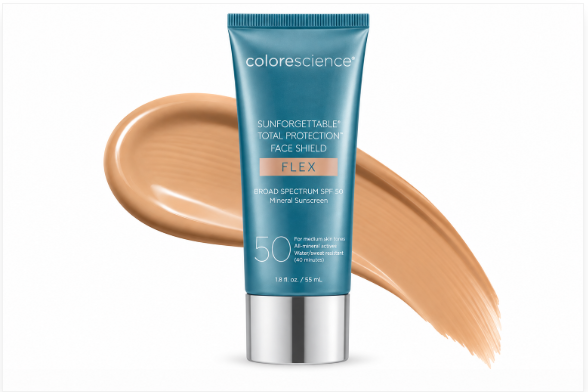
Best for: Dark spots, melasma-prone skin and more coverage
SPF: 50
UV filters: Mineral zinc oxide formula
Shades: 6
Coverage: Buildable
Finish: Demi-matte, natural
Why We Picked It
Colorescience is our pigmentation-focused option, combining SPF 50, mineral protection, tinted pigments and buildable coverage. Six flexible shades offer more choice than a universal tint.
Pros
- SPF 50
- Iron-oxide pigments
- Six flexible shades
- Buildable complexion coverage
Cons
- Expensive
- More makeup-like than very sheer SPF
What to Know
Iron oxides are relevant when visible-light-related pigmentation is a concern, but they do not give us a standardized visible-light SPF number. We can say the pigments are useful; we cannot assume exact protection from the word “tinted” alone.
Buy It If: Dark spots or melasma-prone pigmentation are a major reason you want tinted sunscreen.
Skip It If: You want the cheapest or most invisible-feeling option.
5. Tower 28 SunnyDays SPF 30 Tinted Sunscreen – Best Makeup-Like Coverage
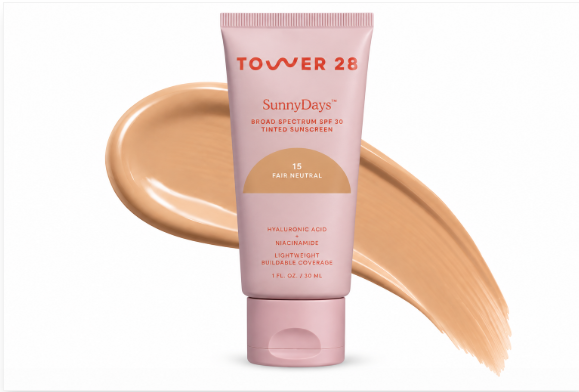
Best for: Replacing light everyday foundation
SPF: 30
UV filters: Mineral zinc oxide formula
Shades: 17
Coverage: Light-to-medium, buildable
Finish: Natural
Why We Picked It
Tower 28 combines sunscreen and complexion coverage. Its 17 shades and multiple undertones give it the most makeup-like shade system here.
Pros
- 17 shades
- Multiple undertones
- Buildable light-to-medium coverage
Cons
- Smaller 1 oz format
- More makeup-like than readers wanting invisible SPF may prefer
What to Know
This is where our full-amount check matters most. A sunscreen-foundation can look excellent when used like makeup, but SPF protection depends on applying it according to label directions. A tinted sunscreen is not a good shade match if it only looks good when you under-apply it.
Buy It If: You want tinted SPF to replace light everyday foundation.
Skip It If: You want a nearly invisible, sheer sunscreen.
6. DRMTLGY Universal Tinted Moisturizer SPF 46 – Best for a Dewy Everyday Finish
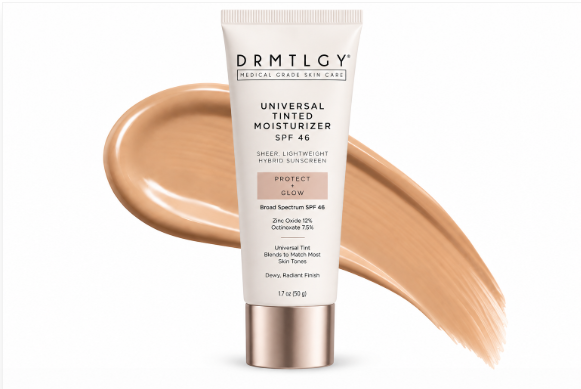
Best for: Normal to dry skin and sheer everyday wear
SPF: 46
UV filters: Hybrid UV-filter formula
Shades: Universal sheer tint
Coverage: Sheer
Finish: Dewy
Why We Picked It
DRMTLGY is sheer and dewy rather than foundation-like. The Amazon page we reviewed showed tens of thousands of ratings and Best Seller status at the time of research.
Pros
- SPF 46
- Hydrating, dewy finish
- Sheer coverage for everyday wear
Cons
- A universal tint is less precise than a real shade range
- Dewy finish can look too shiny on oily skin
What to Know
“Universal” should never be read as a guarantee. A sheer tint can stretch across more skin tones because there is less pigment to mismatch, but depth and undertone still matter. Judge it at the amount you actually need for sunscreen use.
Buy It If: You like a sheer, hydrated, dewy finish and do not want foundation-level coverage.
Skip It If: Universal tints often turn orange, grey or noticeably mismatched on you.
7. Australian Gold Tinted Mineral Face Sunscreen SPF 50 – Best Budget SPF 50 for Oily Skin
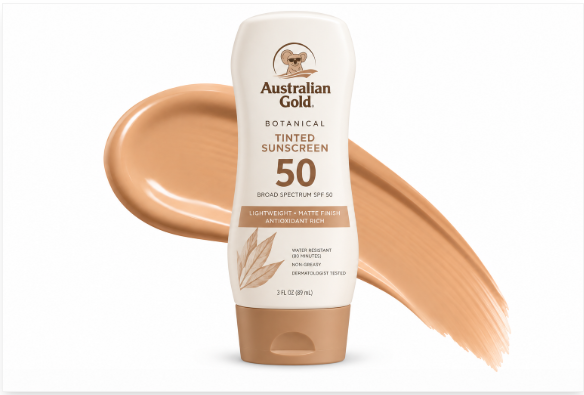
Best for: Budget-conscious shoppers who prefer a more set finish
SPF: 50
UV filters: Mineral UV filters
Shades: 3
Coverage: Buildable
Finish: BB-cream-like, more set
Why We Picked It
Australian Gold pairs SPF 50 with a 2.5 oz format and lower price than several premium picks. The Amazon page you supplied showed three tint groups and strong recent purchase activity.
Pros
- SPF 50
- Good price per ounce
- Three tint depths
- More set finish can suit oily-skin preferences
Cons
- Three broad shades leave undertone gaps
- The more set finish may feel too dry for some skin
What to Know
The shade system is the compromise. Fair to Light, Medium to Tan and Rich to Deep cover very large tone ranges. If the depth seems right but the product still looks orange, pink or ashy, the undertone may be wrong.
Buy It If: You want affordable SPF 50 and prefer a more set, BB-cream-like finish.
Skip It If: You need precise undertone matching or a dewy, barely-there finish.
How to Choose the Best Tinted Sunscreens for Your Skin
1. Start With SPF, Not the Tint
Treat it as sunscreen first. AAD sunscreen guidance recommends broad-spectrum SPF 30 or higher and water resistance when appropriate. A beautiful tint is not a substitute for suitable sun protection.
2. Ask Why You Want a Tinted Sunscreen
When comparing the best tinted sunscreens, ask what you want the tint to do. For less white cast, sheer may be enough. For pigmentation, look at iron-oxide pigments and reliable UV protection. To replace foundation, shade precision and coverage matter more.
3. Separate Skin Concern From Skin Type
Your concern might be acne, dark spots, redness or white cast. Your type might be oily, dry, combination or sensitive. Choose for the concern first, then refine by texture and finish. Someone with oily skin and dark spots, for example, may want relevant pigments but still prefer a lightweight or demi-matte formula.
4. Match Texture and Finish to Skin Type
Oily skin may feel more comfortable with lightweight or more set finishes. Dry skin may prefer a hydrating base. Sensitive skin needs you to look at the whole formula instead of assuming “mineral” or “tinted” automatically means gentle.
5. Do Not Judge by Shade Count Alone
More shades give you options, but coverage changes how exact the match must be. Sheer tint is more forgiving; medium coverage usually needs a closer match.
6. Skin Tone and Undertone Both Matter
Two people can have similar skin depth and need different tints. Warm, cool, neutral and olive undertones can change whether a sunscreen looks natural, orange, pink or grey.
7. Be Careful With “Universal” Tints
Universal tint is a description, not a guarantee. Sheer formulas can be forgiving, but very fair, deep, olive, strongly warm or strongly cool complexions can still see a mismatch.
8. Look at Coverage
Sheer tint mainly reduces cast and slightly evens tone. Light coverage gives more visible correction. Medium coverage can begin replacing foundation, but it also needs a better shade match.
9. Do the Full-Amount Check
Do not judge from one tiny dot. Apply the product according to its label directions and then look again. Did it become orange, grey, greasy, cakey or too dark? If a tint only works when you use too little, it is not the right tinted sunscreen for you.
10. Check Water Resistance for Outdoor Wear
A daily office SPF and a sunscreen for swimming, sweating or long outdoor days have different demands. Check the actual water-resistance statement on the label. A high SPF number alone does not tell you how the product behaves in water.
Which Tinted Sunscreen Is Right for You?
| Your Priority | Look For | Watch Out For |
| Less white cast | Flexible sheer tint | Grey or orange cast |
| Dark spots | Strong UV protection + relevant pigments | Assuming every tint gives equal visible-light protection |
| Oily skin | Lightweight or more set finish | Heavy, very dewy formulas |
| Dry skin | Hydrating formula | Overly drying matte finish |
| Acne-prone skin | Comfortable, acne-friendly formula | Choosing by tint alone |
| Makeup replacement | Better shade range + coverage | Under-applying to improve the finish |
| Outdoor wear | Water resistance + suitable SPF | Assuming high SPF means water resistant |
Tinted Sunscreen vs Regular Sunscreen: Which Makes More Sense?
Neither is automatically better for everyone. Regular sunscreen makes sense if you already have a formula you love and do not need color correction. Tinted sunscreen can be especially useful if white cast bothers you, you want complexion coverage, or visible-light-related pigmentation is a concern.
For pigmentation, the evidence is meaningful but should be described carefully. A randomized melasma trial found better pigmentation outcomes when visible-light protection with iron oxide was added to broad UV protection during treatment. That does not mean every tint performs equally.
Tinted Sunscreen vs Tinted Moisturizer vs Foundation With SPF
| Product | Primary Job | Typical Coverage | Remember |
| Tinted sunscreen | Sun protection | Sheer to medium | Apply according to sunscreen directions |
| Tinted moisturizer with SPF | Hydration + tint + SPF | Sheer to light | Check the label and SPF directions |
| Foundation with SPF | Makeup | Light to full | A thin makeup layer may not equal proper sunscreen use |
Common Tinted Sunscreen Problems — and What They Mean
Looks Orange
The undertone may be too warm, or the tint may become more obvious at a full application. Try a different undertone rather than simply going lighter.
Looks Grey or Ashy
The shade may be too light or poorly matched to your undertone. A broader shade range may work better than another universal tint.
Looks Too Heavy When I Apply Enough
Do not solve this by deliberately under-applying. Choose a sheerer or more fluid formula that remains wearable when used as directed.
Makes My Skin Greasy
The finish may be wrong for your skin. Look toward natural, demi-matte or more set formulas rather than assuming every tint is greasy.
Pills
Too many layers or incompatible textures can contribute. Keep the morning routine simple and allow layers to settle before sunscreen.
The Universal Tint Does Not Match
Then it is not universal for you. Choose a product with more depth and undertone options.
How We Chose the Best Tinted Sunscreens
We compared sun protection, formulation, shade usability, coverage, skin-type fit, pigmentation relevance, finish, value, availability and editorial fit. Each pick also had to solve a distinct reader need.
Our full-amount check asks whether the tint stays wearable when used as directed. We separate manufacturer claims from independent evidence. We have not personally wear-tested every product, so we do not present brand or customer descriptions as our own testing.
How to Apply Tinted Sunscreen
Apply sunscreen as the final skincare step before makeup. AAD application guidance says to apply sunscreen before going outdoors and reapply about every two hours when outside, as well as after swimming or sweating, following the product directions.
Do not mix sunscreen into moisturizer or foundation to lighten the tint. That makes it harder to know whether you have applied an even, adequate layer. If the shade looks wrong at the amount directed on the label, choose a better-matched product rather than routinely using less.
If you are unsure where SPF fits with serums and moisturizer, see our Skincare Routine Order guide.
Frequently Asked Questions About Tinted Sunscreen
Does Tinted Sunscreen Cause Acne?
Tint itself does not mean a sunscreen will cause acne. Look at the complete formula and how your skin responds. If breakouts are your main concern, see our Best Sunscreens for Acne-Prone Skin.
Is Tinted Sunscreen Better?
Not for everyone. It can be more useful for white cast, light complexion coverage or visible-light-related pigmentation, but a regular broad-spectrum sunscreen you apply correctly can still be an excellent daily choice.
What Does Tinted Sunscreen Do?
It combines sunscreen with pigments that add color. Depending on the formula, the tint can reduce white cast, even the look of skin tone and add sheer-to-medium coverage. Iron oxide pigments can also contribute to visible-light protection.
Is Tinted Sunscreen Good for Dark Spots?
It can be useful, especially when iron oxide pigments are present. UV and visible light can worsen pigmentation, so photoprotection matters. For the treatment side, read our Dark Spots on Face guide.
Is Tinted Sunscreen Good for Melasma?
Tinted sunscreen with iron oxides can be useful as part of photoprotection for melasma. Research supports visible-light protection alongside UV protection, but sunscreen does not replace professional treatment when melasma needs medical care.
Does Tinted Sunscreen Protect Against Visible Light?
Iron-oxide-containing tinted sunscreens can add visible-light protection, but products are not interchangeable. Pigment concentration and testing vary, and there is no simple visible-light SPF number printed across all products.
Can Tinted Sunscreen Replace Foundation?
Sometimes. Tower 28 gives more makeup-like coverage, while EltaMD and DRMTLGY are sheerer. If you rely on the product for SPF, still apply it according to sunscreen directions rather than as a tiny amount of makeup.
Can I Wear Makeup Over Tinted Sunscreen?
Yes. Let the sunscreen settle, then apply makeup gently so you do not unnecessarily disturb the layer underneath.
How Much Tinted Sunscreen Should I Apply?
Follow the directions on the product label and apply generously and evenly. The key point is not to intentionally under-apply because a thinner layer makes the tint look prettier.
Is Tinted Sunscreen Good for Oily Skin?
It can be. Look for lighter textures and natural, demi-matte or more set finishes. Australian Gold is the most set-looking option in this list, while DRMTLGY is deliberately dewy.
Is Tinted Sunscreen Good for Acne-Prone Skin?
Yes, if the complete formula suits acne-prone skin. Tint alone does not decide whether a product will work for breakouts.
Does Every Tinted Sunscreen Contain Iron Oxides?
Do not assume visible-light performance from the word tinted alone. Check the ingredient list and manufacturer information, and remember that brands often do not disclose pigment percentages.
Final Takeaway
Choosing among the best tinted sunscreens gets easier when you stop looking for one product that is best for everyone. Start with protection, then identify your main concern. After that, consider skin type, shade depth, undertone, coverage and finish. Finally, ask whether the product still looks good when you apply it properly.
EltaMD is the acne-prone pick. Beauty of Joseon gives more shade choice. CeraVe is the affordable hydrating option. Colorescience makes the most sense when pigmentation is central to the decision. Tower 28 offers the most makeup-like shade system and coverage. DRMTLGY is the dewy sheer choice, while Australian Gold brings SPF 50 and value.
The right tinted sunscreen is not the prettiest swatch. It is the one you can apply as directed, wear comfortably and keep using.
Pingback: Moisturizer or Sunscreen First? The Simple Answer