

Why is my nose so oily? Because your nose and forehead hold the busiest oil glands on your face, so they shine first.
A little shine is normal. It becomes a problem when skin turns greasy by noon or pores look bigger.
Below, find your pattern in a quick table and follow a simple 3 step plan. I used guidance from Cleveland Clinic and the American Academy of Dermatology.
In this article
Why Is My Nose So Oily? The T Zone Explained
Your forehead, nose and chin make up the T zone. These spots have more and larger oil glands than your cheeks, and nose pores are wide, so oil shows quickly.
Your nose also sticks out, so it catches the most heat and sun. Pores cannot shrink, but clear pores look smaller. Our guide on how to unclog pores the right way shows how.
Is It Just a T Zone? Oily, Combination or Dehydrated
Many people with an oily nose and forehead have combination skin: oily in the T zone, normal or dry on the cheeks. Others are dehydrated, which feels tight and looks shiny at once. A simple check tells you which one you are.
- Step 1: wash gently, pat dry and apply nothing
- Step 2: wait 1 hour, then press a clean tissue on your nose, forehead and cheeks
- Oil only on the nose and forehead: combination skin
- Oil everywhere: oily skin
- Tight but shiny: dehydrated skin
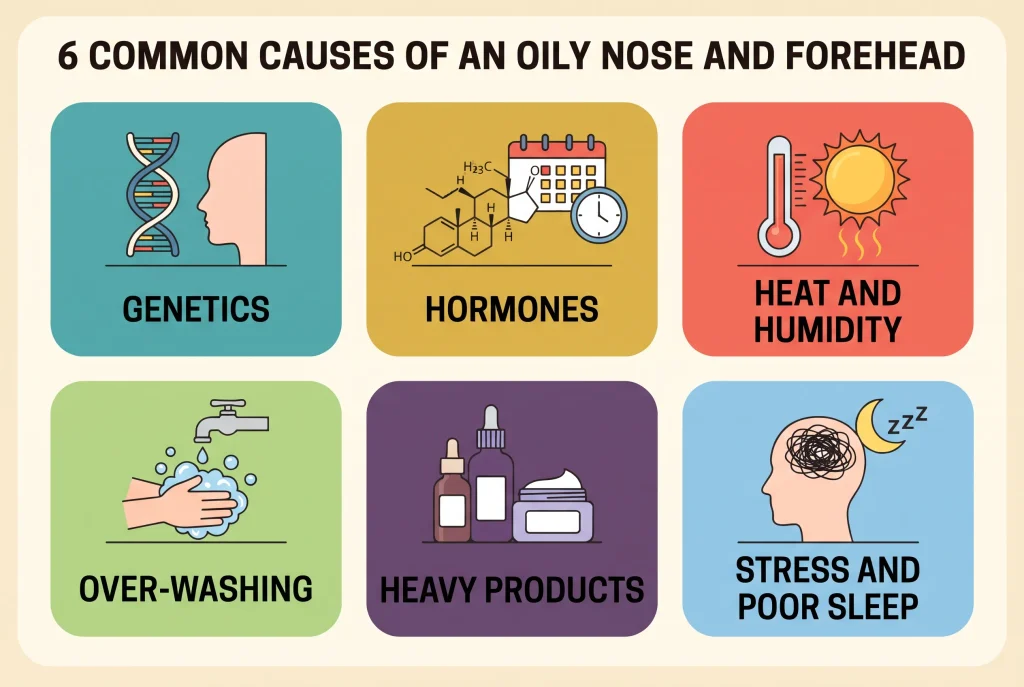
6 Causes of an Oily Nose and Forehead
1. Genetics and Big Pores
Genes are a top answer to why is my nose so oily. If a parent has oily skin, you probably do too. Some people are born with bigger, busier oil glands, and the pores on the nose are the largest on the face.
2. Hormones
Hormones are another answer to why is my nose so oily. They tell your oil glands how hard to work. Oil often rises before your period, in pregnancy and in the teen years, says Cleveland Clinic. Painful jawline pimples as well? Read our hormonal acne routine.
3. Heat, Humidity and Sun
Heat explains why is my nose so oily in summer. Warm, sticky weather and sweat boost shine fast, and the nose gets the most sun. Sweaty on your chest and back too? Our best body washes for acne can help there.
4. Washing Too Much
Over washing is a common reason why is my nose so oily. You see shine, so you scrub harder, and your skin can make even more oil. The American Academy of Dermatology says harsh washes can trigger extra oil. See what to use instead in our best cleanser for oily skin guide.
5. Heavy or Wrong Products
Heavy creams, rich oils and thick foundation can be a hidden answer to why is my nose so oily. Hair adds to it. Why is my forehead so oily when my nose is fine? Often it is hair oil, serums or long bangs touching the skin.
6. Stress and Poor Sleep
Stress is a quiet reason why is my nose so oily in busy weeks. Your body makes more cortisol, which can push oil glands to work harder. Bad sleep makes it worse.
Why is my nose so oily: the 6 common causes of an oily nose and forehead shown as simple icons
Blackheads or Sebaceous Filaments?
Those tiny dots on your nose may not be blackheads. Cleveland Clinic says sebaceous filaments are normal threads that carry oil to the skin, not a form of acne. If real blackheads are your problem, start with our salicylic acid cleansers for blackheads.
- Gray, light brown or yellow
- Small and flat
- A normal part of your pores
- Come back in about 30 days
- Dark plugs of oil and dead skin
- A mild form of acne
- Can clog and grow
- Respond to salicylic acid
Which Pattern Is Yours? A Quick Clue Table
Most people who ask why is my nose so oily have two or three causes at once. Find the line that sounds like you.
| What you notice | Likely cause | First step |
|---|---|---|
| Only the nose is oily, cheeks are fine | Big pores and genes | Keep pores clear, gently |
| Nose and forehead shiny, cheeks dry | Combination skin | Treat each zone differently |
| Tight after washing, then shiny | Over washing | Wash less, be gentler |
| Shiny and tight at the same time | Dehydrated skin | Add water, not heavy oil |
| Only the forehead is shiny, hair is oily | Hair products | Keep hair off your face |
| Oil jumps before your period | Hormones | Blot, do not scrub |
| Shiny in summer or after the gym | Heat and sweat | Wash after sweating |
| Tiny gray dots on the nose | Sebaceous filaments | Leave them alone |
Oily Nose but Dry Cheeks
Why is my nose so oily when my cheeks are dry? That is combination skin, and it is very common. One heavy cream feels greasy on your nose, while one strong wash leaves your cheeks tight. Treat the zones differently.
- A gel or light foaming cleanser
- A thin, oil free gel moisturizer
- Salicylic acid a couple of nights a week
- Blot, do not rub
- A gentle, creamy cleanser if skin feels tight
- A slightly richer layer of moisturizer
- No strong acids on dry patches
- Sunscreen every morning
Need one cleanser for both zones? See our best cleanser for combination skin picks.
Why Makeup and Sunscreen Slide Off Your Nose
Why is my nose so oily by noon that makeup slides off? Oil breaks down base products, and thick layers slide even faster. Keep it light.
- Use thin layers, not one thick coat
- Wait a few minutes after moisturizer and sunscreen before makeup
- Choose a light, oil free sunscreen, like those in our sunscreens for acne prone skin list
- Set only the T zone with a little powder
A Simple 3 Step Plan for an Oily Nose and Forehead
- Step 1, wash: a gentle gel or foaming cleanser, morning and night, and after sweating. Use lukewarm water.
- Step 2, moisturize: a light, oil free, noncomedogenic gel or lotion. Skipping it can make skin oilier.
- Step 3, protect: SPF 30 or higher every morning.
Want a little more? Add salicylic acid or niacinamide to your T zone, starting with two nights a week. Our moisturizer for oily skin guide and skincare routine order show where each step goes.
What Does Not Help
Pore strips pull out filaments, but they return in about a month. Cleveland Clinic warns strips can dry skin and let bacteria in, and it says to avoid squeezing, because nails can damage skin.
- Pore strips
- Squeezing with nails
- Lemon or vinegar masks
- Scrubbing harder
- A gentle salicylic acid product
- Leaving the dots alone
- A light, plain moisturizer
- A gentle wash, not more washing
How Long Until You See a Change?
Why is my nose so oily even after a month? Often it needs more time. Blotting cuts shine today, but a new routine takes a few weeks. Change one thing at a time. Healthline says to see a dermatologist if your skin is still oily after 1 to 2 months of simple care.
When to See a Dermatologist
If you still wonder why is my nose so oily after two months of care, a doctor can check for a skin condition. Book a visit if you notice any of these:
- Oil is still there after 1 to 2 months of simple care
- You get red, flaky patches near your nose or brows
- You have painful or deep pimples
- The oil started after a new medicine
FAQs
Why is my forehead so oily but my cheeks are dry?
That is combination skin. Use a light moisturizer on the T zone and a slightly richer one on the cheeks.
How do I get rid of an oily nose fast?
Press a clean tissue on your nose and leave it. Rubbing spreads oil. For a lasting change, follow the 3 step plan above.
Can I make my nose pores smaller?
Not for good. Clear pores just look smaller, and gentle washing and salicylic acid help.
Does an oily nose mean I have acne?
No. Pimples start when oil mixes with dead skin and clogs a pore. Some people have an oily nose and never break out.
Is an oily nose a sign of poor hygiene?
No. It comes from genes, hormones and weather, and washing more can make it worse.
Why does my nose get oily again an hour after washing?
Your cleanser may be too strong. Skin feels squeaky, then makes oil to fix itself. Try a gentler wash.
The Takeaway
So, why is my nose so oily? Mostly because the T zone has the busiest oil glands, plus genes, hormones, weather and habits. Find your pattern in the table, keep your routine simple and give it a few weeks. For the whole face, read why is my face so oily. Ready for more? Try these:
- Clearer pores: our how to unclog pores guide
- The full plan: our acne skincare routine guide