
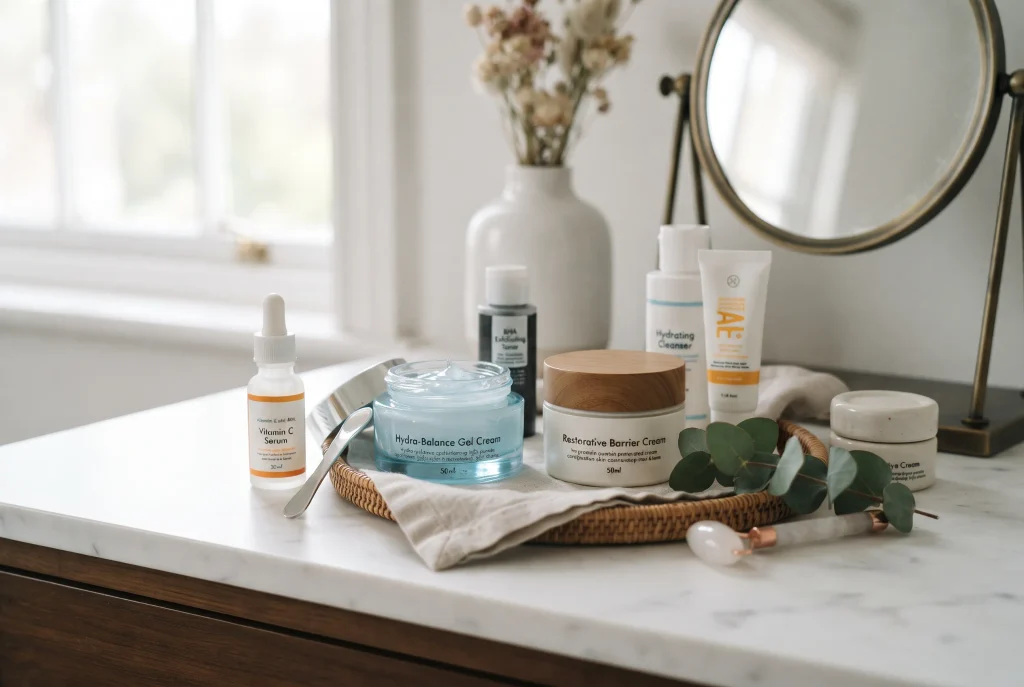
A good combination skin care routine is simpler than you think. Okay, so here is what usually happens: your forehead is shiny by lunch, your cheeks feel tight, and every product seems to fix one and wreck the other. Don’t worry, I’ve got you.
The trick is not more products. It is a few light steps, with a little extra only where your skin needs it. Below you get a quick self check, a zone map, morning and night steps, sunscreen tips and the mistakes to skip. Need a cleanser first? See our guide to the best cleanser for combination skin.
Quick answer: a simple combination skin care routine has 4 steps. Cleanse gently, use a light serum, moisturize, and wear sunscreen in the morning. Put a light gel on your oily T zone and a creamier layer on your dry cheeks.
In this article
Combination Skin Care Routine at a Glance
Short on time? This table is your whole plan.
| When | Steps | Quick tip |
|---|---|---|
| Morning | Gentle cleanser, light serum, moisturizer, sunscreen | Gel on the T zone, cream on dry cheeks |
| Night | Gentle cleanser, serum or treatment, moisturizer | Wash twice only if you wore makeup or sunscreen |
| 1 to 2 times a week | Gentle exfoliation, then a mask by zone | Clay on the T zone, hydrating mask on the cheeks |
What Is Combination Skin?
Combination skin means different parts of your face act like different skin types. Your T zone (forehead, nose and chin) gets oily, while your cheeks feel normal or dry. That is why one cream or one face wash never seems to fit.
It usually comes from genes, hormones, hot or humid weather, and products that are too harsh or too heavy. Your skin can also change with age and the seasons.
How to Tell If You Have Combination Skin
Before you build a combination skin care routine, check your skin first. It takes half an hour and needs no products.
- Step 1: wash your face with a gentle cleanser and pat it dry.
- Step 2: do not put anything on your face.
- Step 3: wait 30 minutes.
- Step 4: look at your T zone and cheeks in a mirror, and press a clean tissue on each area.
- A shiny forehead and nose, with tight or flaky cheeks, means combination skin.
- If your whole face is shiny, you are likely oily. If it all feels tight, you are likely dry.
Wash gently, too. The American Academy of Dermatology (AAD) says to limit washing to twice a day and after sweating. Washing more often can dry out your cheeks.
Your Zone Map: T Zone vs Cheeks
The big idea behind any combination skin care routine is simple: treat each zone for what it needs. You do not need two routines, just a different texture or product.

- Light gel or lotion moisturizer
- Oil free, non comedogenic formulas
- Niacinamide or salicylic acid
- A clay mask once a week
- A creamier moisturizer
- Hyaluronic acid and ceramides
- Gentle cleanser, no scrubbing
- A hydrating mask once a week
If your zones are not very different, one lightweight moisturizer for the whole face is fine. Start with a non comedogenic moisturizer, then add a richer cream on your cheeks only if they still feel tight.
Morning Combination Skin Care Routine
Step 1: Cleanse Gently
Use a mild, water based gel or foaming cleanser. Harsh washes dry out your cheeks and can push your T zone to make even more oil. If your skin feels squeaky, the cleanser is too strong.
Step 2: Add a Light Serum
Niacinamide helps with shine, and hyaluronic acid adds water without weight. Put it on clean skin and wait about a minute before moisturizer.
Step 3: Moisturize
Yes, you still need moisturizer, even on the oily parts. Skipping it can make your skin produce more oil. Pick an oil free gel cream or lotion, and add a little richer cream on dry cheeks if they stay tight.
Step 4: Finish With Sunscreen
Sunscreen always goes last in the morning. More on that below.
Night Combination Skin Care Routine
- Cleanse: use the same gentle cleanser. If you wore makeup or sunscreen, wash twice. If not, one gentle wash is enough.
- Treat: use a serum, or a salicylic acid product on your T zone two or three nights a week.
- Moisturize: use your usual moisturizer, or a slightly richer cream on dry cheeks.
Sunscreen for Combination Skin
Sunscreen is the one step you should never skip in a combination skin care routine. The AAD recommends a broad spectrum sunscreen with SPF 30 or higher, and says to reapply about every two hours when you are outdoors.
Look for a lightweight, non comedogenic formula such as a gel, a fluid or a mineral lotion. Heavy creamy sunscreens can make your T zone greasy. Our guide to the best non comedogenic sunscreen for face shows what to pick.
Not sure whether moisturizer or sunscreen goes first? Read moisturizer or sunscreen first for the right order.
Weekly Extras: Exfoliate and Multi Mask
In your combination skin care routine, add a gentle exfoliant once or twice a week. A salicylic acid or lactic acid product works well on your T zone. Keep strong acids away from dry cheeks. Our guide on how to exfoliate your face properly shows how often to use them.
Multi masking means using a clay mask on your T zone and a hydrating mask on your cheeks at the same time. It is optional. Do it once a week at most.
Best Ingredients for Combination Skin
You do not need a long ingredient list. These five do most of the work.
- Niacinamide: helps with oil, redness and a weak skin barrier
- Hyaluronic acid: adds light hydration without a greasy feel
- Salicylic acid (BHA): clears clogged pores, best on the T zone only
- Ceramides: support the skin barrier, great for dry cheeks
- Vitamin C: a good morning serum for dull skin, if your skin likes it
Want to try niacinamide first? See our niacinamide serum review.
- Add one new product at a time.
- Niacinamide is the easiest first pick for most combination skin.
- Add salicylic acid only after your skin has been calm for two weeks.
- Patch test: put a small amount on your inner arm or behind your ear for 24 hours.
- Stop if you see redness, burning or itching.
Ingredients to Avoid
- Oil free and non comedogenic labels
- Water based gels and light lotions
- Gentle, fragrance free formulas
- Lightweight or mineral sunscreens
- Alcohol heavy toners
- Thick oils, such as coconut oil, on the T zone
- Strong fragrance
- Rough scrubs and harsh peels
Combination Skin Care Routine for Acne
Breakouts on the T zone are common with this skin type. Use salicylic acid on the oily areas only, and keep the rest of your face gentle. If your skin turns red or flaky, cut back and add more moisturizer.
For a full plan, read our acne skincare routine guide.
A Simple Combination Skin Care Routine on a Budget
You do not need expensive products. A budget combination skin care routine needs only three things: a gentle cleanser, a lightweight moisturizer and a sunscreen. Drugstore formulas work well, because the best formulas for combination skin are simple.
Combination Skin Care Routine for Men
Men need the same 4 steps in their combination skin care routine. The main difference is shaving. Shave after you cleanse, use a gentle shaving gel, and finish with an oil free moisturizer. Skip alcohol aftershave, since it dries out your cheeks.
Change Your Routine With the Seasons
Your combination skin care routine should change through the year. In summer, heat makes your T zone oilier, so switch to a lighter gel moisturizer and a fluid sunscreen. In winter, cold air and indoor heat dry out your cheeks, so use a richer cream there and a milder cleanser.
Our fall skincare routine shows how to make the switch.
Common Mistakes
Most problems come from doing too much. Check this list if your skin feels off.
- Washing too often or scrubbing, which dries your cheeks and can push your T zone to make more oil
- Skipping moisturizer on the oily areas
- Using one heavy cream on the whole face
- Using too many actives at the same time
- Using strong acids on dry cheeks
- Skipping sunscreen because your T zone feels oily
How Long Until You See Results?
Give any new combination skin care routine four to six weeks. Skin renews itself slowly. You may see less shine sooner, but breakouts and rough texture take longer. Change one thing at a time, so you know what is helping.
When to See a Dermatologist
See a dermatologist if your skin burns, itches or gets very red or flaky, if you have painful breakouts, or if nothing improves after about two months. A doctor can check for other skin conditions and suggest stronger treatment.
FAQs
Should I use one moisturizer or two for combination skin?
One light moisturizer is enough for many people. If your cheeks stay tight, add a richer cream on the dry areas only.
What is the best skincare routine for combination skin?
Keep it to four steps: a gentle cleanser, a light serum, a moisturizer and sunscreen. Then adjust the texture for each zone.
Can combination skin change over time?
Yes. Hormones, age, weather and the products you use can all change how oily or dry your skin feels.
How often should I exfoliate combination skin?
Once or twice a week is plenty. Use a gentle product, mostly on your T zone.
Do I need to double cleanse?
Only if you wore makeup or sunscreen. On other days, one gentle wash is enough.
Does diet affect an oily T zone?
The evidence is limited. Hormones and genes matter more. If certain foods seem to make your breakouts worse, try cutting them back and ask a dermatologist.
Bottom Line
The best combination skin care routine is short, gentle and smart about zones: cleanse, serum, moisturize, sunscreen, and a little extra only where your skin needs it. Start with the 30 minute test, add one product at a time, and give it four to six weeks. Ready to pick a moisturizer? See our best moisturizer for oily skin guide.