
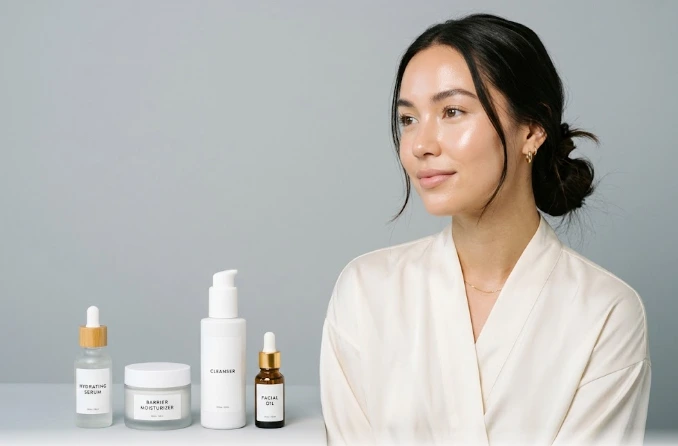
If you are wondering how to get glass skin, start with the basics: gentle cleansing, steady hydration, a moisturizer that suits your skin, targeted treatment when you need it, and daily sunscreen. Glass skin is not about making your face look greasy or piling on ten products. It is about skin that looks smooth, plump, calm and even enough to reflect light well.
The Korean beauty idea behind glass skin puts skin condition first. That means your routine should change depending on what is holding your glow back. Dryness, rough texture, clogged pores, dark marks and irritation do not need the same fix. The best glass skin routine is the one your skin can tolerate consistently.
On this Page
What Is Glass Skin?
Glass skin is a K-beauty term for very hydrated, smooth, luminous and even-looking skin. It does not mean poreless or texture-free skin. Natural pores remain normal, and skin type, genetics and environment affect the final look.
There is also a difference between healthy luminosity and surface shine. Oil can make skin shiny without making it well hydrated. If your goal is how to get glass skin, think “plump and comfortable” rather than “as glossy as possible.”
First, Find Out What Is Blocking Your Glow
A routine works better when it starts with the right problem. Tight, dull skin needs a hydration-first approach. Rough or flaky skin may need barrier support before exfoliation. Shiny-but-tight skin may need lightweight hydration rather than more oil.
Bumps and congestion need a different approach. Uneven tone or post-acne marks may need targeted care plus sun protection. If products sting, burn or peel, simplify first. That is a safer starting point for how to get glass skin.
If your skin still looks flat even after moisturizing, read our guide on why your moisturizer makes your skin look dull.
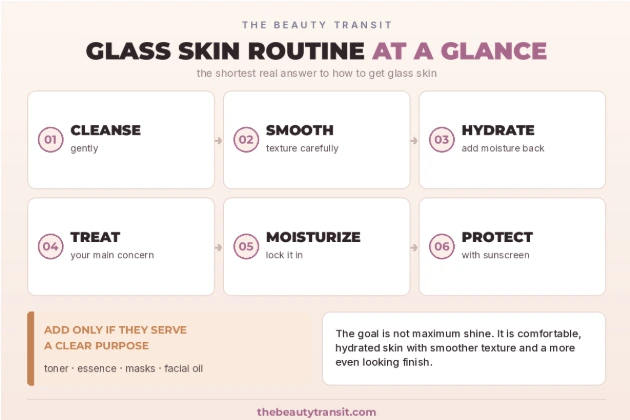
How to Get Glass Skin: The Step-by-Step Routine
Step 1 — Cleanse Gently
Start with a cleanser that removes daily buildup without leaving skin tight. The American Academy of Dermatology (AAD) recommends gentle cleansing because harsh cleansing can irritate skin. Dry or sensitive skin may need less frequent cleansing than oily skin.
At night, double cleansing can help remove makeup or stubborn sunscreen. Use an oil or balm cleanser first, then a gentle water-based cleanser. It is a tool, not a rule.
Step 2 — Exfoliate for Smoother Texture
Exfoliation helps remove dead skin cells from the surface, which can make rough or dull skin look smoother. AHAs are commonly used for dull or uneven texture, while BHA, such as salicylic acid, is better suited to oily skin and clogged pores. PHAs can be a gentler option.
You do not need to exfoliate every day to get glass skin. In fact, too much can leave your skin dry, irritated or peeling. The American Academy of Dermatology (AAD) also advises being careful with exfoliation if you already use retinol, retinoids or benzoyl peroxide.
If clogged pores are your main problem, see our guide on How to Unclog Pores the Right Way.
Step 3 — Layer Hydration, Not Clutter
Hydration is an important part of getting glass skin because well-hydrated skin can look smoother, softer and plumper. Ingredients such as hyaluronic acid help your skin hold onto water, which can give it a fuller, more hydrated look, according to Cleveland Clinic. Glycerin is another ingredient that helps attract moisture to the skin.
You can add a hydrating toner or essence before your serum and moisturizer, but you do not need both. A sheet mask can also give your skin an extra boost of hydration, but it is completely optional.
Step 4 — Treat What Is Holding Back Your Glow
Choose treatment by concern. For dehydration, consider humectants such as hyaluronic acid or glycerin. Ceramides support moisture retention. Niacinamide can support barrier function and improve the look of pigmentation and blotchiness. Vitamin C is used for brightness and uneven tone. BHA suits some congested skin. Retinoids can support texture and renewal but may irritate skin if introduced too aggressively.
You do not need all of these at once. If you are learning how to get glass skin, one well-chosen treatment is usually easier to judge and tolerate than several strong actives started together.
Evidence: DermNet — Nicotinamide
Step 5 — Seal In Hydration With Moisturizer
Moisturizer helps reduce water loss and supports the barrier. The AAD lists glycerin and hyaluronic acid among useful options for dry skin. Oily or combination skin may prefer gel textures, while dry skin may prefer richer cream.
Sensitive or irritated skin usually benefits from a simpler, fragrance-free approach. Facial oil can be useful for some dry skin, but adding oil simply to make your face look shiny is not the same as building healthy-looking glass skin.
Evidence: AAD — Dermatologists’ tips for relieving dry skin
Step 6 — Protect the Results With Sunscreen
Daily sun protection is essential when learning how to get glass skin. UV exposure contributes to premature aging and uneven pigmentation. The AAD recommends broad-spectrum, water-resistant SPF 30 or higher. For dark spots, tinted sunscreen with iron oxides can also help protect against visible light that can worsen hyperpigmentation in darker skin tones.
If breakouts make sunscreen harder to choose, see our guide to the best sunscreens for acne-prone skin.
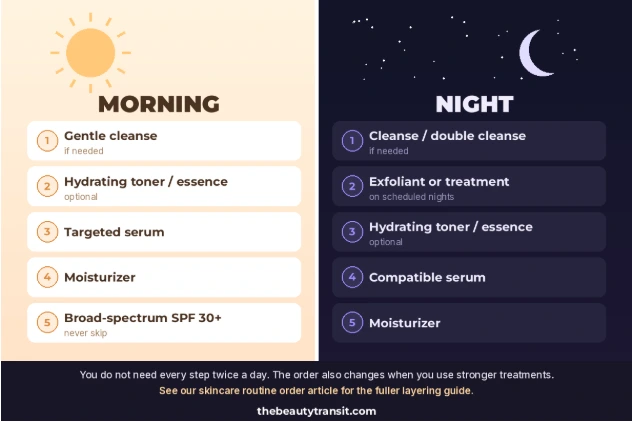
TBT internal read: Skincare Routine Order: What Goes First and Why
Do You Need a 10-Step Korean Skincare Routine?
No. How to get glass skin is not a 10-step rule. A simple routine can be cleanser, targeted hydration or treatment, moisturizer and sunscreen. A layered Korean-inspired version can add toner and essence.
The useful K-beauty idea is not the number of bottles. It is gentle cleansing, thoughtful hydration, barrier support, targeted treatment and consistent sun protection. You also do not need Korean-branded products to follow those principles. Choose formulas your skin tolerates and products you can use consistently.
Adjust the Routine to Your Skin Type
Oily or Acne-Prone Skin
Use lightweight hydration and a moisturizer that does not feel heavy. If clogged pores are part of the problem, an appropriate BHA may be more useful than adding facial oils for shine. Keep treating active acne too, because recurring breakouts can leave new marks and uneven texture.
Dry Skin
Focus on a gentle cleanser, humectant-rich hydration and a richer moisturizer. Apply moisturizer while skin is still slightly damp if that feels comfortable. If your skin is very dry or irritated, barrier care matters more than frequent exfoliation.
Sensitive Skin
Keep the routine short. Introduce one active at a time and avoid treating stinging as proof that a product is working. If irritation persists, stop the irritating product and consider professional advice.
Combination Skin
You can use lightweight hydration across the face and adjust moisturizer texture where needed. Your T-zone and cheeks do not always need identical amounts of product.
Why Your Glass Skin Routine Is Not Working
You are exfoliating too much. Peeling and irritation can make texture and tone look worse. Give the barrier time to recover.
You are using too many actives. Several strong treatments at once make it difficult to know what is helping and what is irritating you.
You are chasing shine instead of hydration. Heavy oils can create gloss, but gloss alone is not glass skin.
You are ignoring the real concern. Congestion, active acne, dark marks and barrier irritation need different strategies.
You are skipping sunscreen. That makes it harder to maintain an even-looking complexion, especially when pigmentation is part of the problem.
You keep changing products. A routine needs enough consistency to judge whether it suits your skin.
You expect pores to disappear. Healthy skin still has pores and natural texture. Glass skin is an appearance goal, not pore-free anatomy.
If dark marks are the main reason your complexion looks uneven, our dark-spots guide explains how causes and treatments differ. Read: Dark Spots on Face: What Causes Them and How to Fade Them.
How Long Does It Take to Get Glass Skin?
There is no reliable “glass skin in seven days” timeline. Surface hydration can make skin look plumper fairly quickly, but acne, persistent texture, dark marks and barrier problems take longer and vary widely between people. The time needed also depends on your starting concern, the treatment you use and how consistently your skin tolerates it.
When deciding how to get glass skin, track comfort and skin health as well as glow. A routine that looks shiny for one night but leaves you irritated the next morning is not progress.
Do Water, Diet and Sleep Matter?
Water, balanced nutrition, sleep and stress management support general health, but they do not replace skincare. Drinking excessive water will not substitute for moisturizer, targeted treatment or sun protection.
FAQs
How can I get Korean glass skin?
To understand how to get glass skin with a Korean-inspired approach, use gentle cleansing, useful hydration layers, barrier support, targeted treatment and daily sunscreen. Korean products are optional.
Can oily skin get glass skin?
Yes. How to get glass skin with oily skin starts with light hydration and sensible pore care, not heavy products added just for shine.
Can I get glass skin if I have acne?
You can work toward hydrated, luminous skin while treating acne. Do not stop appropriate acne care just to copy a glow-focused routine.
Do I need toner and essence?
No. Both can add hydration, but neither is mandatory. Use them only if they improve your routine.
Is retinol good for glass skin?
Retinoids can help texture and skin renewal, but irritation works against the goal. Introduce them carefully and avoid stacking irritating exfoliants.
How often should I exfoliate for glass skin?
There is no universal schedule. Frequency depends on the exfoliant, your skin type and other actives. Start conservatively and reduce use if you become dry or irritated.
Can I get glass skin naturally?
Healthy habits can support skin health, but how to get glass skin still depends on basics such as gentle cleansing, moisturizing and sun protection.
How long does it take?
Hydration can change the look of skin sooner than concerns such as acne, pigmentation or persistent texture. Expect the timeline to depend on what you are treating.
The Bottom Line
How to get glass skin comes down to reading your skin, not counting steps. Build around hydration, smoother texture, barrier support, targeted treatment and sunscreen. Never sacrifice a calm barrier for temporary shine.
Pingback: Skin Cycling Routine: A Simple 4-Night Guide for Beginners