
Finding the best exfoliator for sensitive skin can feel like walking through a minefield, right? You grab a scrub or a strong acid for that glow, and by evening your face is red, stingy and angry at you. Been there.
Here is the good news: sensitive skin can be exfoliated. You just have to start soft. So I lined up 5 options from the mildest to the strongest, like a ladder. Stand on the bottom rung first, and only climb when your skin is happy, because the best exfoliator for sensitive skin is the one your skin tolerates. New to this? Start with our guide on how to exfoliate your face properly.
Quick answer: the best exfoliator for sensitive skin is usually a PHA product, such as Medik8 Press & Glow, because PHAs are the gentlest. If your skin handles that well, move up to mandelic or lactic acid, and keep salicylic acid (BHA) for last.
In this article
Best Exfoliator for Sensitive Skin at a Glance
Short on time? Here is the whole ladder, mildest first.
| Pick | Type | Best for |
|---|---|---|
| 1. Medik8 Press & Glow | PHA tonic | Very reactive skin |
| 2. COSRX Low pH Goodnight Soft Peeling Gel | PHA and enzyme gel | Dullness and rough texture |
| 3. Good Molecules Mandelic Acid Serum | Mandelic acid serum | Dark marks and uneven tone |
| 4. The Ordinary Lactic Acid 5% + HA 2% | Lactic acid serum | Budget smoothing |
| 5. Paula’s Choice Skin Perfecting 2% BHA Liquid | Salicylic acid | Blackheads and clogged pores |
Our 5 Best Exfoliators for Sensitive Skin
Each pick is one step stronger than the one before it.
1. Medik8 Press & Glow: Best Gentle Start

- Best forVery sensitive or reactive skin
- TextureWatery tonic
- Key activesGluconolactone (PHA) 5.5%, aloe vera
- Price$35.00
Start here if your skin gets upset easily. Press & Glow is a PHA tonic, and PHAs are large molecules that work on the surface, so they tend to sting less. Medik8 lists gluconolactone at 5.5%, and the formula is fragrance free and alcohol free with only 13 ingredients.
Pros:
- Fragrance free and alcohol free
- Brand says you can start with one use a day
Cons:
- Costs more than most toners
2. COSRX Low pH Goodnight Soft Peeling Gel: Best Gel Exfoliant
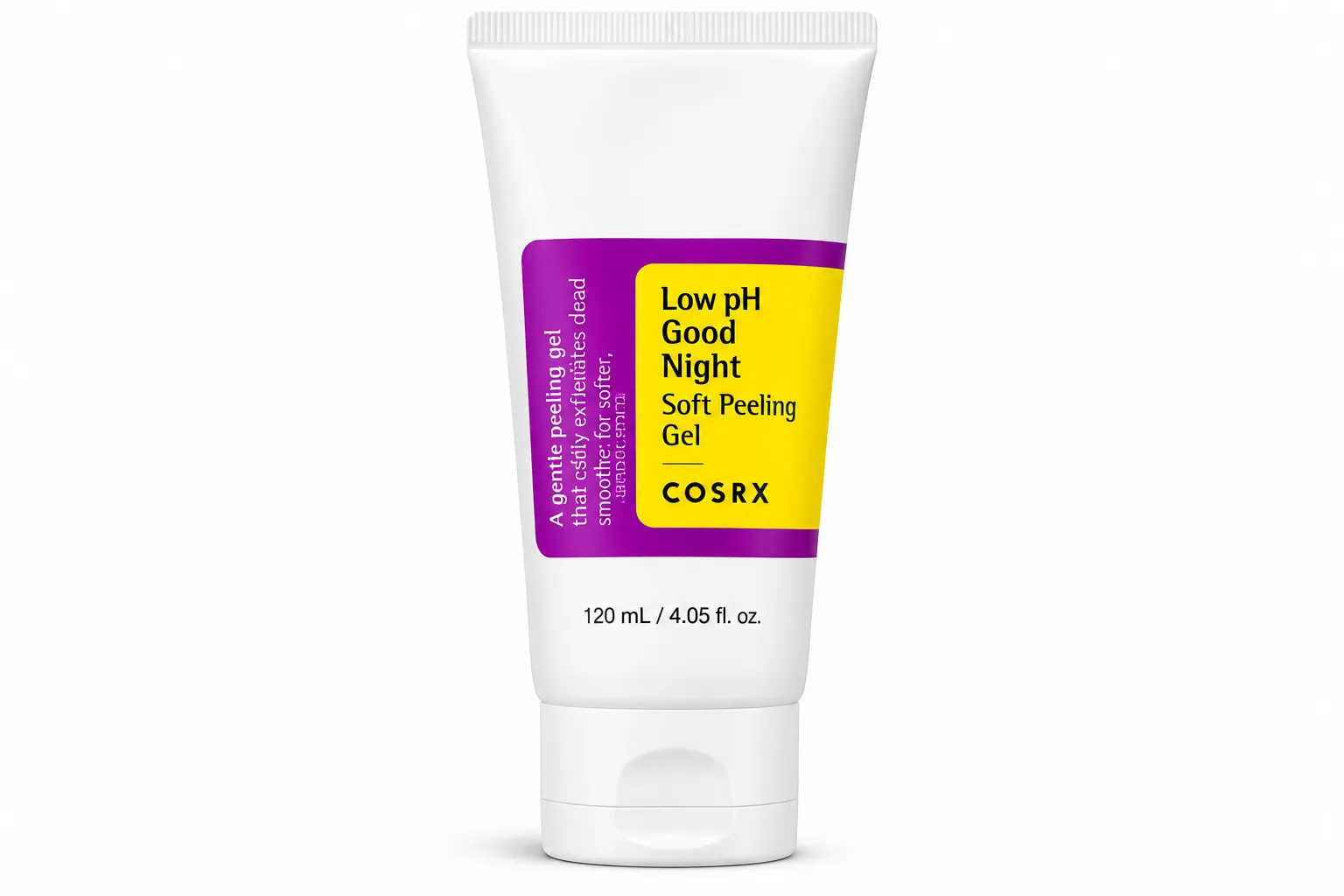
- Best forDullness and rough texture
- TextureLight gel
- Key activesLactobionic acid (PHA), papain enzyme, niacinamide
- Price$16.00
This gel exfoliates with lactobionic acid (a PHA) and papain, an enzyme from papaya. It also has niacinamide and hyaluronic acid, and no AHA or BHA. Ingredient checkers list it as fungal acne safe. One heads up: it contains lavender flower water, which can carry the allergen linalool.
Pros:
- No strong acids
- Listed as fungal acne safe by ingredient checkers
Cons:
- Lavender flower water may bother scent sensitive skin
3. Good Molecules Mandelic Acid Serum: Best for Dark Marks
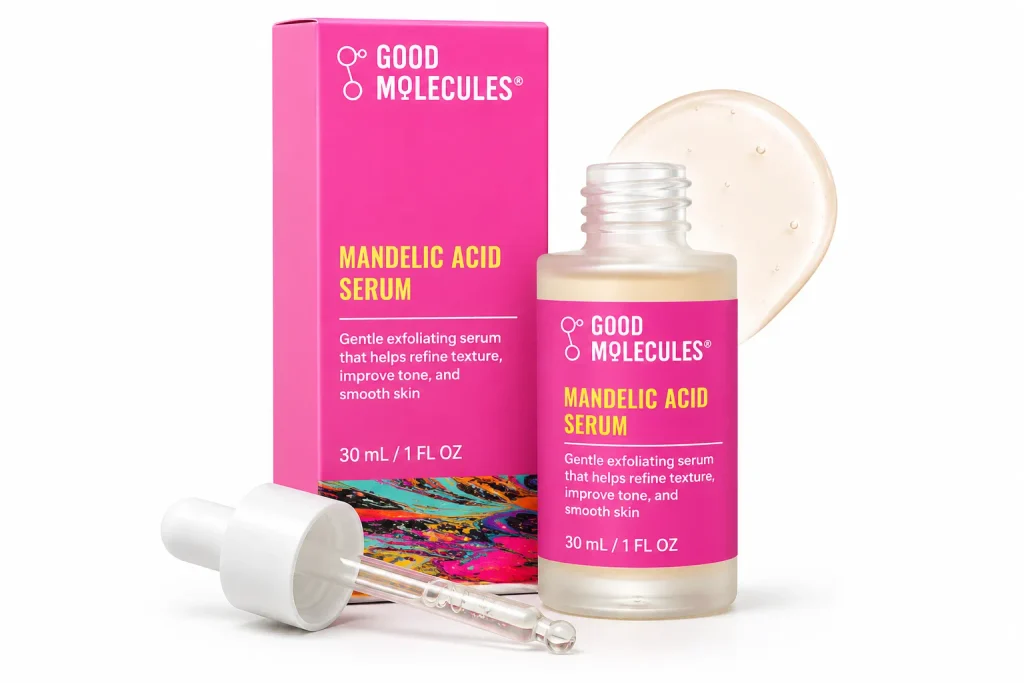
- Best forDark marks and uneven tone
- TextureLeave on serum
- Key activesMandelic acid, gluconolactone (PHA), phytic acid
- Price$10.00
Mandelic acid is an AHA with a larger molecule than glycolic acid, so it is often kinder to sensitive skin. This serum is fragrance free and adds a PHA, hyaluronic acid and allantoin to cushion it. Pick it for smoother skin and softer looking dark spots.
Pros:
- Fragrance free
- Listed as fungal acne safe by ingredient checkers
Cons:
- A step stronger than a PHA
4. The Ordinary Lactic Acid 5% + HA 2%: Best Budget Pick
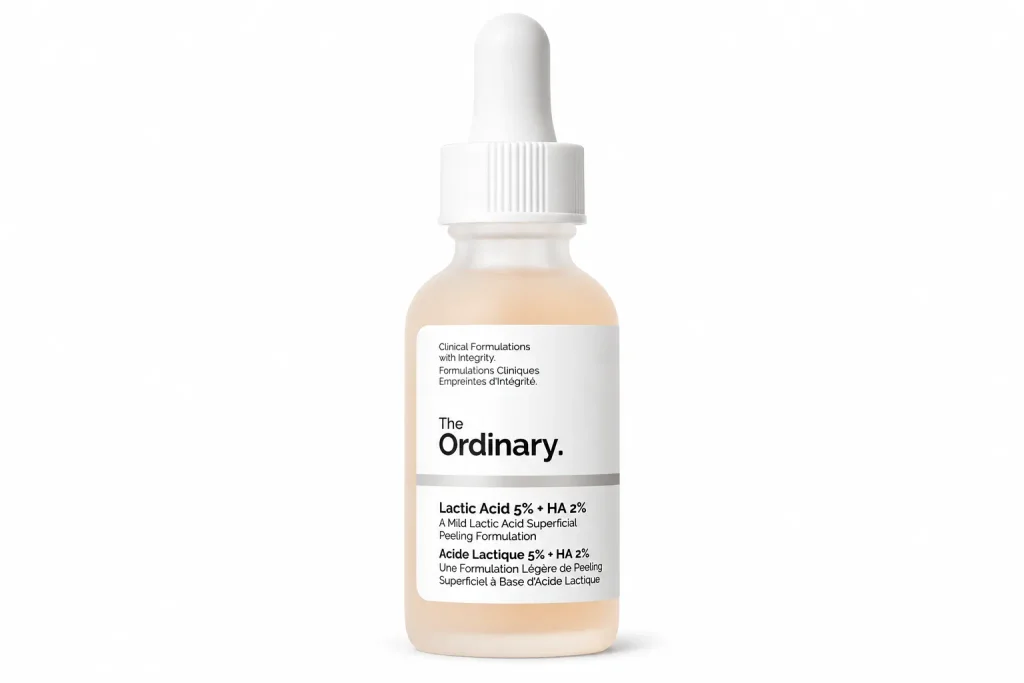
- Best forBudget smoothing
- TextureLeave on serum
- Key activesLactic acid 5%, hyaluronic acid 2%
- Price$8.10
Lactic acid is an AHA that also draws water into the skin, which is why it is a popular next step after a PHA. This one pairs 5% lactic acid with 2% hyaluronic acid and is one of the cheapest options here. Use it at night, once a week to start.
Pros:
- Low price
- Clear percentages on the label
Cons:
- Stronger than any PHA, so start slowly
5. Paula’s Choice Skin Perfecting 2% BHA Liquid Exfoliant: Best for Clogged Pores
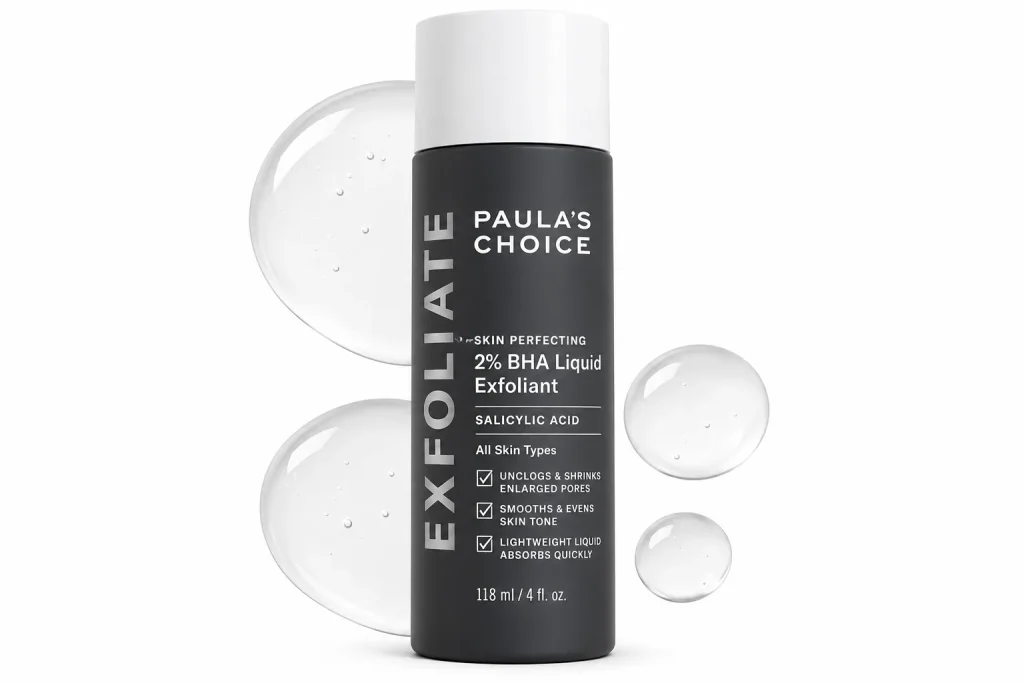
- Best forBlackheads and oily patches
- TextureWater thin liquid
- Key activesSalicylic acid (BHA) 2%, green tea extract
- Price$37
Salicylic acid works inside the pore, so it suits blackheads. This is the strongest pick here, so it is for calm skin, not reactive skin. The formula is fragrance free and alcohol free with just 8 ingredients, and its pH is about 3.5. Use it once a week to start, and follow with a rich moisturizer, since it has no soothing extras. Ingredient checkers flag its polysorbate 20 for fungal acne, so skip it if that is your problem.
Pros:
- Fragrance free and alcohol free
- Absorbs fast and leaves no residue
Cons:
- The strongest pick, so it can sting very sensitive skin
- Flagged for fungal acne by ingredient checkers
What Makes the Best Exfoliator for Sensitive Skin Gentle?
A good face exfoliator for sensitive skin is mild, fragrance free and easy to scale back. The American Academy of Dermatology (AAD) says people with sensitive skin may prefer just a washcloth and a mild chemical exfoliator, because scrubbing can be too irritating. That is why every pick above is a leave on acid or enzyme, not a scrub. Want the science? Read our guide to chemical exfoliation explained.
- PHA, mandelic or lactic acid to start
- Fragrance free formulas
- Soothing extras like allantoin or aloe
- A clear acid percentage on the label
- Gritty scrubs and rough brushes
- Glycolic acid at high strengths
- Strong fragrance and essential oils
- Alcohol heavy toners
Face Scrub for Sensitive Skin: Is It Safe?
Plenty of people search for a face scrub for sensitive skin, so here is the plain answer. A gritty scrub is the riskiest way to exfoliate, and easily irritated skin can end up red and raw. If you still love the feel of one, pick a facial scrub for sensitive skin with soft, round beads, press lightly and use it once a week at most. A gentle scrub for sensitive skin should never leave your face tight or hot.
Which Is the Best Exfoliator for Sensitive Skin for You?
Not sure which exfoliator for sensitive skin fits you? Match your skin to a rung.
- Your skin stings with most products: start with Medik8 Press & Glow.
- You want a gel and no strong acids: try the COSRX peeling gel.
- You have dark marks or uneven tone: try Good Molecules Mandelic Acid Serum.
- You want a cheap, simple smoother: try The Ordinary Lactic Acid.
- You get blackheads and your skin is calm: try Paula’s Choice 2% BHA Liquid, last.
PHA vs Mandelic vs Lactic vs BHA
- PHA: the gentlest. Works on the surface and hydrates.
- Mandelic acid: a mild AHA, good for tone.
- Lactic acid: a mild AHA that smooths and adds moisture.
- BHA (salicylic acid): clears pores, but can dry the skin.
Whichever you choose, the best exfoliator for sensitive skin is one you use slowly. Use only one of these at a time. Our guide to the best exfoliating face wash is a gentler route if even a leave on acid feels like too much.
How to Use the Best Exfoliator for Sensitive Skin
- Step 1: cleanse with a gentle cleanser and pat dry.
- Step 2: apply a thin layer of your exfoliator, avoiding the eye area.
- Step 3: follow with moisturizer right away.
- Step 4: start once a week at night, then move to two or three nights only if your skin stays calm.
- Step 5: skip it on nights you use retinol or any other strong active.
The AAD says the more aggressive the exfoliation, the less often you should do it, and to moisturize right after. Our best cleanser for sensitive skin guide and best moisturizer for sensitive skin guide cover the steps on either side.
How to Patch Test a New Exfoliator
- Step 1: put a small amount of the best exfoliator for sensitive skin you chose on your inner arm or behind your ear.
- Step 2: leave it for 24 hours without washing it off.
- Step 3: check the spot. If you see redness, itching or burning, do not use it on your face.
Who Should Be Careful?
Even the best exfoliator for sensitive skin is not for everyone. Skip exfoliating, or ask a doctor first, if you have any of these:
- Active eczema, rosacea or cracked skin
- Sunburn or fresh cuts
- A prescription retinoid or benzoyl peroxide, which can already make skin peel
- Darker skin tones: the AAD advises avoiding strong exfoliants, which may increase dark spots
- Pregnancy: ask your doctor before using salicylic acid
Signs You Are Overexfoliating
Even the best exfoliator for sensitive skin can be too much. Stop and rest your skin if you notice:
- Redness that does not fade
- Stinging when you apply plain moisturizer
- Tight, shiny or flaky skin
Take a week or two off, then restart on the bottom rung, less often.
Sunscreen After Exfoliating
Even the best exfoliator for sensitive skin leaves your skin more exposed to the sun. The AAD recommends a broad spectrum sunscreen with SPF 30 or higher every morning. Pick a gentle one from our best non comedogenic sunscreen for face guide, and use your exfoliator at night.
When to See a Dermatologist
See a dermatologist if your skin burns, swells or stays red for days, if you get painful breakouts, or if nothing improves after about two months. A doctor can check for eczema, rosacea or an allergy.
How We Choose
To find the best exfoliator for sensitive skin, we looked for products that fit a mildest to strongest ladder. Each has a clear exfoliating acid or enzyme, no strong fragrance and no drying alcohol.
FAQs
What is the best exfoliator for sensitive skin?
For most people it is a PHA product, because PHAs are the gentlest exfoliating acids. Medik8 Press & Glow is a good place to start.
How often should sensitive skin be exfoliated?
Start once a week. Move to two or three times a week only if your skin stays calm.
Is a scrub OK for sensitive skin?
Usually not. The AAD says scrubbing can be too irritating, so the best exfoliator for sensitive skin is a mild chemical one.
Can I use an exfoliator with retinol?
Not on the same night. Use them on different nights.
Is salicylic acid good for sensitive skin?
It can be the best exfoliator for sensitive skin with clogged pores, but it is the strongest rung and can dry the skin. Start with a PHA first.
Should I exfoliate in the morning or at night?
Night. You can follow with moisturizer, then wear sunscreen the next day.
Bottom Line
The best exfoliator for sensitive skin is the gentlest one that still works. Start with a PHA like Medik8 Press & Glow, go once a week, and climb only when your skin is calm. For the full routine, see our best skin care products for sensitive skin guide.