
Is an azelaic acid serum for hyperpigmentation worth the wait? Yes, if you match it to your type of dark spot and give it a few months. Here are 6 picks for different skin, plus an honest timeline.
Here is the part most lists skip. Azelaic acid is famous for acne and redness, but it also slows the extra pigment behind dark spots, so it quietly works on marks left by pimples, sun and hormones. It is not an overnight fix. New to dark spots? Start with our dark spots on face guide, then come back to pick your serum.
In this article
Quick Picks at a Glance
Find your spot type, then read that pick.
| Product | Strength | Best for | Texture |
|---|---|---|---|
| The Ordinary Azelaic Acid Suspension | 10% | Budget, sun spots | Silky cream |
| Paula’s Choice 10% Azelaic Acid Booster | 10% plus 0.5% BHA | Oily skin, post acne marks | Gel cream |
| Naturium Azelaic Topical Acid | 10% complex | Dull, uneven tone | Thin serum |
| The Inkey List Azelaic Acid Serum | 10% | Sensitive, red skin | Light serum |
| Cos De BAHA Azelaic Acid Serum | 10% | Post acne marks | Light serum |
| Sesderma Azelac Ru Serum | Liposomal | Melasma, stubborn patches | Serum |
Best Azelaic Acid Serum for Hyperpigmentation: Our 6 Picks
Read the pick that fits your spots, not the one with the loudest label.
1. The Ordinary Azelaic Acid Suspension 10%: Best Budget Pick

- Best forBudget, sun spots
- TextureSilky cream
- Key activesAzelaic acid 10%
- Price$12
If you want true 10% azelaic acid without spending much, start here. This silky suspension is a simple azelaic acid serum for hyperpigmentation that sits nicely under a moisturizer, morning or night.
Pros:
- True 10% azelaic acid
- Silky, cream like texture
- Alcohol free and oil free
- Low price
Cons:
- Contains silicones
- Thicker than a water serum
2. Paula’s Choice 10% Azelaic Acid Booster: Best for Oily Skin

- Best forOily skin, acne marks
- TextureLightweight gel cream
- Key activesAzelaic acid 10%, BHA 0.5%
- Price$15
This lightweight gel cream adds 0.5% salicylic acid and licorice extract to 10% azelaic acid, so it fades marks while keeping breakouts in check. It absorbs in about a minute and leaves a semi matte finish, which oily skin tends to love.
Pros:
- 10% azelaic acid
- Lightweight gel cream
- Licorice and allantoin added
- Semi matte finish
Cons:
- Can tingle at first
- Slight medicinal scent that fades
3. Naturium Azelaic Topical Acid 10%: Best for Dull, Uneven Tone

- Best forDull, uneven tone
- TextureThin serum
- Key activesAzelaic complex, niacinamide, vitamin C
- Price$19
This one pairs a 10% azelaic acid complex with niacinamide and a stable vitamin C. That makes it an easy azelaic acid serum for hyperpigmentation when your skin also looks dull, and it goes on face, neck and chest.
Pros:
- Niacinamide and vitamin C in one
- Fragrance free
- Thin serum that layers easily
- Works on neck and chest too
Cons:
- Uses a gentler azelaic acid derivative
- Needs a good shake before use
4. The Inkey List Azelaic Acid Serum: Best for Sensitive, Red Skin
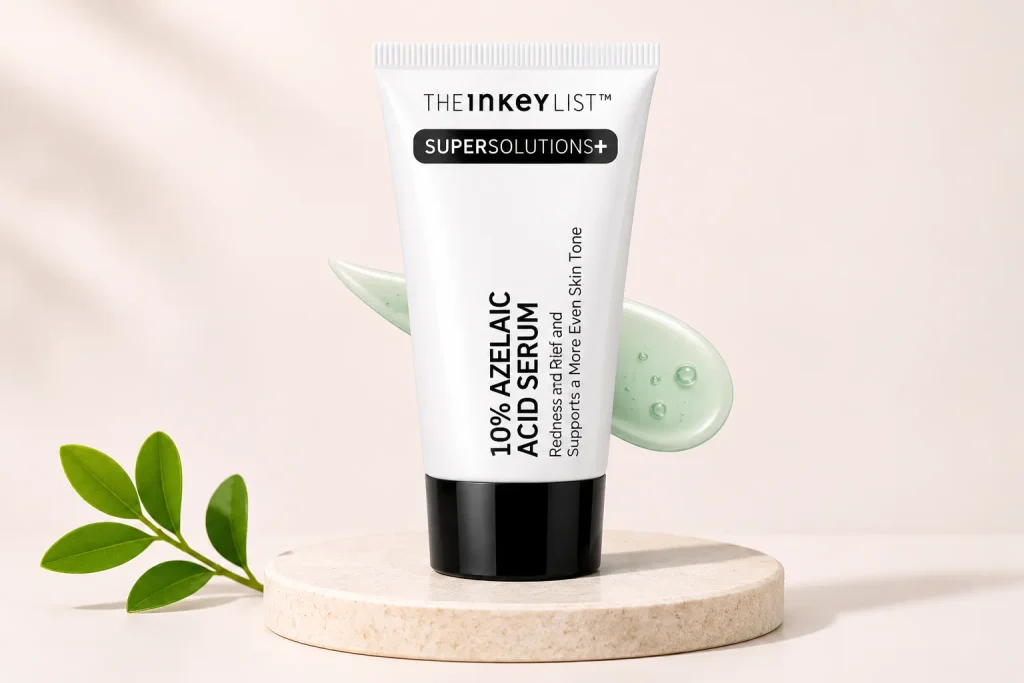
- Best forSensitive, red skin
- TextureLight serum
- Key activesAzelaic acid 10%
- Price$20
Made for sensitive skin that flushes easily, this 10% serum calms redness while it works on marks. It is our gentlest way into an azelaic acid serum for hyperpigmentation, especially if stronger formulas have stung before.
Pros:
- 10% azelaic acid
- Made for sensitive skin
- Helps with redness
- Affordable
Cons:
- Fewer brightening extras
- Can still sting at first
5. Cos De BAHA Azelaic Acid 10% Serum: Best for Post Acne Marks
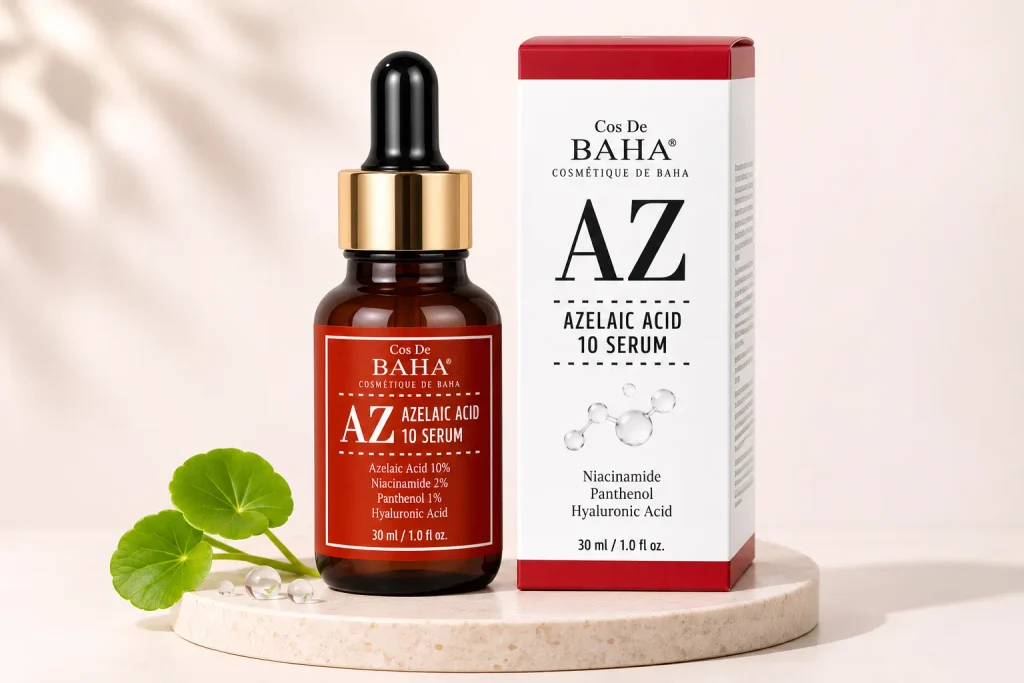
- Best forPost acne marks
- TextureLight serum
- Key activesAzelaic acid 10%, niacinamide
- PriceCheck current price
Niacinamide, hyaluronic acid, panthenol and green tea sit beside 10% azelaic acid, which suits the flat red and brown marks pimples leave behind. The formula is fragrance free and feels comfortable under a moisturizer.
Pros:
- 10% azelaic acid
- Niacinamide added
- Hydrating hyaluronic acid and panthenol
- Fragrance free
Cons:
- Has polysorbate 20, which fungal acne prone skin may avoid
- Not for very sensitive skin
6. Sesderma Azelac Ru Serum: Best for Melasma and Stubborn Patches
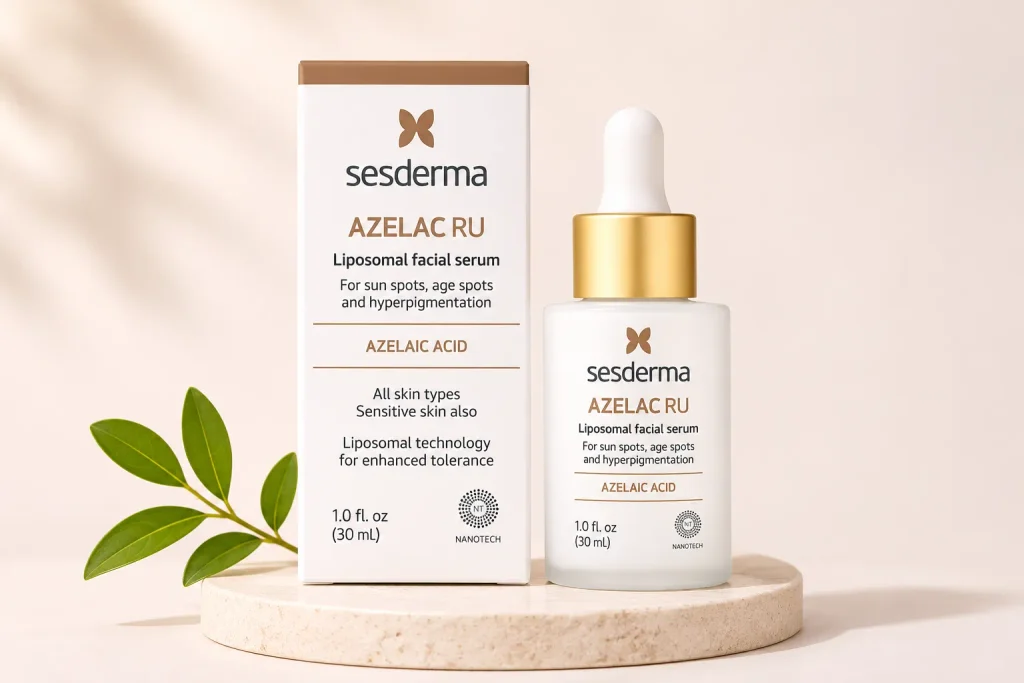
- Best forMelasma, sun spots
- TextureLiposomal serum
- Key activesLiposomal azelaic acid
- Price$60
Built for stubborn patches like melasma and sun spots, this liposomal serum is our pick when lighter formulas feel too gentle. It is the step up for people who already know their skin handles azelaic acid well.
Pros:
- Made for sun spots and hyperpigmentation
- Liposomal formula
- Suits melasma type patches
- A little goes a long way
Cons:
- Costs more than the others
- Strength is less clear than the 10% serums
How Azelaic Acid Fades Dark Spots
Dark spots form when your skin makes extra melanin after a trigger such as a pimple, sun or irritation. Azelaic acid helps because it slows pigment production in the cells that make melanin, and it calms the inflammation that set the spot off. That is why an azelaic acid serum for hyperpigmentation also helps acne and redness at the same time.
It will not lighten your natural skin tone, and it cannot reach very deep spots. For those, a dermatologist has stronger tools.
Which Dark Spot Do You Have?
- Acne marks (flat red or brown spots after pimples): picks 2 and 5
- Sun spots (small flat spots on sun exposed skin): picks 1 and 3
- Marks with redness or sensitive skin: pick 4
- Melasma (patchy, on cheeks and forehead, from hormones and sun): pick 6
Azelaic acid works best on marks from acne and irritation. The American Academy of Dermatology says spots tied to acne usually fade once the acne is controlled. Melasma is harder, and the AAD melasma page explains why a dermatologist often helps. Want to compare other fading ingredients? See our best dark spot removers for face.
Strength and Texture: Start Gentle
Over the counter serums usually top out at 10%. Prescription azelaic acid runs 15 to 20%. Some labels use a derivative, which can feel gentler.
- Gentlest start: The Inkey List
- Light and easy: Naturium and Cos De BAHA
- Silky and richer: The Ordinary
- Stronger feel: Paula’s Choice, which tingles first
- Premium for stubborn patches: Sesderma
How to Use an Azelaic Acid Serum for Hyperpigmentation
Start three times a week, then work up to once or twice a day as your skin settles. Apply a pea sized amount to clean, dry skin, then moisturize.
- Gentle cleanser
- Azelaic acid serum
- Moisturizer
- Tinted iron oxide sunscreen SPF 30 or higher
- Gentle cleanser
- Azelaic acid serum, or your retinoid on alternate nights
- Moisturizer
Niacinamide and hyaluronic acid pair well with it. If you already use vitamin C, see our best vitamin C serums for dark spots, and use one in the morning and one at night. Retinoid user? Our beginner retinol serums guide shows how to start slowly. Then follow the skincare routine order.
Week by Week: What to Expect
- Weeks 1 to 2: your skin adjusts, and mild tingling is normal, so do not give up
- Weeks 4 to 6: redness settles and spot edges soften
- Weeks 8 to 12: spots start to look lighter
- Months 3 to 4: a clear change with over the counter serums
- Up to 12 months: full fading, and deeper spots can take longer
Take a photo in the same light every two weeks, because spots fade slowly and photos show the change. Sun is what darkens spots again, so sunscreen is not optional. Choose a tinted one with iron oxide, like the options in our best sunscreens for acne prone skin guide.
Darker Skin Tones and Sensitive Skin
Using an azelaic acid serum for hyperpigmentation on deeper skin tones is a good idea, but irritation can leave new dark marks, so go slowly and patch test first. The AAD advises buying US made products or ones your dermatologist recommends, because some imported creams hide steroids or mercury. Stop any serum that burns or stings. Pregnant or breastfeeding? Ask your doctor first.
- Do not skip sunscreen, even on cloudy days
- Do not layer it with strong acids or scrubs at the same time
- Do not pick or scratch your spots
- Do not use bleach or unlabeled creams, which can harm your skin
- Do not expect results in two weeks
How We Choose
We chose each azelaic acid serum for hyperpigmentation by its real azelaic acid strength, its texture, how gentle the formula feels and which dark spot it suits best. Our 6 picks cover budget, oily skin, sensitive skin and melasma, so you only buy what your skin needs.
FAQs
Does an azelaic acid serum for hyperpigmentation really work?
Yes. Azelaic acid slows the extra pigment behind dark spots and calms inflammation, so it helps most with marks from acne and irritation.
How long does azelaic acid take to fade dark spots?
With an azelaic acid serum for hyperpigmentation, expect early softening in 4 to 6 weeks and a clear change in about 3 to 4 months. Full fading can take up to a year, and patience pays off.
Can I use azelaic acid with vitamin C or niacinamide?
Niacinamide pairs well with it. Use vitamin C in the morning and azelaic acid at night if your skin gets irritated.
Can I use azelaic acid with retinol?
Yes, but start slowly. Use azelaic acid in the morning and your retinol at night, or alternate nights.
Is azelaic acid good for dark skin tones?
Yes, it is gentle for most skin tones. Go slowly, patch test and always wear sunscreen to protect spots from darkening.
Can I use it twice a day?
Yes, once your skin has adjusted. Start three times a week and build up if there is no stinging.
Bottom Line
The best azelaic acid serum for hyperpigmentation is the one that fits your spot type and your skin. Start gentle, wear sunscreen every day and give it three to four months. See a dermatologist if your spots do not budge.