
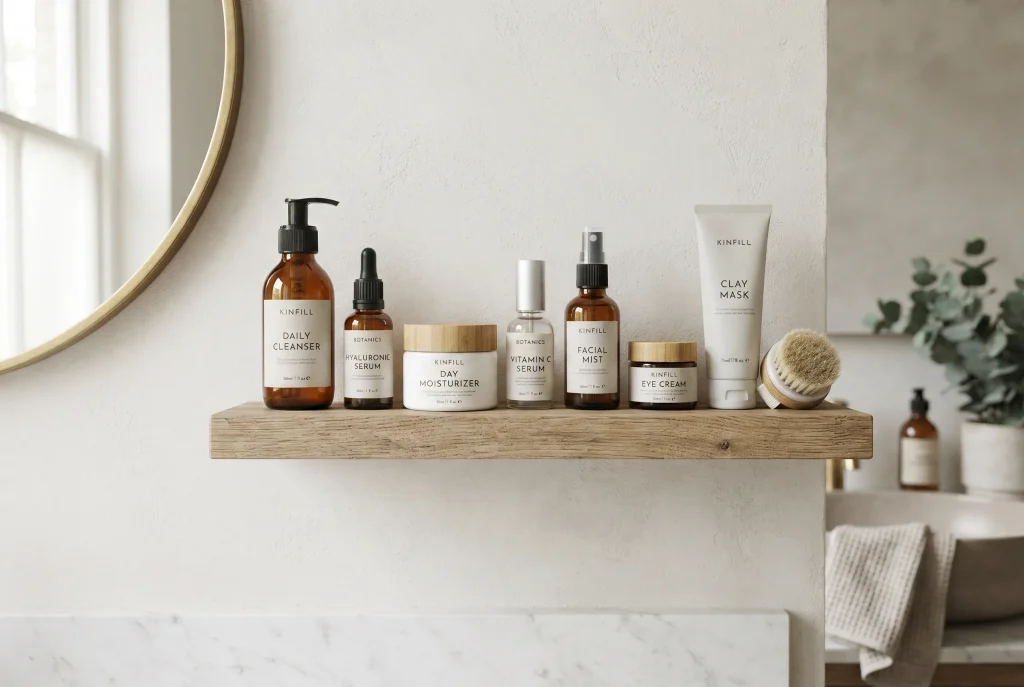
Okay, so what is clean skin care? Everyone says it, almost every brand puts it on the label, and hardly anyone explains it.
Here is the honest answer. Clean skin care has no official meaning. No law says what a product must leave out to call itself clean, so each brand, store and website decides for itself.
That does not make it fake, and it does not make it magic either. It is a way of shopping: fewer questionable ingredients, simple labels and a bit more care for the planet. Below I explain what it really means, what clean skincare products usually skip, who gets the most from them and five label checks you can use at any shelf.
Quick answer: clean skin care means products made without the ingredients a brand sees as risky, and it works best when you pick it for your skin, not for the label.
- It has no official definition, so every brand sets its own rules
- Clean is not the same as natural or organic
- Natural does not always mean safer, because plant ingredients can cause allergies
- Some ingredients on avoid lists, like parabens, have a good safety record
- It helps most if your skin is sensitive or reacts to fragrance
- Use the label as a clue, then judge each product by how your skin reacts.
In this article
What Clean Skin Care Really Means
Think of clean skin care as a promise a brand makes, not a rule it has to follow. In the US the FDA has no definition for the word, so a product can be called clean with no check on what is inside.
Most brands use it to mean three things. The formula leaves out ingredients they see as risky. The full ingredient list is shown. And many add care for the planet through packaging and sourcing.
The catch is that the list changes from place to place. Clean at Sephora restricts dozens of ingredient groups, and Credo, Ulta and many brands keep their own lists, so a product that is clean in one store can fail in another. Skin doctors at a dermatology forum have said the same: there is no clear definition and little science behind the word itself.
So why is it so popular? Shoppers now ask what is left out, not only what is inside, and clean skin care feels like a way to stay in control of what goes on your face.
Clean Skin Care vs Natural vs Organic
These words get mixed up all the time, so here is the simple version.

| Term | What it means | Regulated? |
|---|---|---|
| Clean | Made without a brand’s list of risky ingredients | No |
| Natural | Ingredients that come from plants or minerals | No |
| Organic | Ingredients grown without synthetic pesticides | Yes, with certification |
| Non toxic | A brand claim that ingredients are safe | No |
| Eco friendly | Lower impact packaging and sourcing | No |
Organic is the only one with real rules, and only when a product has official certification. USDA organic needs at least 95% organic ingredients, and the label “made with organic ingredients” needs at least 70%. When you shop for organic products for skin, look for the seal, not just the word.
Natural is the one to be careful with. It only means the ingredient came from nature, and poison ivy does too.
Ingredients Clean Brands Usually Skip
Every brand list for clean skin care is different, but these show up again and again.
- Parabens, a family of preservatives
- Phthalates
- Sulfates such as SLS and SLES
- Synthetic fragrance
- Petrolatum, mineral oil and paraffin
- Talc and heavy metals
- PFAS, found in some long wear makeup
You will also see some chemical sunscreen filters, formaldehyde releasers and certain dyes on avoid lists. Remember that a clean label tells you what is missing. It does not tell you if the formula works.
Is Clean Safer? What Dermatologists Say
This is where the honest part starts. Some skin doctors say clean skin care does not mean safer, and the evidence gives them a point.
- Natural can trigger allergies. A 2022 review in JAMA Dermatology looked at 1,651 natural personal care products. About 94% had at least one skin allergen, and the average product had 4.5.
- Some banned ingredients have a good record. Parabens sit on many avoid lists, yet the American Contact Dermatitis Society once named them its Nonallergen of the Year.
- Swaps can be harsher. Methylisothiazolinone, used by some brands instead of parabens, is linked to some of the highest rates of allergic reaction.
- Petrolatum is often avoided but gentle. It is a hypoallergenic ingredient that clinics use all the time.
On the other side, a couple of studies found that nature based routines reduced redness for some people with sensitive skin, rosacea or eczema. Both things can be true: clean skin care can suit reactive skin, and it is still not safer for everyone.
One more point. Products with weak preservatives can grow bacteria, so a short ingredient list is not always a safe one. If you want brands that skin doctors actually back, see our dermatologist recommended skincare brands.
Who Decides What Is Clean? Laws and Store Rules
In the US the FDA does not approve cosmetics before they go on sale, and it has banned only a small number of ingredients. The EU bans or restricts far more, which is why one brand can sell a different formula in Europe.
A 2022 law, the Modernization of Cosmetics Regulation Act, gave the FDA more power. Brands now have to list their products, report serious bad reactions and be ready for recalls. It still did not create a long banned list, and it did not define clean.
That gap is why stores built their own programs. Clean at Sephora, Credo’s Clean Standard and Ulta’s Conscious Beauty each use their own list. Another label with no legal meaning is medical grade, which we explain in our medical grade skincare guide.
Environmentally Friendly Skin Care Products: What Counts
Clean skin care often comes bundled with eco claims, but they are two different things. A formula can be clean and still come in a plastic jar that is hard to recycle.
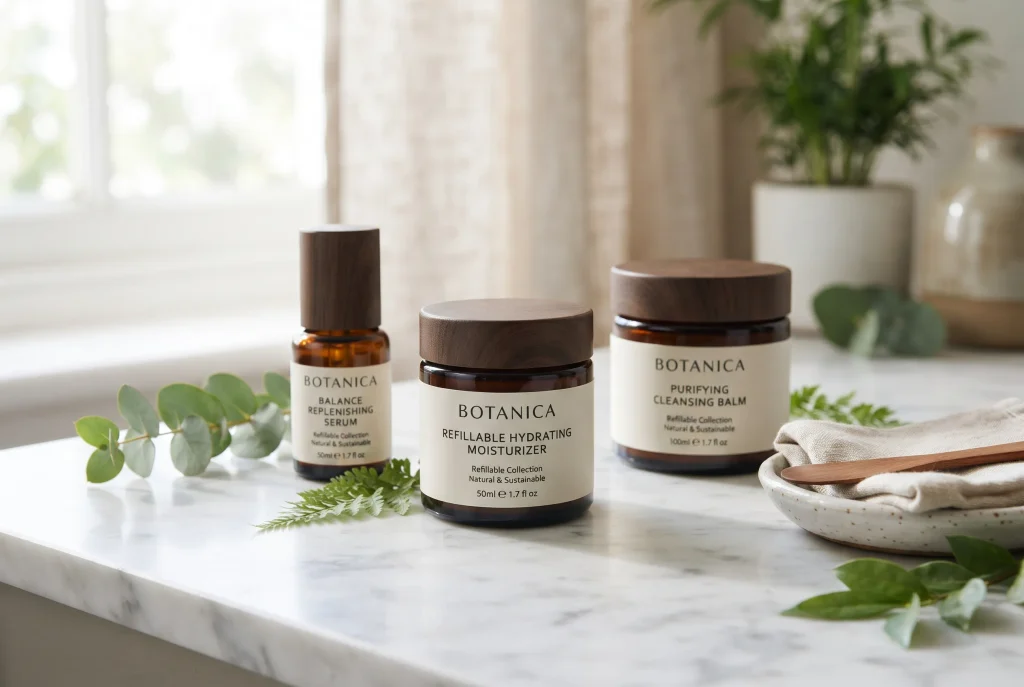
Here is what to look for in environmentally friendly skin care products.
- Refillable or recycled packaging, not only “recyclable”
- No microplastics in the formula
- Responsibly sourced mica and palm oil
- A carbon or renewable energy commitment
- Less plastic wrap and fewer extra boxes
Sephora’s Clean + Planet Positive seal is a useful example. It asks for at least half of core packaging to hold 30% post consumer recycled content, no microplastics and 1% of profits for environmental causes. When it launched, only 18 brands held it, so vague words like green or eco deserve some doubt.
Who It Suits and Who Can Skip It
Clean skin care suits you if:
- Your skin is sensitive and stings with fragrance
- You like short, simple ingredient lists
- You want less plastic and waste
- You want a fresh start with a simpler routine. Our guide to skin care products for sensitive skin is a good place to begin
You can skip clean skin care if:
- Your skin is calm and happy with what you use now
- You need a treatment active, like retinol or an acid, because those are chosen for results, not for being clean
- You would drop sunscreen because some clean brands avoid certain filters
That last one matters. Never skip sunscreen. A non comedogenic sunscreen for face fits into a clean routine just fine.
5 Label Checks Before You Buy Clean Skincare Products
- Check 1: Read the full ingredient list, not just the front. Words like clean, pure and green are not proof.
- Check 2: If your skin reacts, look for fragrance and essential oils high on the list. Our fragrance free moisturizer picks skip both.
- Check 3: Look for official seals such as USDA Organic, COSMOS or ECOCERT, and the National Eczema Association Seal.
- Check 4: Read how the brand defines clean on its own site. A good brand explains its list and why.
- Check 5: Patch test every new product, even a natural one.
- Dab a small amount on your inner arm or along your jaw
- Wait 24 hours
- Stop if you see redness, itching or swelling
- Add one new product at a time so you know what caused a reaction.
A Simple Clean Routine, Step by Step
- Gentle cleanser or a water rinse
- Light moisturizer
- Broad spectrum SPF 30 or higher
- Gentle cleanser
- Moisturizer
- One targeted active only if you need it
A clean skin care routine does not need many steps. Start with a gentle cleanser, such as the ones in our best cleanser for sensitive skin list. Add a barrier friendly moisturizer from our sensitive skin moisturizers picks, and finish with sunscreen in the morning.
Not sure about the order? Our skincare routine order guide shows what goes first. Once your skin is calm for a few weeks, you can add vitamin C, like those in our best vitamin C serums for dark spots.
FAQs
What is clean skin care?
It is skin care made without ingredients a brand sees as risky. There is no official definition, so each brand sets its own list.
Are clean skincare products better for you?
Not always. They can be a good fit for sensitive or fragrance reactive skin, but natural ingredients can also cause allergies.
Is clean skin care the same as organic?
No. Organic is about how ingredients are grown and is only reliable with certification. Clean is about what a product leaves out.
What are organic products for skin?
They are skin care products with ingredients grown without synthetic pesticides. Look for a seal like USDA Organic to be sure.
Are environmentally friendly skin care products always clean?
No. Eco friendly is about packaging and sourcing, and clean is about the formula. A product can be one without the other.
Does clean skin care cost more?
Often yes, but price does not prove quality. Judge a product by its ingredients and how your skin reacts.
Bottom Line
Clean skin care is a useful way to shop, not a rule of science. Use it to cut fragrance, read labels and choose gentler routines, then judge every product by how your skin reacts. Start with one swap, like a fragrance free cleanser, and give it four weeks.