
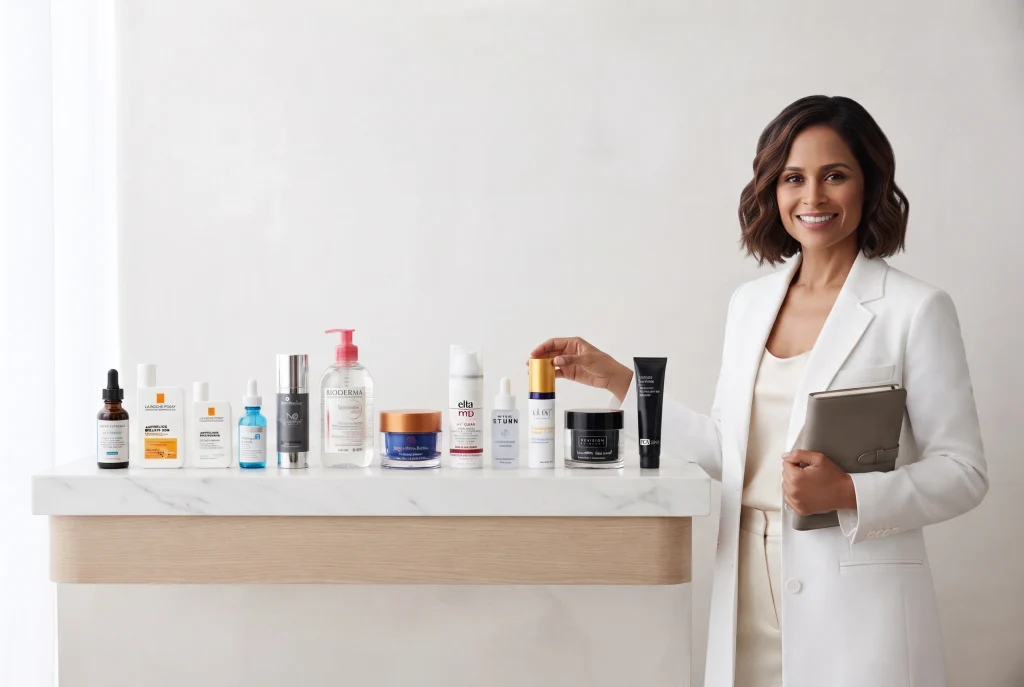
Explore dermatologist-recommended skincare brands including CeraVe, La Roche-Posay, Cetaphil and more, plus what makes each brand stand out.
Walk into any skincare aisle and the choices can feel endless. One brand is known for ceramides. Another is famous for sensitive-skin formulas. Another has become almost synonymous with facial sunscreen.
So which names keep standing out in dermatologist-focused skincare?
Some of the most familiar dermatologist-recommended skincare brands include CeraVe, La Roche-Posay, Cetaphil and Vanicream. Eucerin, Neutrogena, Bioderma, EltaMD and SkinCeuticals also have strong identities built around different parts of skin care.
This guide is about those differences: what each brand is known for, what makes its range distinctive and where it may fit into a real routine.
Table of Contents
What Makes a Skincare Brand Dermatologist-Recommended?
“Dermatologist-recommended” does not mean there is one official certification that every brand has to earn. A brand may use the term based on dermatologist surveys, recommendations or because it works with dermatologists when developing its products.
So, what makes these brands stand out? They usually focus on real skin needs such as gentle cleansing, barrier support, acne, sensitive skin and sun protection.
Top Dermatologist-Recommended Skincare Brands and What Makes Them Stand Out
CeraVe
CeraVe has built its identity around the skin barrier. The brand says it has worked with dermatologists since it was founded and formulates its products with three essential ceramides. Many formulas also use its MVE delivery technology, designed to release moisturizing ingredients over time.
What makes CeraVe especially useful is the breadth of the range. You can move from a creamy cleanser to a foaming cleanser, exfoliating wash, moisturizer, acne product or sunscreen without leaving the brand. That makes it easy to compare formulas by skin need rather than assuming one texture suits everyone.
For a closer look, compare our Best Hydrating Cleanser guide, CeraVe Foaming Facial Cleanser Review and CeraVe SA Cleanser Review.
La Roche-Posay
La Roche-Posay stands out for the size and variety of its dermatology-focused range. Cleansers, moisturizers, acne products, serums and sunscreens sit alongside formulas aimed at sensitive or easily irritated skin.
The appeal is choice. Someone looking for a simple cleanser can explore the same brand as someone shopping for an acne treatment or high-protection SPF. If breakouts are your main concern, our Complete Acne Skincare Routine explains where cleansers, treatments and moisturizers fit before you choose a product.
Cetaphil
Cetaphil has a long-standing identity around sensitive skin and straightforward daily care. The brand says it works with dermatologists and healthcare professionals and has tested its products extensively in sensitive-skin research.
Its strength is simplicity. The range covers cleansers, moisturizers, body care and sun care without making every step feel like a treatment. It is an easy brand to explore when you want dependable routine basics rather than a shelf full of strong actives.
Vanicream
Vanicream is another familiar name in sensitive-skin care, but its personality is even more pared back. The brand focuses on simple daily products, including cleansers, moisturizers, body care, hair care and sunscreen.
That makes Vanicream particularly appealing for people who want fewer extras in their routine. Instead of chasing trends, the range is built around practical products that can sit quietly beside prescription or over-the-counter treatments.
Eucerin
Eucerin brings more than a century of skin-science history to the category. The brand describes its development as rooted in dermatological research and collaboration between pharmacists and dermatologists.
Today the range goes well beyond basic moisturizer. Eucerin covers face and body care, barrier support, sun protection and targeted concerns. It is especially useful to know as a brand when you want skincare that connects facial care with body care instead of treating them as completely separate categories.
Neutrogena
Neutrogena is one of the broadest and most accessible names on this list. Its range stretches from everyday cleansers and moisturizers to salicylic acid, retinol and sunscreen.
That variety is its biggest strength. You can find very different product types under the same name, so Neutrogena works well for shoppers who want familiar, widely available options across several routine steps. If congestion is your main issue, our How to Unclog Pores the Right Way guide explains which ingredients actually target clogged pores.
Bioderma
Bioderma is closely associated with micellar water and gentle cleansing, but that is only one part of the brand. Its ranges also cover dry skin, sensitive skin, blemish-prone skin, pigmentation and sun care.
What makes Bioderma stand out is how clearly its collections are organized around different skin states and concerns. It can be a useful brand to explore when you like gentle cleansing but also want targeted options within the same skincare system.
EltaMD
EltaMD has a particularly strong identity in facial sun protection. Its sunscreen range includes different textures, tints and formulas designed for daily facial wear, alongside cleansers and moisturizers.
That sunscreen-first reputation gives EltaMD a clear place in a dermatologist-focused guide. Daily UV protection matters across acne, pigmentation and ageing routines. If breakouts make SPF difficult to choose, see our Best Sunscreens for Acne-Prone Skin.
SkinCeuticals
SkinCeuticals sits at the premium end of this list. The brand is especially known for targeted formulas built around antioxidants, vitamin C, exfoliating acids and ageing-focused skincare.
Its role is different from a basic cleanser-and-moisturizer brand. SkinCeuticals is more likely to appeal when you are specifically shopping for a treatment step and are comfortable with a higher price point. That treatment-led identity is what makes it stand apart from the more everyday pharmacy-style brands above.
Which Dermatologist-Recommended Brand Is Right for You?
Each brand has its own strengths. This quick comparison can help you narrow down where to start.
| Brand | Worth exploring for |
|---|---|
| CeraVe | Barrier support, ceramides and everyday basics |
| La Roche-Posay | Sensitive skin, acne care and sunscreen |
| Cetaphil | Gentle, simple everyday skincare |
| Vanicream | Minimal, sensitive-skin-friendly formulas |
| Eucerin | Face and body care, hydration and barrier support |
| Neutrogena | Acne, retinol, hydration and sunscreen |
| Bioderma | Gentle cleansing and skincare for different skin needs |
| EltaMD | Daily facial sunscreen |
| SkinCeuticals | Premium antioxidants and targeted treatments |
You do not have to build your whole routine around one brand. Start with what your skin needs most, then choose the product that fits that job. If you are not sure where a new product belongs, our Skincare Routine Order guide can help.a new product belongs.
Affordable vs Premium Dermatologist-Recommended Brands
You do not have to move into premium skincare to build a dermatologist-focused routine. CeraVe, Cetaphil, Vanicream, Eucerin and Neutrogena all offer accessible everyday products. That matters because cleansers, moisturizers and sunscreen are repeat purchases.
Premium brands can make sense when you are paying for a more specialized treatment.
How to Choose Between Dermatologist-Recommended Skincare Brands
Start With the Product Category
Decide what you actually need: cleanser, treatment, moisturizer or sunscreen. This immediately makes the brand list easier to navigate.
Match the Formula to Your Main Goal
Barrier support, acne treatment, pigmentation, ageing and sun protection are different jobs. Look for a formula built around the job you need rather than choosing only by packaging or popularity.
Make It Fit Your Existing Routine
A new product should have a clear place in your routine. If you already use strong treatments, you may want the rest of your products to stay simple. AAD guidance on skincare order also warns that using too many products can irritate skin.
Choose a Routine You Can Keep Using
Budget, texture, availability and how a product feels on your skin all affect consistency. A well-chosen basic you use every day can be more useful than a complicated routine you keep changing.
When to See a Dermatologist
Skincare brands can help you build a routine, but persistent or painful acne, recurring rashes, severe irritation, rapidly changing skin or pigmentation that keeps worsening may need professional assessment. A dermatologist can diagnose the problem and recommend treatment when over-the-counter skincare is not enough.
Common Myths About Dermatologist-Recommended Skincare Brands
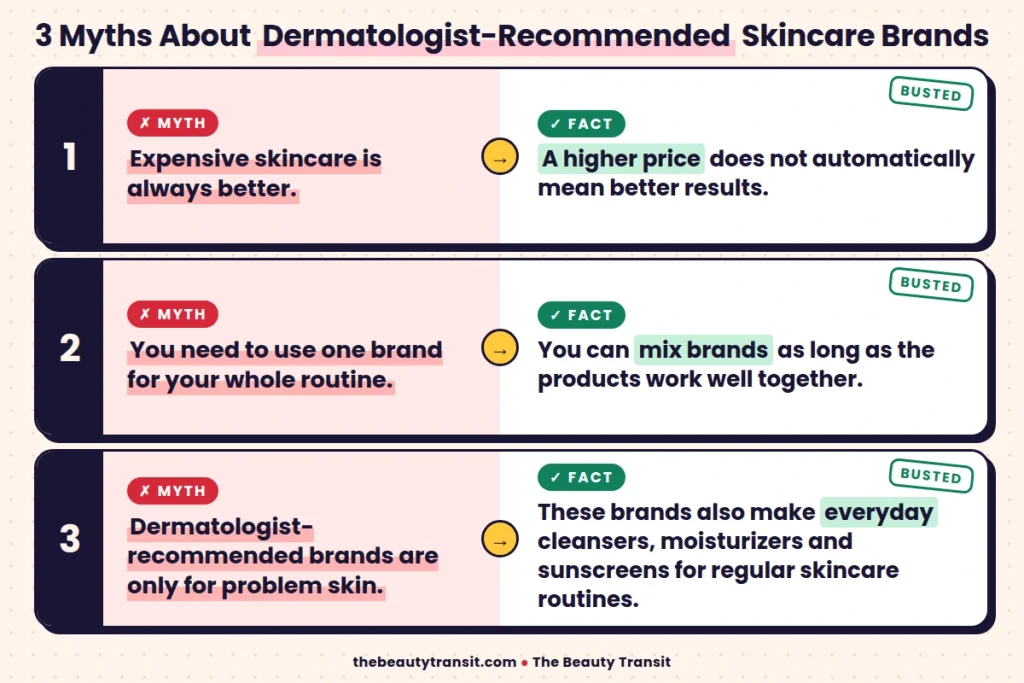
There is a lot of confusion around what dermatologist-recommended skincare actually means. Here are a few common myths worth clearing up.
Myth: Expensive Skincare Is Always Better
A higher price does not automatically mean better results. Many dermatologist-recommended brands, including CeraVe, Cetaphil and Vanicream, are built around affordable everyday skincare.
Myth: You Need to Use One Brand for Your Whole Routine
You can mix brands. Your cleanser might come from CeraVe, your treatment from another brand and your sunscreen from EltaMD. What matters is how the products work together in your routine.
Myth: Dermatologist-Recommended Means the Brand Is Only for Problem Skin
Not at all. These brands make plenty of everyday products for cleansing, moisturizing, sun protection and general skin maintenance. You do not need to have acne, eczema or another skin concern to use them.
This version adds value without bringing back the repeated “not every dermatologist-recommended product is good” message you specifically wanted removed.
FAQs About Dermatologist-Recommended Skincare Brands
What skincare brands do dermatologists commonly recommend?
CeraVe, Cetaphil, La Roche-Posay and Vanicream are some of the most familiar dermatologist-focused names. Eucerin, Neutrogena, Bioderma, EltaMD and SkinCeuticals also stand out for different parts of a routine.
What is the #1 dermatologist-recommended skincare brand?
There is no single universal #1 brand across every skin type, country and product category. CeraVe does state that it is the #1 dermatologist-recommended skincare brand in the U.S. based on the survey cited by the brand.
Is CeraVe dermatologist-recommended?
CeraVe says it has worked with dermatologists since the brand was founded and that its products are developed with dermatologists. Its barrier-focused formulas use three essential ceramides.
Which dermatologist-recommended brands are known for sensitive skin?
Cetaphil and Vanicream have especially strong sensitive-skin identities, while CeraVe, La Roche-Posay and Bioderma also offer many options for sensitive skin.
Which brands have options for acne-prone skin?
CeraVe, La Roche-Posay and Neutrogena all have acne-focused products. The useful next step is choosing the right active and product type for the kind of acne you are treating.
Which dermatologist-recommended brand is known for sunscreen?
EltaMD is particularly associated with facial sunscreen. La Roche-Posay, CeraVe, Neutrogena and other brands on this list also offer broad sun-care ranges.
The Bottom Line
Dermatologist-recommended skincare brands stand out for different reasons. CeraVe is strongly associated with barrier-focused everyday care. La Roche-Posay offers a wide dermatology-led range. Cetaphil and Vanicream keep sensitive-skin care approachable. Eucerin connects face and body care, EltaMD has a clear sunscreen identity, and SkinCeuticals focuses more heavily on premium targeted treatments.
That is what makes this group useful: you are not choosing between nine versions of the same brand. Each has a different strength. Start with what you want from your routine, then explore the brand whose range is strongest in that area.
Pingback: Best Dermatologist-Recommended Cleanser: 4 Top Picks