
Most people think dry lips need more lip balm. So they put it on again and again, all day long.
Here is the problem: if your balm has fragrance, flavor or menthol, more balm means more irritation. Your lips never get the chance to heal.
The best hypoallergenic lip balm is a plain one: no fragrance, no flavor, no lanolin. It may feel boring, but boring is what sore lips need.
Below are five easy picks, plus a simple way to test any balm before you trust it.
In this Article
Best Hypoallergenic Lip Balm: Quick Picks
| Product | Best for | Feels like | Price |
| La Roche-Posay Cicaplast Lip Balm B5 | Best overall | Soft, creamy balm | About $12 |
| CeraVe Healing Ointment | Very dry, cracked lips | Thick ointment | About $10 |
| Vaseline Original Petroleum Jelly | Simplest and cheapest | Plain jelly | About $3 |
| Aquaphor Lip Repair Stick | Easy to carry | Smooth stick | About $5 |
| Sun Bum Mineral SPF 30 Lip Balm | Daytime sun cover | Light, slightly white | About $4 |
Not sure where to start? Pick Cicaplast for daily wear and Vaseline for bedtime.
What Does Hypoallergenic Lip Balm Really Mean?
Here is the surprise: the word hypoallergenic is not a promise. The FDA has no set rules for it, so any brand can print it on the label.
It simply suggests the maker tried to use fewer common triggers. It does not mean the balm is safe for every person.
So read the ingredient list, not just the front of the tube. A short list with no fragrance is a good sign.
Is It Dry Lips or a Lip Balm Allergy?
Most people just have dry lips. But some are reacting to what they put on them. Both look alike at first.
Think allergy or irritation if:
Your lips burn or itch right after you apply a balm.
The corners crack and the skin turns red or swollen.
It gets worse with a flavored or scented balm, and a bit better when you stop.
Skin doctors call this contact cheilitis. The fix is to stop the balm you suspect and switch to a plain one. If you have dry skin elsewhere, our best skincare products for dry skin guide can help.
Ingredients to Avoid in a Hypoallergenic Lip Balm
The American Academy of Dermatology shares a clear list of lip product ingredients to skip. Here are the main ones:
Fragrance and flavoring: this includes mint, cinnamon and citrus. They are common triggers.
Menthol, camphor and eucalyptus: they feel cool, but they can dry and irritate lips.
Lanolin: a wool based ingredient that causes reactions in some people.
Octinoxate and oxybenzone: chemical sunscreen filters that can bother sensitive lips.
Phenol, propyl gallate and salicylic acid: these can sting cracked skin.
Many scented lip products also sneak in a pretty flavor. If your lips are sore, skip anything that tastes or smells sweet. The same idea applies to your face, so see our fragrance free moisturizer guide.
What to Look for Instead
Good news: the helpful ingredients are simple, and most are cheap.
Petrolatum and white petroleum jelly: they seal in moisture and rarely cause reactions.
Ceramides and dimethicone: they help protect the lip barrier.
Shea butter and castor seed oil: they soften rough, flaky lips.
Zinc oxide or titanium dioxide: gentle mineral sun cover for the day.
One caution: beeswax and nut oils are natural, but they bother some people. If you react to those, check the label.
How We Chose the Best Hypoallergenic Lip Balms
We looked for lip balms with no fragrance, flavor or lanolin, the common triggers for sensitive lips. Each pick has a short, simple formula built on petrolatum, shea butter or ceramides, which soften dry lips without stinging.
We also kept chemical sun filters out of the picks, and included a mineral SPF option for daytime. Want to know which brands skin doctors trust? Read our dermatologist recommended skincare brands guide.
Our 5 Best Hypoallergenic Lip Balms
1-La Roche-Posay Cicaplast Lip Balm B5: Best Overall Hypoallergenic Lip Balm
Best for: dry, cracked, sensitive lips
Texture: soft, creamy balm
Ingredients: shea butter, panthenol, beeswax
Packaging: tube
Price: about $12
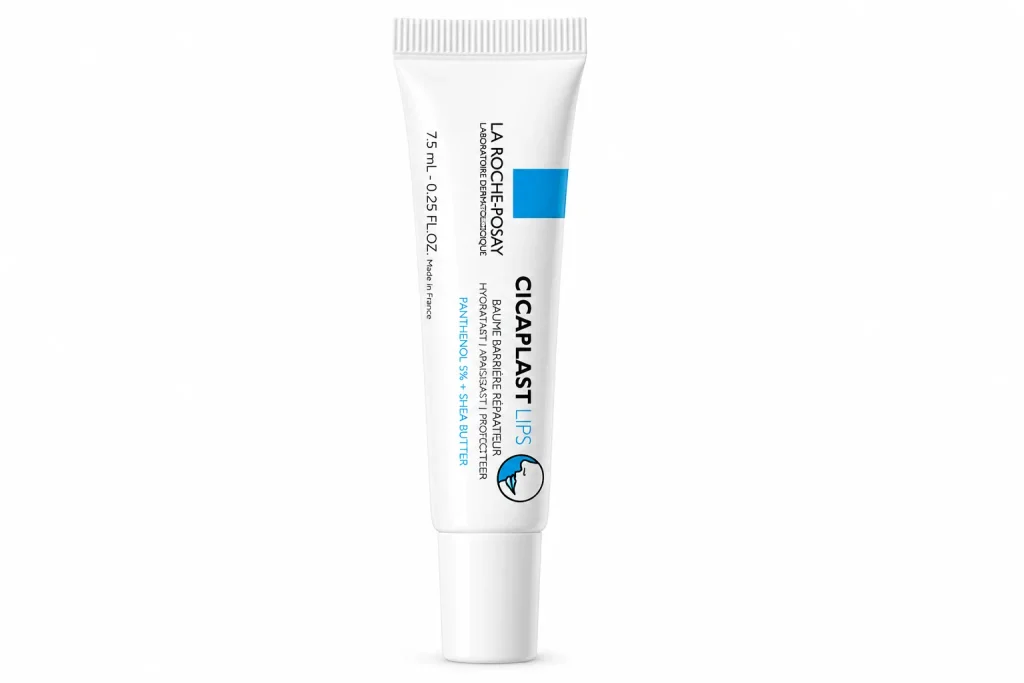
If your lips are sensitive, this is the one we’d start with. La Roche-Posay Cicaplast Lip Balm B5 is fragrance free and has no lanolin on the label, so it leaves out the usual troublemakers. Shea butter and panthenol soften and soothe dry, sore lips. It feels comfortable in the day and at night, so one tube does it all.
Pick it if: you want one gentle balm for daily use.
Skip it if: you react to beeswax.
2-CeraVe Healing Ointment: Best for Very Dry, Cracked Lips
Best for: very dry, cracked lips
Texture: thick ointment
Ingredients: petrolatum, ceramides, hyaluronic acid
Packaging: tube
Price: about $10
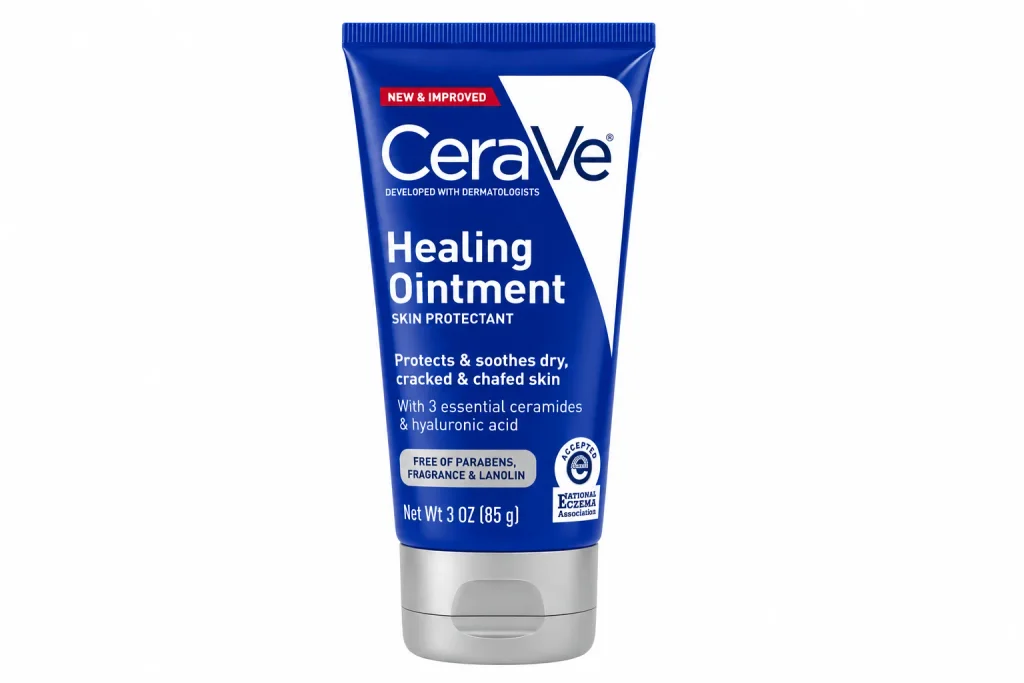
This ointment is fragrance free and lanolin free. It is thick and rich, so a little goes a long way. That makes it a strong pick for very dry, cracked lips, because it forms a protective layer that keeps moisture in overnight.
Pick it if: your lips are cracked and need heavy care.
Skip it if: you dislike a sticky feel.
3-Vaseline Original Petroleum Jelly: Best Simple Hypoallergenic Lip Balm
Best for: the simplest, cheapest care
Texture: plain, glossy jelly
Ingredients: 100% white petrolatum
Packaging: small jar
Price: about $3
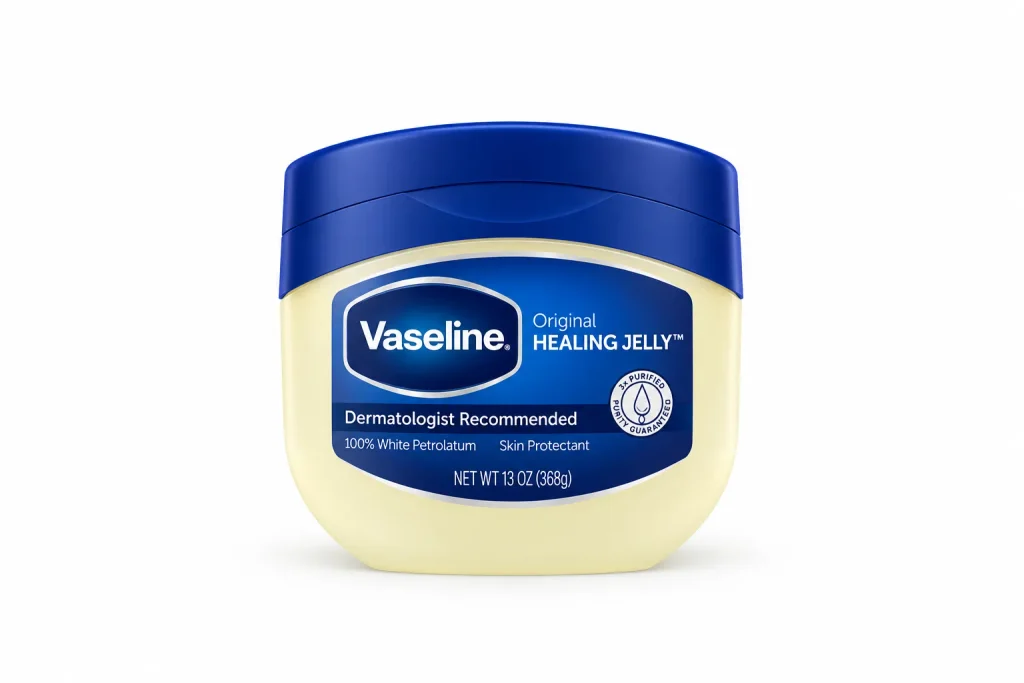
Vaseline Original Petroleum Jelly is the simplest pick here, and that is its strength. It is 100% white petrolatum, so there is very little to react to. It seals in moisture and makes a great night balm. Dab a little on before bed and wake up to softer lips.
Pick it if: you want one ingredient and a low price.
Skip it if: you want a stick or a matte finish.
4-Aquaphor Lip Repair Stick: Best Hypoallergenic Lip Balm to Carry
Best for: easy use on the go
Texture: smooth, light stick
Ingredients: shea butter, castor oil, panthenol
Packaging: stick
Price: about $5
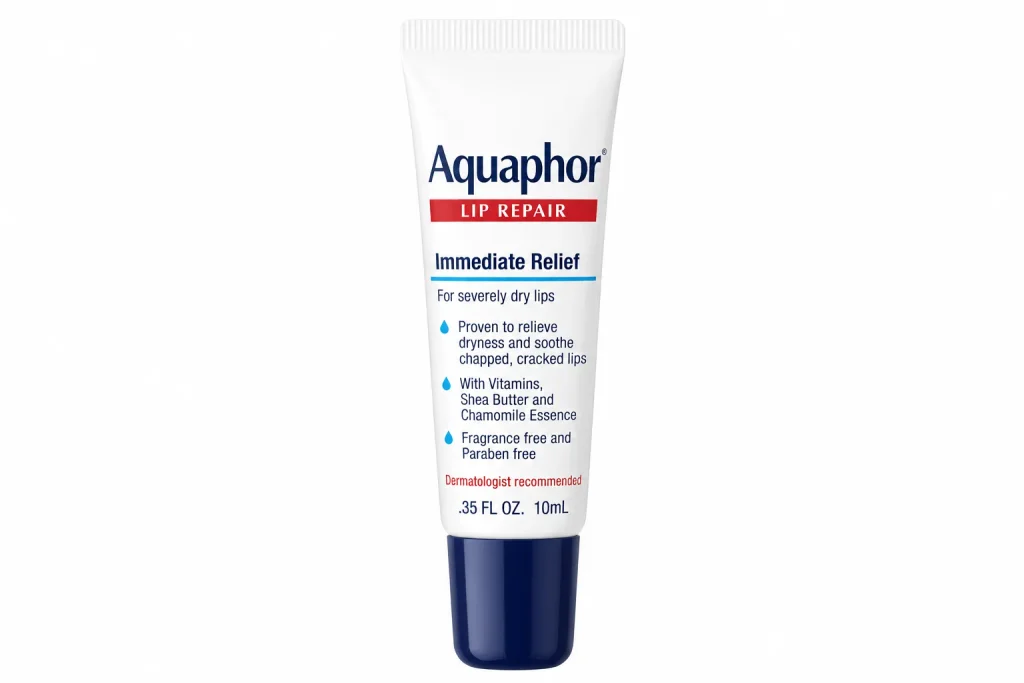
Aquaphor Lip Repair Stick is the one we’d toss in a bag. It is fragrance free and has no lanolin in the ingredient list, so it covers the main things sore lips react to. It glides on smoothly, with no mess on your fingers, so it’s easy to reapply during the day. A simple, gentle stick like this is what we’d pick for everyday use.
Pick it if: you want a clean balm you can use anywhere.
Skip it if: you need sunscreen from the same product.
5-Sun Bum Mineral SPF 30 Lip Balm: Best for Daytime Sun Cover
Best for: sun cover for sensitive lips
Texture: light balm, slight white tint
Ingredients: 8% zinc oxide, shea butter, jojoba oil
Packaging: stick
Price: about $4
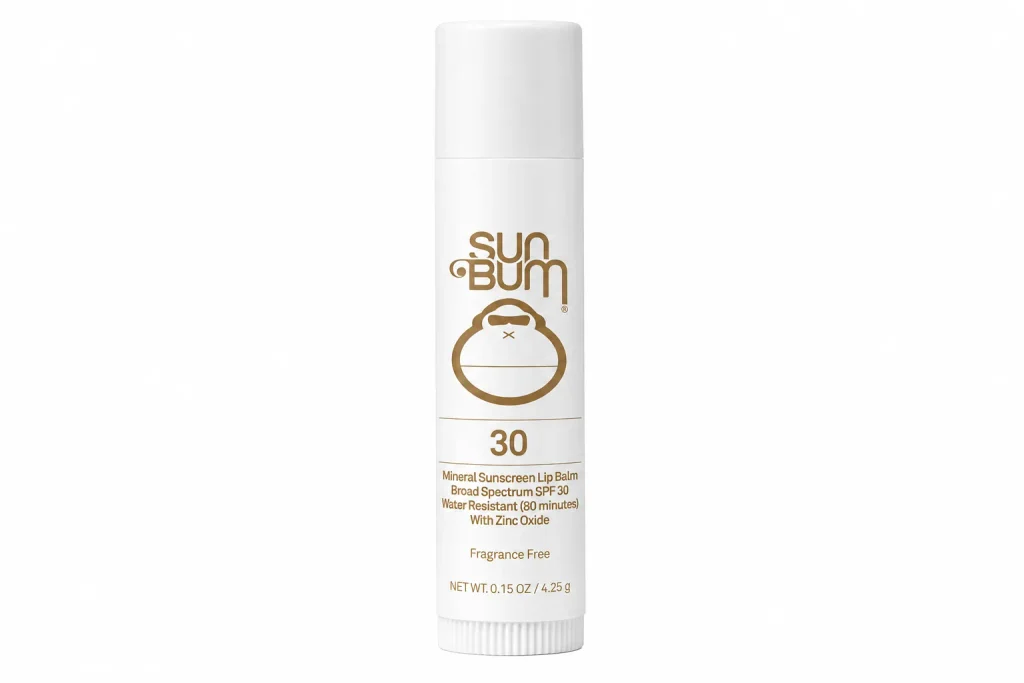
Sun Bum Mineral SPF 30 is our pick for daytime lip protection. It is fragrance free and uses mineral zinc oxide, not chemical filters, so it sits gently on sensitive lips. Your lips get sun too, and they have no natural shield. The AAD says to use SPF 30 or higher before time outdoors.
Pick it if: you want daytime sun cover without chemical filters.
Skip it if: you have a nut allergy, because it has sweet almond oil.
How to Patch Test a Hypoallergenic Lip Balm
Even a gentle balm can bother you. A quick test saves a lot of pain.
Dab a small amount on your inner forearm once or twice a day for two to three days. Watch for redness, itching or bumps.
If your arm stays calm, try the balm on one small part of your lips first. Then use it normally.
Switch one product at a time. That way you know exactly which one caused trouble.
How to Use Lip Balm the Right Way
Use a thick balm at night. Your lips heal while you sleep, so this is the best time.
Use an SPF balm in the morning. Reapply every two hours if you are outside.
Do not lick your lips. Spit dries them out faster and leaves them rougher.
Skip peeling flakes. Let them soften with balm instead.
Winter makes it harder. Our fall skincare routine guide shows how to adjust, and our best lip balms for dry lips guide has more options if you are not sensitive.
Common Lip Balm Mistakes
Mistake 1: choosing by flavor. A sweet taste often means added flavoring.
Mistake 2: using a cooling balm. Menthol feels fresh, but it can dry you out.
Mistake 3: trying several new balms at once. You will not know which one caused the reaction.
Are You Addicted to Lip Balm? A Common Myth
You may have heard that lip balm is addictive. Skin doctors say that is a myth.
But if you need to reapply all day and your lips are not getting better, the balm may be irritating you. Switch to a plain one with no fragrance or flavor and see what happens.
When to See a Doctor
Most dry lips get better in a week or two with a gentle balm. See a doctor or dermatologist if:
Your lips are not better after two weeks.
You have open sores, swelling or a rash around your mouth.
One spot will not heal. A sore that stays should always be checked.
Hypoallergenic Lip Balm FAQs
What is the best hypoallergenic lip balm?
A plain balm with no fragrance, flavor or lanolin. Cicaplast and Vaseline are good starting points.
Is Vaseline a hypoallergenic lip balm?
It is 100% petrolatum, so it has very few ingredients to react to. Many people with sensitive lips use it. Allergy to petrolatum is rare.
Can I be allergic to lip balm?
Yes. Fragrance, flavoring, lanolin and some sunscreen filters are common triggers.
Is lip balm with SPF safe for sensitive lips?
Yes, if it uses zinc oxide or titanium dioxide and has no fragrance. Mineral formulas are gentler than chemical ones.
How long does it take for dry lips to heal?
Usually a week or two. If not, talk to a doctor.
The Bottom Line
The best hypoallergenic lip balm is the plainest one that works for you.
Cicaplast is our easy pick for daily wear. CeraVe suits very dry lips, Vaseline is the simplest, Aquaphor is easy to carry, and Sun Bum covers you in the sun.
Skip fragrance, flavor and lanolin, patch test first, and change only one product at a time.