
Anti-aging has become a major skincare concern, and finding the best anti-aging serum for wrinkles can feel overwhelming. From retinol and peptides to hyaluronic acid, so many ingredients promise smoother, younger-looking skin.
So, which one should you actually buy?
We narrowed it down to three serums that do different jobs. RoC Retinol Correxion Deep Wrinkle Serum is our retinol pick for someone who wants to focus directly on visible wrinkles. Good Molecules Super Peptide Serum is an affordable peptide option. L’Oréal Revitalift 1.5% Pure Hyaluronic Acid Serum is the hydration-focused choice for plumper-looking skin and softer-looking fine lines.
The important part? These serums are not interchangeable. Below you will find what each one does, who should skip it, and which anti-aging serum suits your 50s.
On this Page
Best Anti-Aging Serum for Wrinkles: Our 3 Picks
| Product | Pick This If… | Main Approach | Price at Research |
| RoC Retinol Correxion Deep Wrinkle Serum | Wrinkles are your main concern | Retinol | $20.99 |
| Good Molecules Super Peptide Serum | You want an affordable retinol-free option | Peptides | $12 |
| L’Oréal Revitalift 1.5% Pure Hyaluronic Acid Serum | Dryness makes fine lines look more noticeable | Hyaluronic acid | $23.75 |
Prices can change. Check the current Amazon listing before buying.
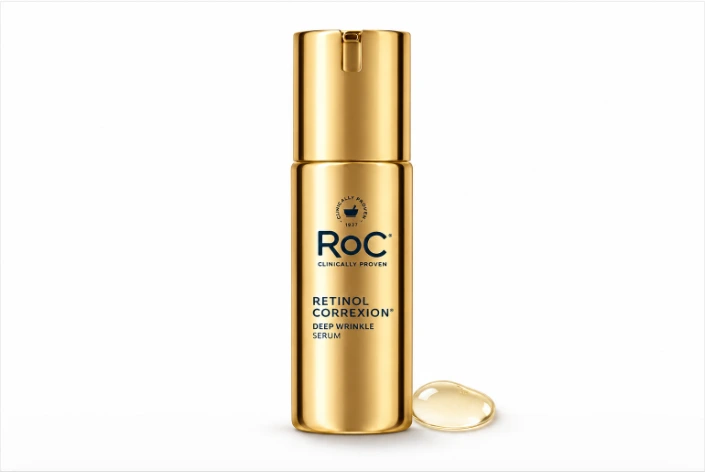
1-RoC Retinol Correxion Deep Wrinkle Serum — Best Retinol Pick
If your reason for buying an anti-aging serum is simply “I want something that seriously focuses on wrinkles,” RoC is the most direct pick of the three.
Quick facts
Best for: Visible fine lines and wrinkles
Key active: Retinol
Supporting ingredients: Glycerin, vitamin E, ascorbic acid and mineral complex ingredients
Texture: Lightweight, silky serum
Size: 1 fl oz | 30 mL
Packaging: Pump bottle (packaging may vary)
Price: About $20.99
RoC earns its place because retinol has a much stronger wrinkle story than simply adding moisture to the skin. Research on topical retinoids supports their role in improving signs of photoaging, including wrinkles.
Prescription tretinoin has the strongest clinical evidence, while cosmetic retinoids such as retinol are common in over the counter products. RoC also positions this serum for deep set wrinkles, fine lines, texture and dullness.
The American Academy of Dermatology advises using the least intense formula you can find, applying it at night only, and starting every other night. That matches the directions on this product.
Pros
- Retinol based formula aimed directly at wrinkles
- Lightweight serum texture
- Strong Amazon review history
- More affordable than many premium retinol serums
Cons
- Retinol can cause dryness or irritation
- The formula contains fragrance
- Not for use in pregnancy, as with all retinoids
TBT verdict: Buy it if wrinkles are your main reason for shopping. Of our three picks, RoC has the clearest treatment focused approach. Start slowly if you are new to retinol. The product directions recommend beginning every other night and building up as your skin adjusts.reasing use as your skin adjusts.
2. Good Molecules Super Peptide Serum: Best Affordable Peptide Pick
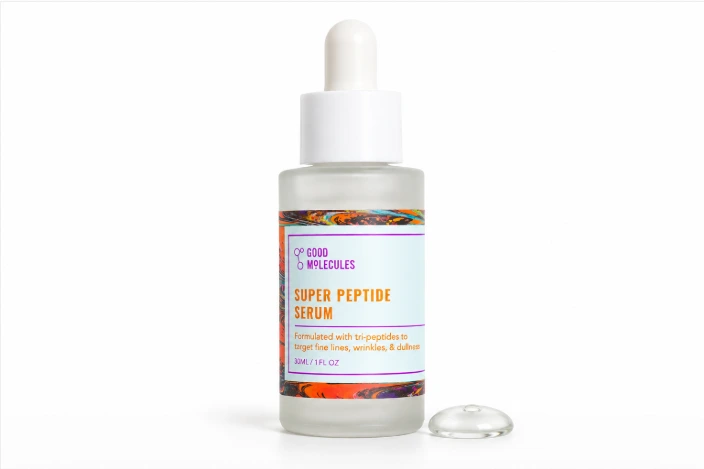
Not everyone wants retinol. And not everyone wants to spend $80 on an anti-aging serum. That is where this $12 bottle becomes interesting.
Quick facts
Best for: Affordable, retinol free anti-aging care
Key actives: Multiple peptides
Notable ingredients: Acetyl hexapeptide-8, acetyl octapeptide-3 and copper tripeptide-1
Texture: Water based serum
Size: 1 fl oz | 30 mL
Packaging: Dropper bottle
Price: $12 at the time of research
The formula gives us something genuinely different from RoC. Good Molecules combines several peptides with glycerin and sodium hyaluronate. The brand positions the serum around smoother, plumper and firmer looking skin.
There is growing research around peptides and skin aging, but keep your expectations sensible. Evidence for topical peptides is promising but less established than the evidence for retinoids.
Pros
- Only $12 at the time we checked
- Multiple peptides in one formula
- Retinol free
- Fragrance free
- Water based texture that layers easily
Cons
- Topical peptide evidence is less established than retinoid evidence
- Do not expect retinol like results just because it says anti-aging
TBT verdict: Buy it if you want an affordable, easy to add peptide serum without retinol. It also proves that an anti-aging serum does not need a luxury price tag to have an interesting formula.g serum does not need a luxury price tag to have an interesting formula.
3. L’Oréal Revitalift 1.5% Pure Hyaluronic Acid Serum: Best for Hydration and Plumping
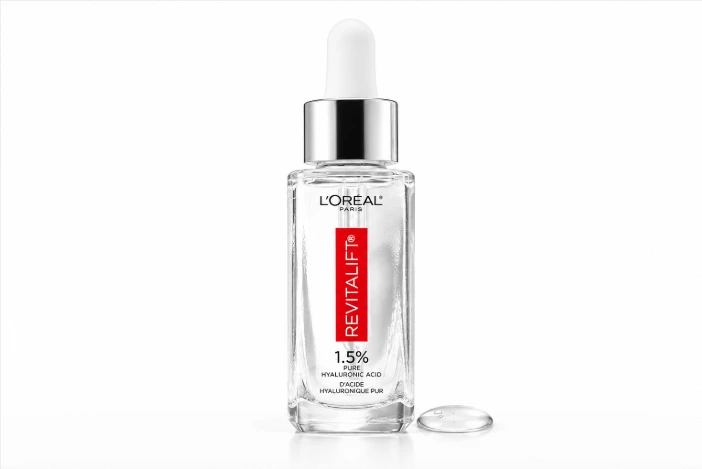
Alt text: L’Oréal Revitalift 1.5% Pure Hyaluronic Acid Serum, a hydrating anti-aging serum, in a glass dropper bottle
This one needs a little explanation. Yes, L’Oréal markets it as an anti-aging serum. But hyaluronic acid does not do the same job as retinol, and that is exactly why we included it. It hydrates and plumps the skin, helping fine lines caused by dryness look less noticeable.
Quick facts
Best for: Hydration and plumper looking fine lines
Key active: 1.5% pure hyaluronic acid
Texture: Lightweight serum
Size: 1 fl oz
Packaging: Glass dropper bottle
Fragrance: Fragrance free
Price: About $23.75
Sometimes fine lines look more obvious when skin is dry and dehydrated. Hyaluronic acid attracts water and helps give skin a more hydrated, plump appearance.
L’Oréal uses high and low molecular weight forms of hyaluronic acid in this formula and positions it around hydration, replumping and smoother looking wrinkles. That makes it useful for anyone who wants visible plumping without jumping straight into retinol.
Pros
- Strong hydration focus
- Fragrance free
- Suitable for different skin types
- Lightweight texture
Cons
- Hydration is not the same as retinoid treatment
- Dropper packaging is less convenient than a pump for some people
TBT verdict: Buy it if dehydration and fine lines are making your skin look less plump. If your main goal is treating established wrinkles, look at the RoC option first.and fine lines are making your skin look less plump. If your main goal is treating established wrinkles, we would look at the RoC option first.
What Makes an Anti-Aging Serum Worth Buying?
Ignore the words “age defying,” “youth boosting” and similar claims for a minute. Turn the bottle around.
A good anti-aging serum should have a clear reason for being in your routine. That might be a retinoid aimed at visible photoaging, peptides used to support smoother looking skin, or humectants that improve hydration and temporarily plump the look of fine lines.
The rest of the formula matters too. Texture, packaging and irritation potential decide whether you will actually keep using it. And expensive does not automatically mean effective. The AAD says the same: price does not guarantee results, and effective products exist at every price point.
Retinol, Peptides and Hyaluronic Acid Do Not Do the Same Job
This is probably the most important thing to understand before buying. Asking which ingredient is “best” without asking what it does can lead you to the wrong bottle.
| Ingredient | Main job | Evidence level | Best for |
| Retinol | Targets visible photoaging, wrinkles and texture | Strongest of the three | Wrinkles and rough texture |
| Peptides | Support smoother, firmer looking skin | Promising, still developing | Sensitive skin or retinol free routines |
| Hyaluronic acid | Hydrates and temporarily plumps | Good for hydration, not a wrinkle treatment | Dry skin and dehydration lines |
Retinol is a cosmetic retinoid. Retinoids have the strongest wrinkle evidence of these three, although prescription tretinoin has considerably more clinical evidence than an over the counter retinol serum.
Peptides are small chains of amino acids used in many anti-aging formulas. Research is promising, but evidence varies by peptide and formula. They should not automatically be treated as equal to retinoids.
Hyaluronic acid is primarily about hydration. Well hydrated skin can look smoother and plumper, which can soften the look of fine lines.
Which Anti-Aging Serum Is Best for Your 50s?
The best anti-aging serum for your 50s is usually the one your skin tolerates every day, not the strongest one on the shelf. Skin often feels drier in this decade, so comfort matters as much as results.
| If your skin in your 50s is… | Start with… |
| Dry or easily irritated | L’Oréal Revitalift 1.5% Hyaluronic Acid, then add a moisturizer |
| Sensitive and you want to avoid retinol | Good Molecules Super Peptide Serum |
| Fine with active ingredients and wrinkles are your main goal | RoC Retinol Correxion, starting every other night |
| New to all of this | One serum only, for 4 to 6 weeks, before adding another |
A second anti-aging serum is optional, not required. Many people in their 50s do well with a simple pair: a hydrating or peptide serum in the morning and retinol at night, once the skin has settled. Add one new product at a time so you can tell what is helping.
Whichever serum you choose, a good cream on top matters. See our guide to the best moisturizer for ageing skin for options that pair well with these serums.
Can a $100 Serum Really Do More Than a $20 One?
Sometimes a higher price comes with a more complex formula, special packaging or costly ingredients. But price alone tells you almost nothing about how well a serum will work for your skin.
Our $12 Good Molecules pick is a good example. It contains several named peptides and clearly lists its ingredients. Before spending $100 or more, ask a simpler question: what am I getting here that I cannot get from a well made $20 to $30 serum? If the answer is mainly fancy packaging and vague promises, keep your money. For brands worth a look at every price, see our list of dermatologist recommended skincare brands.
How to Use an Anti-Aging Serum
- Cleanse first. Apply serum to clean skin, ideally slightly damp for hyaluronic acid.
- Morning: a hydrating or peptide serum, then moisturizer, then sunscreen.
- Night: retinol goes on after cleansing and before moisturizer. Start every other night.
- Amount: a few drops or a small pump is enough for the whole face. More does not work faster.
- Patch test: try a new serum on your jaw for a few days first.
If you are new to retinol, our guide to a gentle retinol cream shows an easier way to start. For the correct order of steps, see skincare routine order.
What Results Can You Realistically Expect?
No serum is going to erase every wrinkle. The AAD notes that results from anti-aging products are modest, and that no single product treats every sign of aging.
| Serum type | When you may notice a change |
| Hyaluronic acid | Skin can look plumper and smoother within days to a couple of weeks |
| Peptides | Usually weeks to a few months, and results vary |
| Retinol | Studies often follow people for 12 weeks or more, so be patient |
Deeper wrinkles may not respond to skincare the way fine lines do. Think improvement, not a filter.
Before You Add Another Anti-Aging Serum
Check what is already in your bathroom. If you already use a retinoid, you probably do not need another retinol serum just because the bottle says anti-aging. Adding several strong actives can also make irritation harder to control.
Using vitamin C already? Our guide to the best vitamin C serums for dark spots explains how it can fit alongside other actives. If dark marks are your bigger worry than lines, start with dark spots on face.
Hydration matters too. Our Glass Skin routine has a simple hydration first approach.
Most importantly, do not forget sunscreen. UV exposure plays a major role in photoaging, and retinoids can make skin more sun sensitive. The AAD calls sunscreen and moisturizer the two most effective anti-aging products. Not sure how they layer? Read moisturizer or sunscreen first.
FAQs About Anti-Aging Serums
What is the best serum ingredient for wrinkles?
Retinoids have stronger clinical evidence for photoaging and wrinkles than peptides or hyaluronic acid. But the right product also depends on tolerance. Hyaluronic acid mainly helps hydration and plumping, while peptide evidence is still developing.
What is the best anti-aging serum for your 50s?
The best choice is one your skin tolerates daily. Dry or sensitive skin may do better with hyaluronic acid or peptides, while skin that handles actives well can add retinol slowly at night.
At what age should you start using an anti-aging serum?
There is no birthday when everyone suddenly needs one. Choose skincare based on what you want to address. Daily sun protection is useful long before visible wrinkles become a concern.
Can I use an anti-aging serum every day?
It depends on the formula. Hydrating and peptide serums are often designed for daily use. Retinol may need to be introduced more slowly. Follow the directions for your product.
Can I use hyaluronic acid with retinol?
Yes, they can be part of the same routine. Hyaluronic acid provides hydration, while retinol has a different role. If retinol leaves your skin dry, a simple hydrating routine can help.
Can I use two anti-aging serums at once?
You can, but add them one at a time. A hydrating serum and a retinol serum can share a routine, while two strong actives together raise the risk of irritation. Give each new anti-aging serum a few weeks before judging it.
Do I still need moisturizer after an anti-aging serum?
Usually, yes. A serum is not automatically a replacement for moisturizer.
Which of our three should I choose?
Choose RoC if wrinkles are the main target and you are comfortable introducing retinol. Choose Good Molecules if you want an affordable peptide serum without retinol. Choose L’Oréal Revitalift 1.5% HA if hydration and plumping are your priority.
The Bottom Line
The best anti-aging serum for wrinkles does not need the longest ingredient list or the biggest price tag.
For a retinol focused approach, RoC Retinol Correxion Deep Wrinkle Serum makes the most sense. For an affordable peptide option, Good Molecules Super Peptide Serum keeps things simple. And for hydration and plumper looking fine lines, L’Oréal Revitalift 1.5% Pure Hyaluronic Acid Serum fills a completely different role.
Choose the job first. Then choose the serum.