
Finding the best dark spot removers for face gets much easier once you know what kind of dark spot you are treating. A mark left after acne is not the same as a sun spot, and patchy melasma-like pigmentation may need a different approach.
So we did not build this list around popularity alone. We looked at what each formula is best suited for, its key ingredients, irritation potential, routine fit, value, customer feedback patterns and available evidence. The goal is simple: identify your spots, know what to look for, then choose the product that fits your skin.
Table of Contents
Best Dark Spot Removers for Face: Our Top Picks
If you already know what you need, start here. If you are not sure, the short buying guide below will help you choose before you spend.
| Product | Pick This If… | Key Ingredients | Finish |
| Topicals Faded | Your dark spots feel stubborn | Tranexamic acid, niacinamide, azelaic acid, kojic acid | Creamy serum |
| CeraVe Resurfacing Retinol Serum | You have post-acne marks + uneven texture | Retinol, niacinamide, licorice root, ceramides | Lightweight serum |
| Good Molecules Discoloration Correcting Serum | You want a simple, affordable option | 3% cetyl tranexamate mesylate + 4% niacinamide | Lightweight serum |
| TOSOWOONG Arbutin 7% + TXA 4% Cream | You prefer a cream | 7% arbutin, 4% tranexamic acid, niacinamide | Cream |
| AXIS-Y Dark Spot Correcting Glow Serum | You are new to dark-spot serums | 5% niacinamide, squalane | Lightweight, hydrating |
| Neutrogena Rapid Tone Repair | You want retinol + vitamin C | Retinol, vitamin C derivative | Smooth serum |
What Kind of Dark Spot Are You Trying to Fade?
Before choosing the best dark spot removers for face, look at the spots themselves. You only need enough identification here to avoid buying the wrong type of treatment.
Post-acne marks: Flat brown, grey-brown or darker marks left after a breakout may be post-inflammatory hyperpigmentation. A treatment that also fits acne-prone skin can make sense here.
Sun or age spots: These are linked with repeated sun exposure. A brightening treatment may help their appearance, but daily sunscreen matters just as much.
Patchy or symmetrical pigmentation: Larger patches across the cheeks, forehead or upper lip may be melasma-like. This can be stubborn and may need professional guidance rather than a stronger cosmetic serum.
Marks after irritation: Picking, rubbing, waxing or an irritating product can leave pigmentation behind. The trigger needs attention too.
If a spot is new, changing, bleeding or does not look like ordinary pigmentation, do not keep trying stronger cosmetic products. Have it assessed.
Need help identifying the cause first? Read our Dark Spots on Face: What Causes Them and How to Fade Them guide. It covers the causes and treatment options in more detail.
What Should You Look for in a Dark Spot Remover?
Do not shop by the longest ingredient list. Shop by your concern and what your skin can tolerate.
For post-acne marks: Niacinamide, retinoids, azelaic acid and other pigmentation-focused ingredients can make sense, depending on your skin and current routine.
For sensitive skin: Start simpler. A product you can use consistently is more useful than a stronger one that keeps irritating your skin.
For sun-related discoloration: Look for a suitable brightening treatment, but do not separate it from daily sun protection.
For stubborn or melasma-like pigmentation: Tranexamic acid, azelaic acid and other pigment-focused ingredients may be useful, but over-the-counter skincare has limits.
The better question is not “Which ingredient is strongest?” It is “Which treatment fits my type of dark spot and what can my skin actually tolerate?”
Serum, Cream or Spot Treatment?
A lightweight serum is easy to layer and works well when discoloration covers more than one small spot. A cream may suit dry skin or anyone who does not want another serum layer. And do not assume every “dark spot corrector” should be dabbed only on individual dots. Some are meant for broader facial use. Follow the directions for the product you choose.
Stronger Isn’t Always Better
Higher percentages and longer active lists can look impressive, but they do not automatically make a product better. Irritation can make consistent use harder. Check the active strength, supporting ingredients, frequency and how the product fits with the rest of your routine.
Which of These 6 Dark Spot Removers Fits You?
1. Topicals Faded Brightening + Clearing Serum — Best for Stubborn Dark Spots
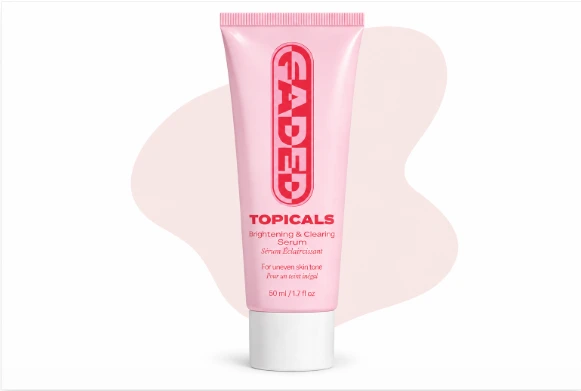
Best for: Dark spots that have been difficult to fade.
Key ingredients: Tranexamic acid, niacinamide, azelaic acid, kojic acid, arbutin and licorice root.
Texture & finish: A creamy serum that feels richer than a thin, watery serum.
Why We Picked It
Topicals Faded stands out because it brings several ingredients used for discoloration into one treatment. We like it for someone who has already tried a very simple brightening serum and wants something more targeted. It is also a useful non-retinol choice.
Pros
- Several dark-spot ingredients in one formula
- No retinol
- Made specifically for discoloration
- Useful for larger areas of uneven tone
Cons
- Takes more thought if your routine already contains several actives
- May be more than a beginner needs
What to Know
More actives do not mean instant results. Faded already gives you a lot in one formula, so you do not need to surround it with every other strong treatment you own.
Where it goes: Cleanser → Faded → Moisturizer → Sunscreen in the morning.
Routine Fit: Requires care.
Be Careful With: Retinoids, AHAs and BHAs in the same routine.
Treatment Area: Areas of discoloration rather than treating it like a tiny pimple treatment.
Who Should Skip It?: If your routine already contains several strong actives, a simpler option may be easier to manage.
Value: Good if you want several dark-spot ingredients in one treatment.
TBT Verdict
Choose Topicals Faded if stubborn discoloration is your main concern and you want more than a basic brightening serum. Keep the rest of your active routine simple.
2. CeraVe Resurfacing Retinol Serum — Best for Post-Acne Dark Spots
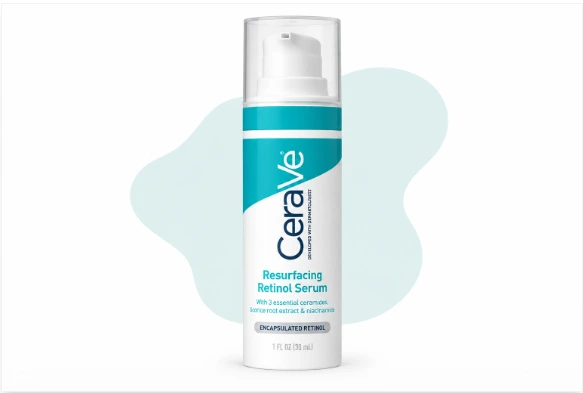
Best for: Dark marks left after acne, especially when uneven texture is also bothering you.
Key ingredients: Retinol, niacinamide, licorice root extract and ceramides.
Texture & finish: A lightweight serum that layers easily under moisturizer.
Why We Picked It
If the breakout is gone but the mark is still there, CeraVe is one of the first options we would compare. Retinol makes it useful when post-acne marks come with uneven-looking texture, while niacinamide, licorice root and ceramides round out the formula.
Pros
- Good fit for post-acne marks
- Also targets uneven-looking texture
- Contains niacinamide and ceramides
- Fragrance-free and non-comedogenic
Cons
- Retinol can cause dryness or irritation
- Unnecessary if you already use another retinoid
What to Know
Do not rush into nightly use just because the formula looks gentle. It still contains retinol. Give your skin time to adjust.
Where it goes: PM — Cleanser → CeraVe serum → Moisturizer.
Routine Fit: Moderate.
Be Careful With: Other retinoids and an already heavy exfoliating routine.
Treatment Area: Across areas with post-acne marks rather than only individual dots.
Who Should Skip It?: If you already use another retinoid or specifically want a non-retinol treatment.
Value: Strong if you want one product for post-acne marks and uneven texture.
TBT Verdict
This is our pick for dark marks left after acne. It makes even more sense when texture is another concern. If you only want a simple brightening serum, you probably do not need the retinol.
3. Good Molecules Discoloration Correcting Serum — Best Affordable Dark Spot Serum
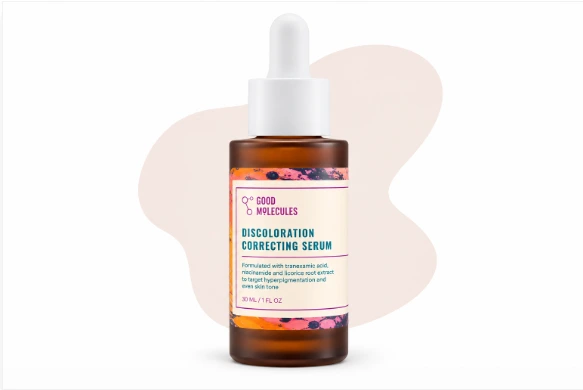
Best for: Anyone who wants a simple dark-spot serum without spending much.
Key ingredients: 3% cetyl tranexamate mesylate and 4% niacinamide.
Texture & finish: Lightweight and easy to layer.
Why We Picked It
Treating dark spots does not have to mean buying the most complicated serum. Good Molecules keeps things focused with a tranexamic acid derivative and niacinamide. It is a practical choice if you want a dedicated treatment without retinol or a long list of stronger actives.
Pros
- Affordable
- Simple formula
- Lightweight
- Fragrance-free
- Easy to add to a basic routine
Cons
- Fewer dark-spot actives than Topicals Faded
- May feel too simple if you want a more intensive treatment
What to Know
Simple can be a strength. One suitable serum used consistently can make more sense than constantly adding new brightening products.
Where it goes: AM or PM — Cleanser → Serum → Moisturizer → Sunscreen in the morning.
Routine Fit: Easy.
Be Careful With: Adding extra treatments simply because this formula looks simple.
Treatment Area: Areas of uneven tone rather than only individual dots.
Who Should Skip It?: If you specifically want retinol or a more active-packed formula.
Value: Excellent. Affordability is a major reason it made our list.
TBT Verdict
Good Molecules is our simple, budget-friendly option. It is an easy place to start if you want to treat discoloration without making your routine complicated.
4. TOSOWOONG Arbutin 7% + Tranexamic Acid 4% Cream — Best Dark Spot Cream
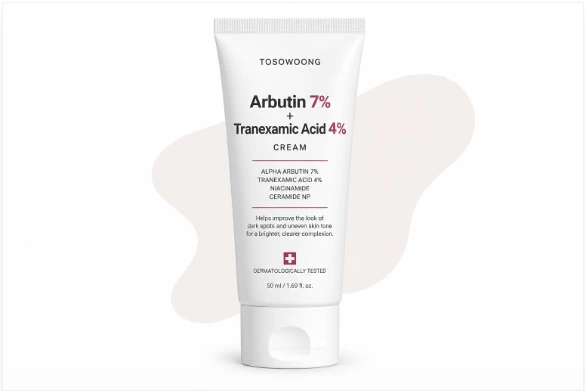
Best for: Anyone who would rather use a cream than another serum.
Key ingredients: 7% arbutin, 4% tranexamic acid, niacinamide and glutathione.
Texture & finish: A richer cream format.
Why We Picked It
Most dark-spot treatments on this list are serums. TOSOWOONG gives you another choice. It combines arbutin and tranexamic acid with niacinamide and glutathione in a 50 ml cream.
Pros
- Cream instead of serum
- 7% arbutin
- 4% tranexamic acid
- Also contains niacinamide
- Generous 50 ml size
Cons
- May feel too rich if you prefer very light skincare
- Less independent evidence for this exact finished formula than for some other picks
What to Know
Do not choose it only because 7% and 4% sound strong. Higher numbers do not automatically mean faster or better results.
Where it goes: After lighter treatments. Depending on your skin, it may also work as your cream step.
Routine Fit: Easy to Moderate.
Be Careful With: Starting several new pigmentation treatments at once.
Treatment Area: Broader areas of uneven tone, following the product directions.
Who Should Skip It?: If you dislike richer creams or want the lightest possible layers.
Value: Good, especially because you get 50 ml.
TBT Verdict
Pick TOSOWOONG if you want dark-spot ingredients in a cream instead of another serum. The useful difference here is the formula and format, not simply bigger numbers.
5. AXIS-Y Dark Spot Correcting Glow Serum — Best for Beginners
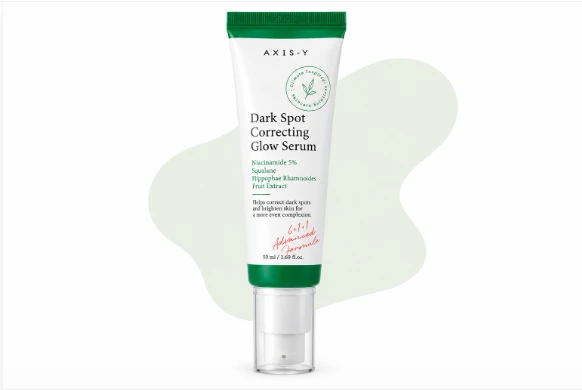
Best for: Someone buying a first dark-spot serum or wanting a simple, lightweight option.
Key ingredients: 5% niacinamide, squalane and plant extracts.
Texture & finish: Lightweight with a hydrating feel.
Why We Picked It
Your first dark-spot treatment does not need to be the strongest product you can find. AXIS-Y puts 5% niacinamide at the center of the formula and adds squalane for moisture support. That makes it approachable if you want to work on uneven tone without immediately jumping into retinol.
Pros
- 5% niacinamide
- Lightweight
- Hydrating
- Easy to layer
- Simple beginner approach
- 50 ml size
Cons
- May be too simple for stubborn discoloration
- Contains rosemary leaf oil
What to Know
Beginner-friendly does not mean irritation is impossible. If your skin reacts easily, patch testing is still sensible.
Where it goes: AM or PM — Cleanser → AXIS-Y → Moisturizer → Sunscreen in the morning.
Routine Fit: Easy.
Be Careful With: Starting several new brightening treatments at the same time.
Treatment Area: Areas of uneven tone or post-breakout discoloration.
Who Should Skip It?: If you already tolerate stronger treatments and want something more targeted for stubborn pigmentation.
Value: Strong, particularly with the 50 ml size.
TBT Verdict
AXIS-Y is our easy starting option. Choose it if you want to begin treating dark spots without immediately making your routine complicated.
6. Neutrogena Rapid Tone Repair Retinol + Vitamin C — Best Retinol + Vitamin C Option
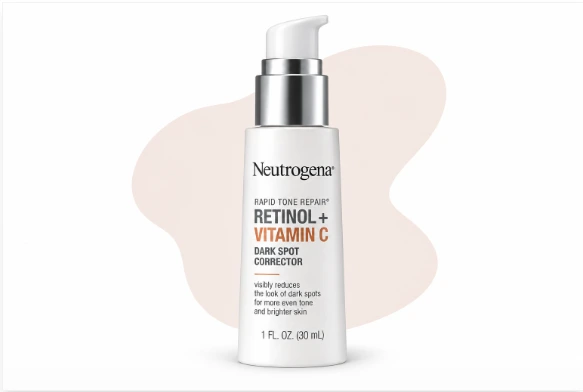
Best for: Someone who wants retinol and a vitamin C ingredient in the same treatment.
Key ingredients: Retinol, a vitamin C derivative and sodium hyaluronate.
Texture & finish: A smooth serum that sits easily under moisturizer.
Why We Picked It
Having two retinol products on the list does not make them the same. Neutrogena combines retinol with a vitamin C derivative in a serum for dark spots, uneven tone and texture. CeraVe is our more focused choice for post-acne marks; Neutrogena is the one to compare if you specifically want the retinol + vitamin C combination.
Pros
- Retinol + vitamin C derivative
- Made for dark spots and uneven tone
- Also targets uneven-looking texture
- Combines two treatment directions in one product
Cons
- Contains fragrance
- Retinol can cause dryness or irritation
- Not needed if you already use another retinoid
What to Know
Do not use two retinol products just because both appear here. If you choose Neutrogena, it should replace another retinol treatment rather than become an extra retinol layer.
Where it goes: PM — Cleanser → Neutrogena serum → Moisturizer.
Routine Fit: Moderate.
Be Careful With: Other retinoids and an overly aggressive exfoliating routine.
Treatment Area: Use as a facial serum according to the directions rather than as a tiny pimple treatment.
Who Should Skip It?: If you already use retinol, struggle with retinoids or avoid fragranced skincare.
Value: Good if you specifically want retinol and a vitamin C ingredient without buying two separate treatments.
TBT Verdict
Choose Neutrogena if you specifically want retinol + vitamin C in one dark-spot product. If your biggest concern is marks left after acne, CeraVe is the more focused choice.
What Should You Realistically Expect From a Dark Spot Remover?
The word “remover” is search language, not a promise that pigment disappears overnight. A dark spot remover is a treatment meant to gradually reduce the appearance of discoloration. Results depend on what caused the spot, how old or deep it is, the formula you choose, how consistently you use it and whether the trigger is still happening.
How Long Should You Give It?
Do not judge a treatment after a few days. Different types of pigmentation do not follow one timeline. Brand claims such as “visible results in X days” should be treated as manufacturer claims, not a guarantee that your skin will follow the same schedule. Consistent use and realistic expectations matter more than chasing the fastest claim.
Before You Switch to a Stronger Dark Spot Remover
If you are not seeing progress, check the basics before buying something stronger. Are you using the treatment consistently? Are new breakouts or irritation creating new marks? Are you picking? Are you skipping sunscreen? And most importantly, are you treating the right type of pigmentation?
For a deeper troubleshooting guide, see Why Aren’t My Dark Spots Fading? in our Dark Spots on Face guide.
Where Does a Dark Spot Remover Go in Your Routine?
Keep it simple.
morning: cleanser → suitable treatment → moisturizer → sunscreen.
night: cleanser → chosen treatment → moisturizer. The exact order and frequency can change with the product, which is why every pick above includes its own routine placement.
If you want a full step-by-step routine guide, read Skincare Routine Order: What Goes First and Why.
Why Sunscreen Still Matters
A dark-spot treatment cannot do all the work while your skin keeps getting unprotected UV exposure. Sunscreen helps protect the progress you are trying to make and reduces one of the triggers that can worsen pigmentation.
The American Academy of Dermatology’s guidance on fading dark spots also emphasizes sun protection as part of managing hyperpigmentation.
When Another Product Is Not the Answer
If pigmentation is stubborn, looks melasma-like, keeps returning or is not responding despite a sensible routine, professional guidance may help. And if a spot changes in size, shape or color, bleeds or simply looks unusual, have it assessed rather than trying progressively stronger cosmetic treatments.
How We Chose the Best Dark Spot Removers for Face
We did not choose these products from a bestseller list. We first looked at what a reader actually needs from a dark-spot treatment, then compared formula fit, key ingredients, the type of discoloration each product makes sense for, skin tolerance, irritation potential and routine compatibility.
We also considered value, availability, market signals and customer review patterns. Reviews can be useful for spotting repeated comments about texture, ease of use or common complaints, but they are not proof that a formula works. Manufacturer claims were treated as manufacturer claims, not as TBT guarantees.
Finally, we kept the list useful. Instead of six versions of the same serum, our final picks cover stubborn discoloration, post-acne marks, beginners, a lower-cost option, a cream format and a retinol + vitamin C option. Affiliate availability did not decide the recommendations, and we do not say “we tested” unless we genuinely did.
Frequently Asked Questions
Which are the best dark spot removers for face?
There is no single best option for every type of pigmentation. Post-acne marks, sun spots and melasma-like patches can need different approaches. Start with the type of spot, then choose a treatment that fits your skin and routine.
Can I use a dark spot remover every day?
It depends on the formula. Some simple serums can be used daily, while retinol or stronger multi-active treatments may need to be introduced more slowly. Follow the directions for the product you choose.
Can I use two dark spot serums together?
Usually, there is no need to start two treatments at once. One well-chosen product is easier to judge and may lower the chance of irritation. If you already use strong actives, check routine compatibility first.
Should I use a dark spot remover in the morning or at night?
That depends on the product. Some brightening serums fit morning or night, while retinol products are generally better placed in the evening routine. The six picks above include exact routine placement.
Can dark spots come back after they fade?
Yes. New acne, irritation and sun exposure can lead to new discoloration. Treating the original trigger and using sun protection are important parts of preventing new marks.
Final Takeaway
The best dark spot removers for face are not simply the strongest formulas or the ones with the longest ingredient list. Start with what caused the discoloration, then choose a product your skin can actually tolerate and use consistently. Topicals is the more active-packed choice for stubborn spots, CeraVe fits post-acne marks and texture, Good Molecules keeps things simple and affordable, TOSOWOONG gives you a cream option, AXIS-Y is the easiest starting point, and Neutrogena is the retinol + vitamin C choice.
Affiliate disclosure: The Beauty Transit may earn a commission from qualifying purchases made through links in this article, at no extra cost to you. Our product choices are based on editorial fit, not commission.