
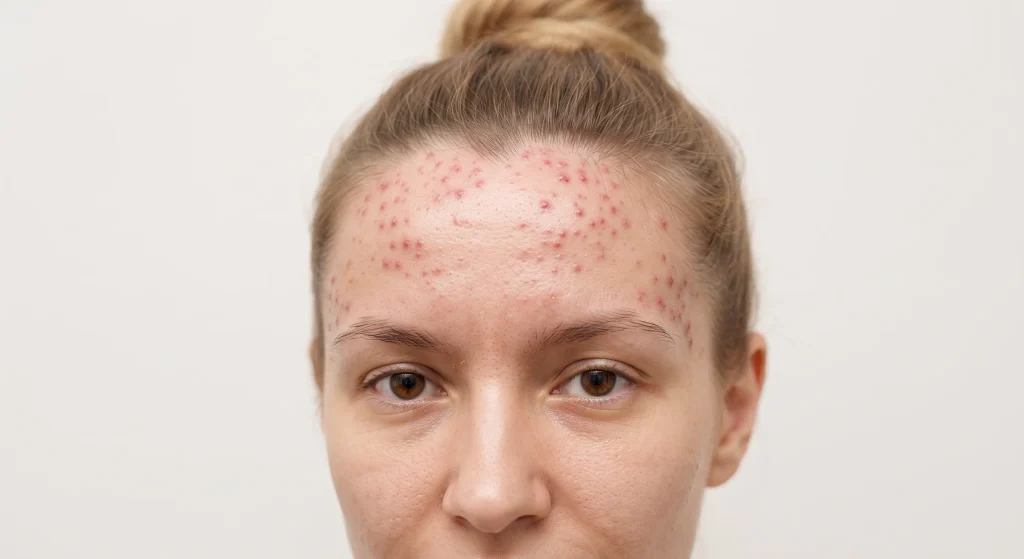
What does fungal acne look like? Picture tiny bumps, all the same size, that itch and never turn into big pimples.
Maybe you tried an acne wash. Then a stronger one. Then a spot treatment. And the bumps just kept coming back.
That stubborn, itchy breakout may not be acne at all. It could be fungal acne, and it needs a different plan.
Here is what fungal acne looks like, where it shows up, and how to tell it from regular pimples. You will also get simple next steps.
On this page
What Does Fungal Acne Look Like? The Quick Answer
Fungal acne looks like many small, round bumps that are all the same size. They are often red, they usually itch, and they show up in groups. You will not see many blackheads.
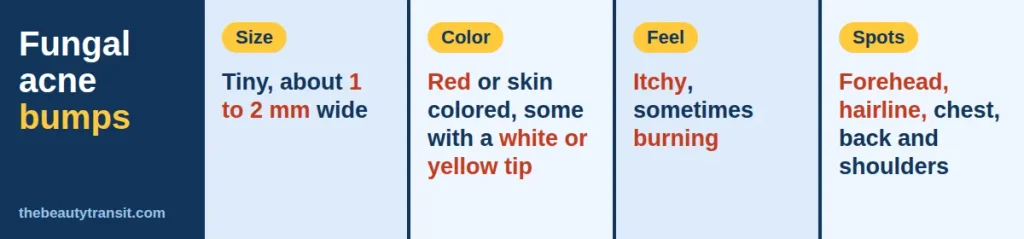
Doctors call it Malassezia folliculitis. It is a yeast problem inside the hair follicle, not true acne. Cleveland Clinic describes small, itchy, red bumps that look alike and form clusters.
The 5 Signs of Fungal Acne
The more signs you tick, the more likely it is yeast. This is what fungal acne looks like in real life.
1. All the Bumps Look the Same
Regular acne is messy. You get small bumps, big bumps, whiteheads and blackheads, all at once.
Fungal acne is neat in a strange way. The bumps look almost identical. A review of 110 patients found most spots were only about 1 to 2 mm wide.
2. They Itch
This is the biggest clue. Itching is common with fungal acne and rare with regular pimples. Some people also feel burning.
3. They Come in Clusters or Rows
Look at your forehead. Do the bumps line up near the hairline, almost in rows? That is a classic pattern. Regular acne is more scattered.
4. No Blackheads
Regular acne starts with clogged pores, so you see blackheads. Fungal acne usually does not have them. If you do see blackheads, our guide on how to unclog pores will help.
5. Acne Products Do Not Help
This one frustrates people the most. Antibiotics can even make fungal acne worse. They wipe out the good bacteria that keep yeast in check, as Healthline explains. If weeks of acne care changed nothing, that is a clue.
Where Does Fungal Acne Show Up?
Yeast loves warm, sweaty spots. So what fungal acne looks like on the face is a little different from the body:
- Forehead and hairline: the most common face spot
- Cheeks and chin: less common, but it happens
- Chest, back and shoulders: very common, often after workouts
- Neck and upper arms: also possible
Wondering what fungal acne looks like on the chest? It is the same: tiny, matching bumps in clusters, often very itchy after a sweaty day.
Here is the catch. Regular acne also loves the forehead and back. Where the bumps sit will not give you the answer. Size, itch and pattern matter more.
Alt text: fungal acne on chest and back, small itchy bumps in clusters on the upper body
What Fungal Acne Looks Like on Lighter and Deeper Skin
Color changes with skin tone and lighting. That is why photos can fool you.
On lighter skin, you may see pink or red bumps, sometimes with a red ring. On deeper skin, the redness can be hard to spot.
So when you check what fungal acne looks like on your skin tone, use touch as well as sight. Tiny, raised, matching bumps that itch point to fungal acne on any skin tone.
Fungal Acne vs Regular Acne: Side by Side
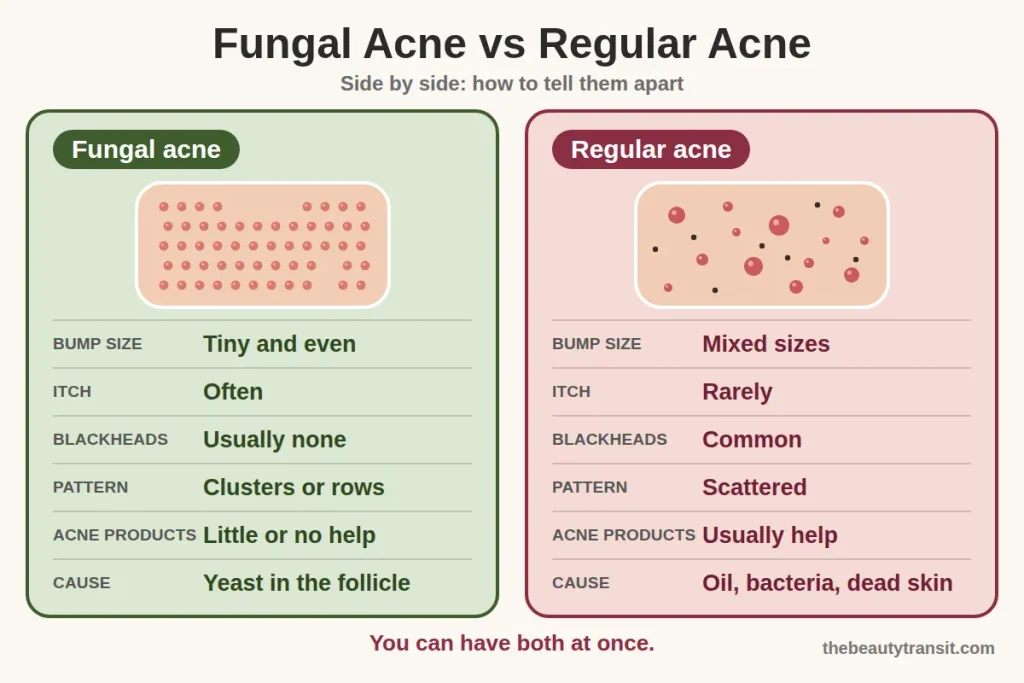
You can have both at once. If you are building a plan for regular breakouts, start with our acne skincare routine.
Why Fungal Acne Gets Mistaken for Acne
The two look so alike that even doctors can miss it. In the 110 patient review, more than 75% had been treated for acne with antibiotics first.
That is the trap. The bumps look like pimples, so people treat them like pimples. But what fungal acne looks like on the skin is a yeast problem, and acne treatment does not touch yeast.
Look-Alikes That Fool People
Fungal acne is not the only thing that causes bumps. Here are the usual mix-ups:
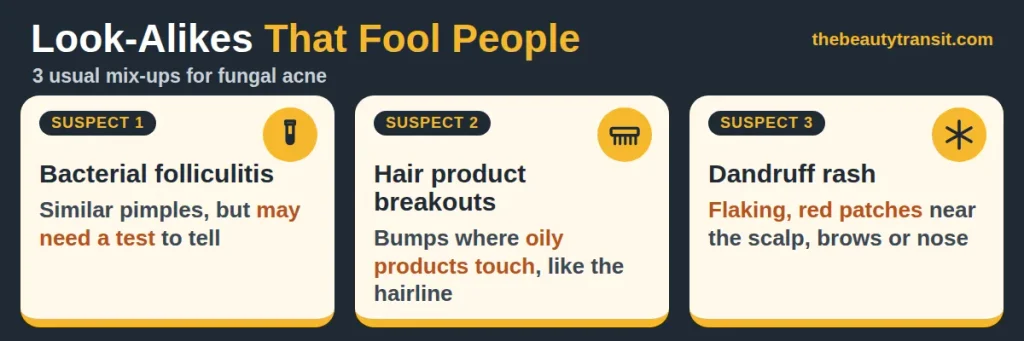
Yeast is behind dandruff too. If you have a flaky scalp and itchy bumps, Healthline says that can point to yeast.
What Causes Fungal Acne?
Yeast grows best in heat and damp. These things can tip the balance:
- Sweat and humid weather
- Tight clothes and gym wear you wear twice
- Antibiotics or steroid medicines
- Oily skin
- Shaving or waxing that irritates the follicle
- Hot tubs that are not kept clean
It is most common in teens and young men. But anyone can get it. It is not contagious, and it is not a sign of poor hygiene.
The 3 Question Self Check
Not sure what fungal acne looks like on your own skin? Ask yourself:
- Are most of my bumps the same size?
- Do they itch?
- Did acne products fail to help after a few weeks?
If you said yes to two or three, fungal acne is a good guess. But it is only a guess. Only a doctor can confirm it.
Write down when it started, where it is, and what you tried. A doctor may scrape a tiny sample to check under a microscope, or use a special light called a Wood’s lamp.
What to Do Next
Good news. This is usually very treatable.
Antifungal treatment is the standard fix. In the 110 patient review, doctors often used ketoconazole 2% shampoo as a skin wash, left on for 5 to 10 minutes every other day. Most people got better with that alone. Stronger cases may need pills.
Ask your doctor first. The shampoo is used on skin off label. On the face, rinse it off well and quickly.
Keep the rest simple. A gentle cleanser is enough. See our hydrating cleanser guide, or our picks for the best cleanser for oily skin.
Go easy on heavy oils and rich creams while you heal. Dermatologists say oily creams can feed the yeast. Pick light, simple products.
Also cut sweat and friction:
- Shower and change clothes soon after you sweat
- Wear loose, breathable fabrics
- Dry swimwear fully between uses
Many people improve within days to a few weeks. It can come back, so these habits matter.
Do Not Pop or Scratch the Bumps
It is tempting. But picking and scratching can hurt the skin and leave marks.
Instead, keep your hands off and let the treatment work. Wash after sweating and pat the skin dry. Dry, calm skin gives yeast less to grow on.
Marks can fade, but they take time. If you already have dark marks, read our guide on dark spots on the face.
Alt text: dermatologist checking skin for fungal acne, what fungal acne looks like up close
When to See a Dermatologist
Book a visit if:
- The itchy breakout lasts more than 3 weeks despite home care
- It keeps coming back after it clears
- Acne products make it worse
Get care quickly if you have fever, fast spreading redness, strong pain or a large tender lump. Do the same if your immune system is weak.
FAQs About What Fungal Acne Looks Like
What does fungal acne look like at a glance?
Tiny, even, itchy bumps in clusters. Some have a white or yellow tip. Blackheads are not a main sign.
Is fungal acne contagious?
No. It comes from your own skin yeast growing too much. It is not caused by dirt.
Can you pop fungal acne?
Please don’t. Popping and scratching can irritate the skin and leave marks.
Does fungal acne go away on its own?
Not usually. Ohio State Health says it can get itchier and spread without treatment.
How long does fungal acne take to clear?
Improvement can start within days. Most cases clear within a few weeks once the right treatment is used.
Does benzoyl peroxide work on fungal acne?
Not well. When acne washes like salicylic acid or benzoyl peroxide fail, that is often a clue it is fungal.
The Bottom Line
So, what does fungal acne look like? Tiny, even, itchy bumps in clusters, with no blackheads, and no help from acne products.
Now you know what fungal acne looks like. If that sounds like your skin, talk to a doctor, keep your routine simple, and treat the yeast, not the pimples.